By Francisco Silva -
Disclosure Day
Director: Steven Spielberg
Writer: David Koepp
Cast: Emily Blunt, Josh O'Connor, Colin Firth, Coleman Domingo, Wyatt Russell
Tuner
Director: Daniel Roher
Writer: Daniel Roher and Robert Ramsey
Cast: Leo Woodall, Dustin Hoffman, Havana Rose Liu
Disclosure Day
The trick in Steven Spielberg’s filmography is that his films always seem to be searching for the truth. Not a universal one in a commitment to mankind, but a truth that only Spielberg seems to be searching for, on questions that only he seems to be asking. For decades (and his work has spanned more than five of those), it looked like it was all related to fatherhood, but 2022’s The Fabelmans (a fictitious autobiography), unlocked the door to understanding the most successful American filmmaker of all time, recontextualising his career up to that point and paving the way to understand the films that came after.
I start this way because Spielberg’s new film, Disclosure Day, falls right at the centre of Spielberg’s Venn diagram. It’s marketed as a return to the alien genre, from a director who shaped our generational consciousness of the subject and hasn’t touched on it since the 2005 War of the Worlds, but it’s also deeply personal, politically conflicting, morally complex, and imbued with a curious sense of wonder. Because who is Spielberg but an adult who never lost the gift of seeing the world through a child’s eyes?
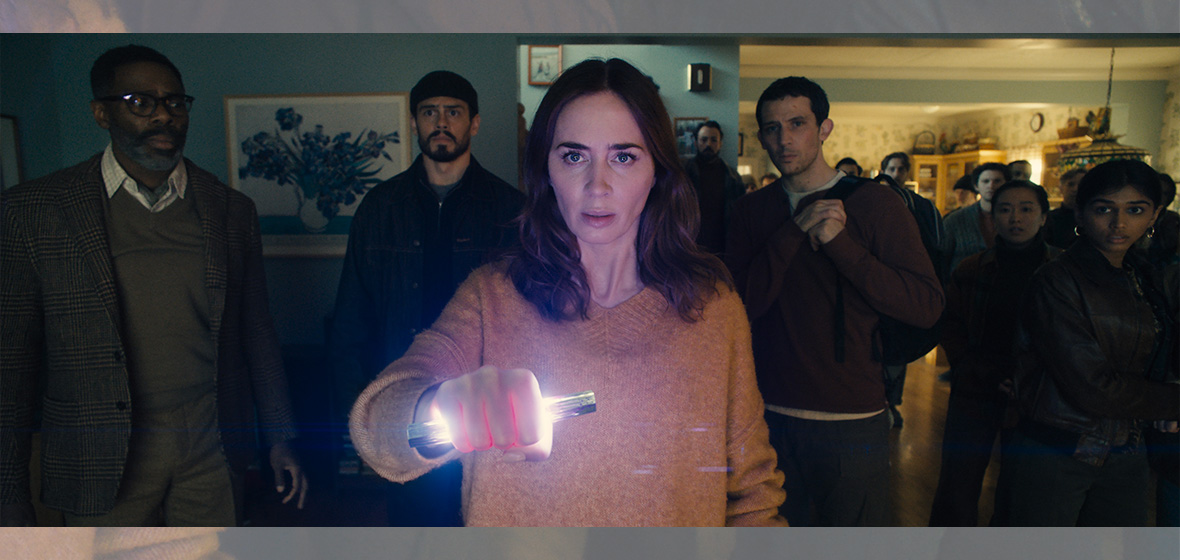
The first shot says a lot about a film. Disclosure Day starts with a point-of-view of a wrestling fighter getting pummelled on the head by another fighter. It’s loud and distracting, like how entertainment (even this) is supposed to be. It’s here that we meet Daniel (Josh O’Connor), who is holding a secret that the government (or worse) wants. He works for a secret organisation led by Hugo (Colman Domingo). Noah (Colin Firth) is the man in charge of finding Daniel and stopping Hugo from releasing to the world proof that aliens exist, a claim the US government has known for many decades.
While the cat-and-mouse game between Daniel and Noah goes on, the focus shifts to Margaret (Emily Blunt), a weather girl from Kansas City with ambitions to become a news anchor. While talking to her boyfriend (Wyatt Russell), a little red cardinal flies into their living room, triggering something deep inside her. Margaret starts behaving erratically, speaking different languages and is pushed to go on the road to meet Daniel.
For the first half, Disclosure Day plays like Spielberg’s own Minority Report but with a strange contemplative edge. His usual collaborator, John Williams, adds an uncharacteristically subdued soundtrack, and David Koepp’s script seems to go out of its way to keep everyone, the audience and the characters, in the dark. But it’s in this muddy ground that Spielberg finds the essence of his film. Like the wrestling in the beginning, the action set pieces distract us from the central question. The mystery doesn’t feel that compelling because Spielberg purposely refuses to address it. It’s only at the midpoint that he shifts to reveal to the audience the importance of his artifice. Suddenly, Williams’ score becomes more relevant, Koepp’s script more focused, and Spielberg puts a spotlight on a very personal element he had avoided before.
Morality is at the centre of Disclosure Day. Firth’s character is a man dedicated to a mission he finds essential to the larger scheme, though he knows it is conflicting and complicated. In that sense, Disclosure Day mirrors Munich’s analysis of how to navigate one’s conflicting ethical sense. Firth believes what he does is right, but he can also see the wrong in it, and the consequences that revealing the truth can bring. Spielberg, ever in childlike wonder, gets serious there for a moment, and it’s hard not to see how he represents the filmmaker, down to the way he sits on a chair near the end, like a director observing the fruits of his actions.
Disclosure Day is a profoundly personal film from a director who always brought all of himself into his movies. It only works at this stage of his career, after The Fabelmans. It feels like it’s Spielberg tying loose knots about himself. He still delivers entertainment like no other (the ending is fantastic, and there’s a car chase halfway through that reminds us how good he is at that kind of set piece), and the performances, especially Emily Blunt, are a cut above, but deep at his core, this is about an artist finding his mojo again.
Verdict: 4.5 out of 5
For Steven Spielberg’s fans, who I trust is everyone who has enjoyed a film in the past fifty years.
Tuner
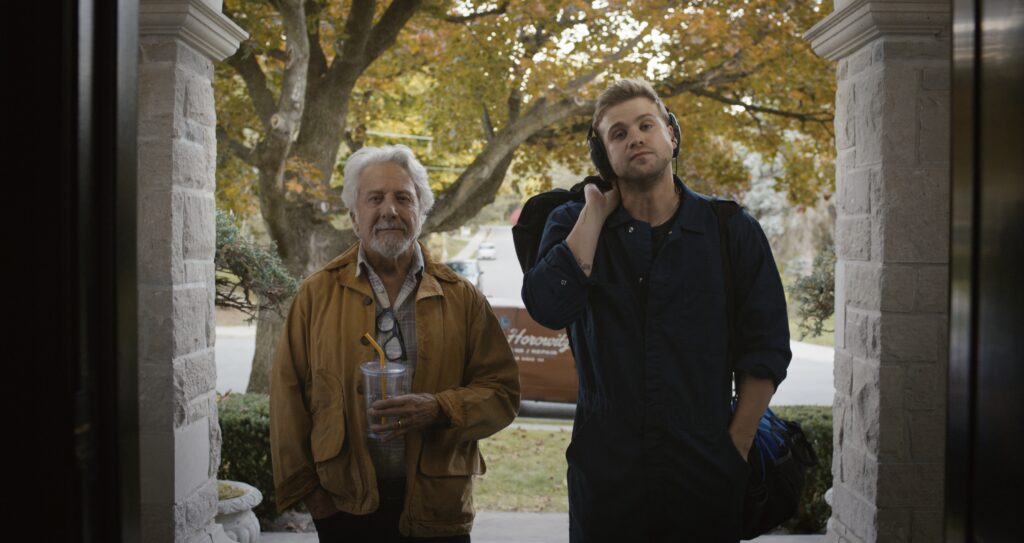
Daniel Roher’s Tuner moves uncompromisingly somewhere between the heart of a New York indie drama and the style of a modern crime caper. The synopsis is compelling. Niki (Leo Woodall) is an ex-piano prodigy who now works for the piano-tuning business of his old teacher, Harry (Dustin Hoffman), after developing the rare disease hyperacusis (hypersensitivity to sound). Niki needs noise-cancelling headphones to live, but they also give him an edge for perfectly tuning a piano and, as he quickly finds out, opening locked safes. Very conveniently, shortly after discovering this new talent, Nikki catches the eye of Uri (Lior Raz), the owner of a security company who often steals from his wealthy clients. Only small things, a watch here, a necklace there, not to give away his business and enough for the people to blame the help instead. As another chance would have it, Harry suffers an accident and is sent to a hospital, which in America means mounting bills that his family can’t pay. So, Niki agrees to work for Uri so Uri can continue supporting his mentor. No thriller like this would survive without a dame. Before the plot kicks off, Nikki meets Ruthie (Havana Rose Liu), a student at the music conservatory working on a piece that can open the door to an internship with a world-renowned composer (played by Jean Reno).
There is enough enjoyment and charm to see you through it, but there is such a thing as too much plot. Every twist, every turn, seems to be perfectly engineered to serve the film’s world, so that the film ends up lacking any semblance of real life. It may sound like nitpicking, but it quickly becomes distracting that everything in this world revolves around the same elements so conveniently. There is something to be said about letting your characters behave badly for the sake of behaving badly. Harry didn’t have to give a reason for Niki to start robbing the rich; there’s nothing wrong with having Niki be that person to begin with. Let him deal with his own moral conundrums in his own terms. Not everyone has to be Jesus, let alone a man whose own conditions would make him angry and prone to rebellion.
Roher works here for the audience. He brings a charming, sympathetic protagonist, hinged not only on Woodall’s surprising proclivity to carry a film as the protagonist, but also on the great chemistry he has with both Hoffman and Rose Liu, and the third act is a classic “trying to make it back in time for the performance”. Nothing is too racy, too violent, too controversial, too complicated or too flashy. It reminds me sometimes of Edgar Wright’s Baby Driver, but with the cadence of an early 00s mid-winter crime thriller. Whether that’s a missed opportunity depends on your expectations. The film has a few of those.
Verdict: 3 out of 5
For anyone looking for a straightforward crowd pleaser that works hard enough to keep in line, and maybe a bit too much to please everyone.