
By Francisco Silva -
Director: Warwick Thornton
Writer: Steven McGregor, David Tranter
Cast: Deborah Mailman, Erroll Shand, Joe Bird, Thomas M. Wright, Pedrea Jackson
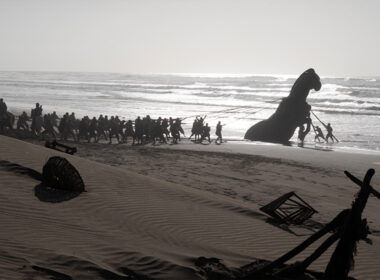
Whether Australians like it or not, Warwick Thornton’s filmography is aggressively Australian. Through the point of view of the First Nations experience, Thornton doesn’t sugarcoat the past and the present of Australia. He’s not here to advertise this country as a tourist hotspot, but to force an inward look at the fabric that weaves these shores. Thornton’s films are not angry because he celebrates life and culture. But they’re not comforting to look at, because nothing is. His new film, Wolfram, continues the same conversation he has been having with the entire country since breaking the scene with Samson and Delilah in 2009.
Set a few years after Sweet Country, with some actors reprising roles, Wolfram finds Central Australia in hardship. Between the World Wars, wolfram was mined for military use. With peace, ore demand is low, and most miners move to Queensland to seek gold. We meet Aboriginal siblings Max (Hazel Jackson) and Kid (Eli Hart), who work for a local miner and are searching for their mother, Pansy (Deborah Mailman). Their journey leads to Philomac (Pedrea Jackson), an Aboriginal man working for his white father, Kennedy (Thomas M Wright). The children and Philomac seek Pansy, pursued by veterans Casey (Erroll Shand) and Frank (Joe Bird), whose return brings violence to the local Aboriginal people.
In the same vein as Sweet Country, which confronted Australia’s difficult recent past, Wolfram depicts a relentless, inhospitable outback. From the start, rot and decay dominate. Flies swarm every frame, and a dead horse decomposes in front of the only pub in town. The white man arrives, exploits, and abandons the land when it no longer serves his purpose. This trauma is embodied in Mailman’s performance, who conveys deep emotion with minimal dialogue. Holding a newborn, she mourns the painful circumstances that forced her to abandon her children. Her powerful and nuanced performance vindicated by the effect it has even with such a short screen time.
Thornton, again working with Sweet Country writers Steven McGregor and David Tranter, criticises only those invaders who disrespect the land. The group of Chinese immigrants (Jason Chong, Ferdinand Hoang, and Aiden Du Chiem) supports both Pansy and Philomac. The local priest (John Howard), who lives with a local Aboriginal woman, supports the locality and helps the half-caste children. All is observed by the Arrernte people, who intervene only when necessary.
In contrast with relentless Sweet Country’s bleakness, there is hope in Wolfram. The ending offers solace in a future where family, respect, and community thrive together. A cynical person may see this as simplistic at first glance, but Thornton’s clarity is a strength. Wolfram presents the conflict in concrete terms: the oppressors are men whose hubris links to their violent tendencies—warmongers, perpetuators of patriarchy, and white supremacists. The liberators are women who endure pain and trauma as they search for freedom. Sometimes it is truly that black and white.
Verdict: 4.5 out of 5
For anyone interested in a time and place that Australian history forgot.
Ticket giveaway – H is for Hawk
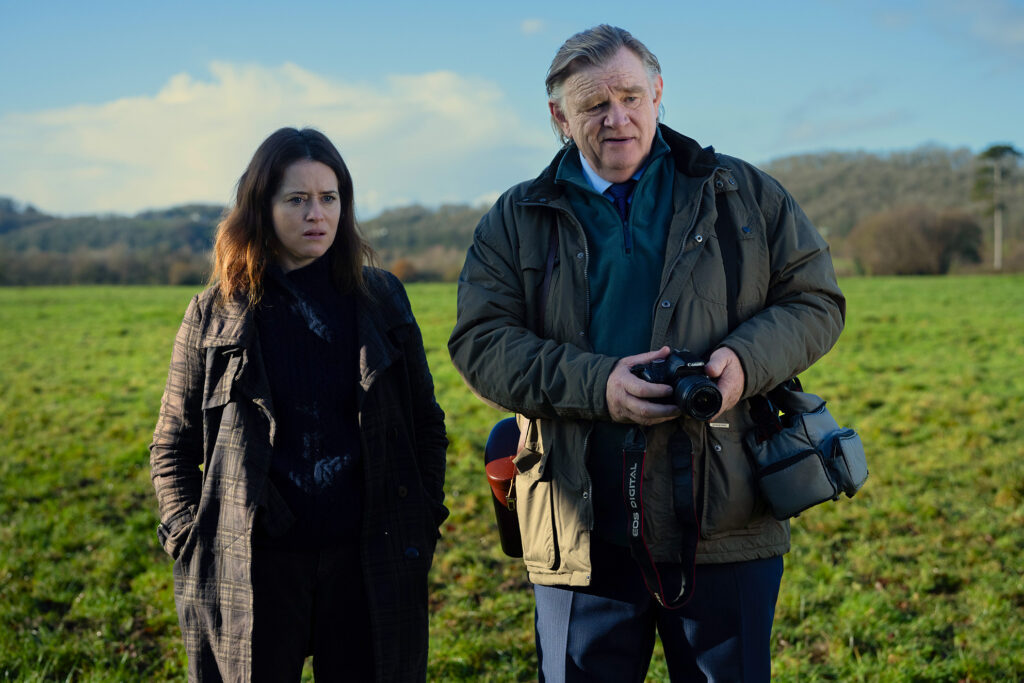
LSJ and Kismet Movies have five double passes for the upcoming British drama H IS FOR HAWK.
When grief takes flight, so does hope. Claire Foy and Brendan Gleeson deliver a powerful, heartfelt performance in H IS FOR HAWK, the visually stunning cinematic adaptation of Helen Macdonald’s internationally bestselling memoir. Follow Helen’s journey as she navigates loss, forms a bond with the wild goshawk Mabel, and rediscovers herself through nature, courage, and love. Experience this moving British drama on the big screen from 28 May. Watch the trailer here.
For a chance to win one of the double passes, email your LawID number to journal@lawsociety.com.au with the subject line H IS FOR HAWK by Friday 22 May.