By Francisco Silva -
The Death of Robin Hood
Director: Michael Sarnoski
Writer: Michael Sarnoski
Cast: Hugh Jackman, Jodie Comer, Bill Skarsgård
Leviticus
Director: Adrian Chiarella
Writer: Adrian Chiarella
Cast: Joe Bird, Stacy Clausen, Mia Wasikowska
The Death of Robin Hood
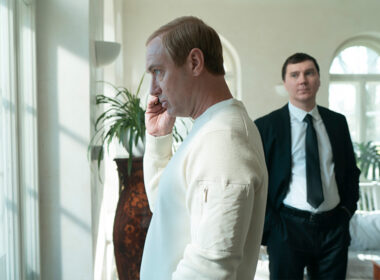
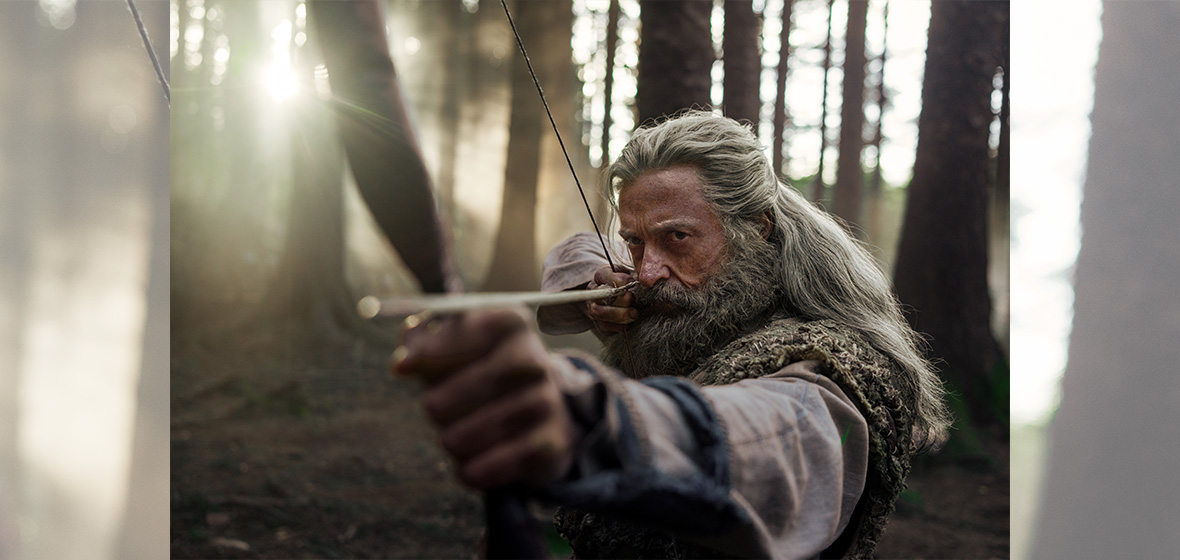
Michael Sarnoski’s The Death of Robin Hood promises a highly requested, gritty version of Robin Hood. Not a retelling. When we meet Robin (Hugh Jackman), he’s an old scraggly vagabond sharing his food with a young female traveller. Unaware of the man in front of her, she uses his name as a way to protect herself. The famous Robin Hood lurks in those woods, and if something should happen to her, he can come and protect the defenceless. Myths, we learn, are just fancy lies that hide the brutal truth that Robin Hood and his men were nothing but violent criminals.
Robin Hood’s myth is a great catch-all. As a sanitised Disney fox, he was jettisoned into modern pop culture as a benevolent symbol of helping the poor against corrupt power. But a communist will see taking up arms against feudalism as an early way of redistributing wealth, and a liberal can gawk at the thought of an organised grassroots community. This Robin isn’t that, though. He’s not charming like Errol Flynn, his hair is long and dishevelled, and he doesn’t speak in inspiring quotes. It’s hard to see how he could’ve led a group of robbers unless he got them with promises of bloodlust. “I robbed and killed for the joy of it, nothing more,” he blurts. And yes, point taken.
There’s also no romance here. No hint of Maid Marion or any long-lost love. Everything we seem to know about Robin Hood, the film tells us, down to the feather in his cap, is a complete lie. He hangs out with Little John (Bill Skarsgård), a brute psychopath who Skarsgård fits like a glove. It’s during one of the two men’s incursions that Robin is injured and taken to an island where a nun, Sister Brigid (Jodie Comer), has built a community that cares for sick and abandoned children. Precisely what people say Robin does, Brigid acts. There’s a leper who befriends Robin with long-winded moral philosophies, there’s a mysterious young man (Noah Jupe) who arrives with probably wicked reasons, and a traumatised little girl called Margaret (Faith Delaney) who Robin recognises.
After the brutal first act, where we see Robin and Little John’s sadistic violence in all its glory, the film zeroes in on our protagonist’s redemption arc. On the island, Robin learns how to be part of a community again and how to actually help others. He hides his identity, as someone in that place might have affected his real work, but he’s also plagued by the ghosts of his past. This is where Sarnoski, who a couple of years ago surprised everyone with the brutal Pig, fails. The Death of Robin Hood adds nothing more to the central question it raises at the start. The promised gritty version of Robin Hood isn’t really there. Sarnoski removes Robin Hood’s ethos but replaces it with absolutely nothing. It comes out as a conservative fantasy that is one crucifix away from becoming a religious allegory for atoning for one’s sins. This isn’t the fierce interpretation Sarnoski thinks it is; it’s a simplistic reduction of a very good idea.
Jackman is sadly miscast in the role. He’s done something similar in Logan (a far superior film that scratches some of the same itches as this one), but his style fits the Marvel popcorn flavour. Sarnoski’s is more contemplative; Jackman can’t reach those depths. At least not as far as Comer and Skarsgård. The former imbues herself in so many secrets that we can feel the pain of her life from the moment she comes on screen.
The Death of Robin Hood is, like the title, very straightforward. The slow pace and old-fashioned dialogue fit the grey, brutal background, but the central philosophy of the story, so perfectly distilled in the first scene, doesn’t expand throughout the rest of the film.
Verdict: 3 out of 5
For fans of the dark part of the Dark Ages, but who also like a little bit of redemption in their story.
Leviticus
It’s in the book of Leviticus that the bible supposedly says that homosexuality is a sin and a man who lies with another man should be put to death. This, as the rest of the book, is debated under mistranslation and lost cultural contexts, but as it’s used, it’s the reason religious fundamentalists are so locked on homosexuality. Mind you, Leviticus also says wearing clothes woven with two different materials is also prohibited, but no big action against the use of Zara puffer jackets.
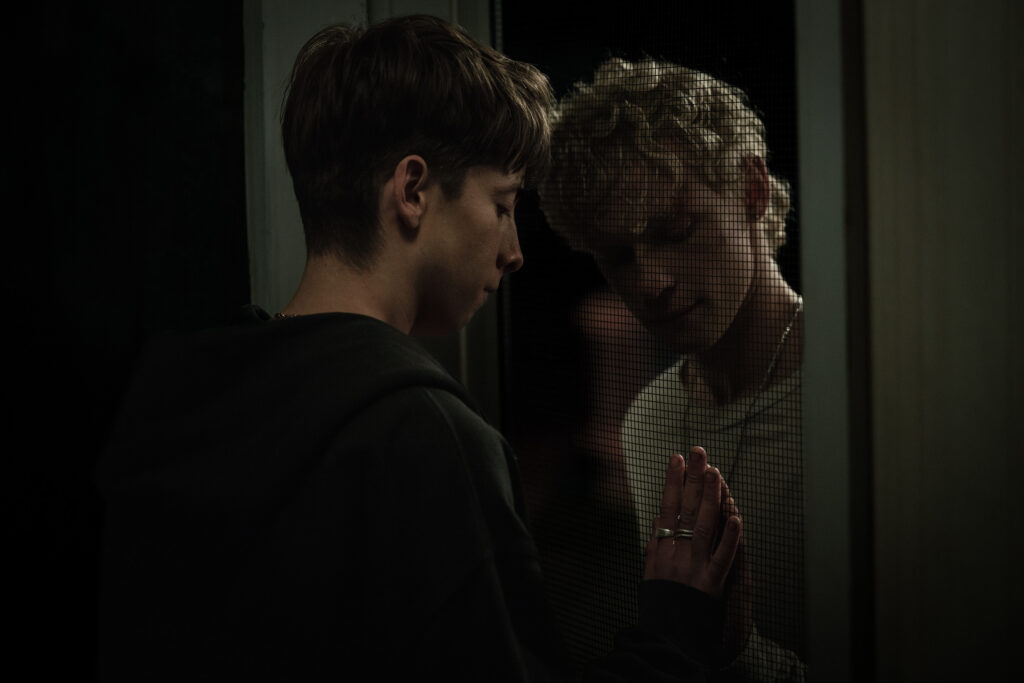
Adrian Chiarella’s Leviticus is a horror thriller about the existential threat of persecution becoming very real, very fast. The idea is simple. Two Australian teenagers, Naim (Joe Bird) and Ryan (Stacey Clausen), hide their lust for each other from their very religious families. When a local boy is mysteriously murdered, the truth comes out, which leads both Ryan’s parents and Naim’s mother (Mia Wasikowska) to hire the services of a local religious cult leader who puts a curse on the boys. Sometimes, when they least expect it, an entity will attack them. The twist is that said entity takes the form of the love of their lives, in this case, the boys see each other.
So, “gay It Follows” is as good a pitch as you can get, but the cruelty of having to run away from your emotional safe space is inherent to the trauma of queer culture. Strangely, after the procedure that starts the curse, religion takes a bit of a step back to be replaced by toxic familial and cultural practices. We learn that there’s no way to break the curse, that this is a fear the boys will forever have to live with or accept their death.
Where Chiarella bites more than he can chew is in the horror part. Leviticus excels in highlighting the dramatic problem, but visually, Chiarella doesn’t seem that interested in the nitty-gritty of horror. Even Hideo Nakata, who made the original Ring and Dark Water, knows he needs to make the audience squirm and be uncomfortable, even when he’s more comfortable with the drama side of the film. Leviticus is existentially horrifying, but where the violence in It Follows and Nakata’s Ring was brutal and cathartic, it fails to be impactful. That shouldn’t be a problem; a film can be what it wants to be, and Chiarella’s PG-approach is as valid as anything, but it’s an artistic decision that doesn’t fit the film’s central message, where the dread of being who you are needs to be elevated. Keeping it so tame is a missed opportunity to make an even bigger impact.
But the film’s point still stands, and it’s a great one. The ending is precisely the right ending for it. A mix of relieving melancholy with frightful trepidation for the future. There are many who will watch this and not only see themselves, but find their anxiety exposed as an open wound.
Verdict: 3.5 out of 5
For queer kids who haven’t yet found a way to express their fears.
Film ticket giveaway: Glenrothan
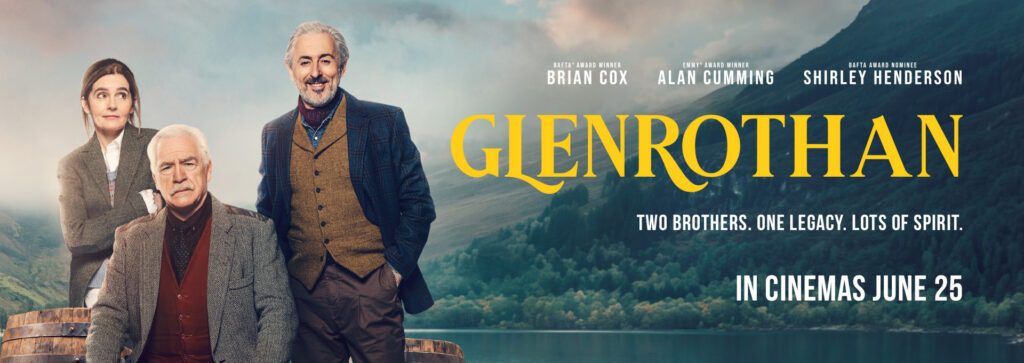
LSJ and Rialto Distribution have 10 double passes to giveaway for the upcoming British comedy drama, Glenrothan.
Marking the directorial debut of famed actor Brian Cox, GLENROTHAN tells the story of a family trying to heal a longstanding rift. When his Chicago blues club burns down, Donal (Alan Cumming) returns to Scotland for the first time in nearly 40 years, forced to confront the family he left behind after a bitter falling-out with his brother Sandy (Brian Cox) and their father. Now struggling to secure the future of the family’s Glen Nairn whisky distillery, Sandy hopes Donal can help preserve their legacy. But Donal’s return is driven by a deeply personal secret that threatens to derail any chance of reconciliation. With old resentments resurfacing and the future of the distillery at stake, the brothers must decide whether forgiveness can finally overcome the past. In cinemas 25 June. Watch the trailer here.
For a chance to win one of the digital passes, email your LawID to journal@lawsociety.com.au with the subject line GLENROTHAN before Tuesday 23 June.