By Francisco Silva -
One Battle After Another
Director: Paul Thomas Anderson
Writer: Paul Thomas Anderson
Cast: Leonard DiCaprio, Teyana Taylor, Sean Penn, Chase Infiniti, Benicio Del Toro
Spinal Tap II: The End Continues
Director: Rob Reiner
Writers: Christopher Guest, Michael McKean, Rob Reiner
Cast: Christopher Guest, Michael McKean, Harry Shearer, Rob Reiner
One Battle After Another
It’s hard not to look at a new PTA film without considering his entire career, or even my whole adult life. He was there during my formative years. It was at the moment I left the cinema for Magnolia, in 1999, that I decided to study film. I watched that film four more times in the cinema on that run. Could quote scenes off the top of my head. My first film education came from watching the filmmakers who inspired him (Truffaut, Altman, Scorsese, Ophüls). When he was visiting my town for the release of Punch-Drunk Love, I considered searching around for where he was just in the off chance I could bump into him and, I don’t know, tell him how much I admired his work? My one real moment of being so startstruck I was speechless, is when he made a surprise introduction at my advanced screening of Inherent Vice. And my one true “kill your heroes” moment came after my disappointment with the Japanese scene in Licorice Pizza. My journey into cinema is directly attached to his work, so my joy in watching a film like One Battle After Another cannot be distilled into succinct words. No, I need time and many paragraphs. Because this film is a masterpiece, and I have to take my time explaining why.
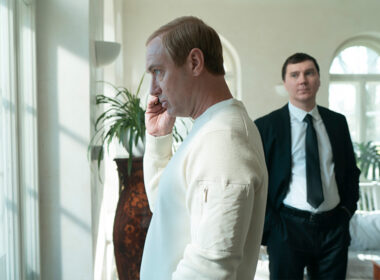
For only the second time in his career, One Battle After Another is set during the current times. Bob (Leonardo DiCaprio) is a revolutionary part of an organised anarchist group called French 75, targeting, amongst other things, immigration centres and banks. The quasi-leader is Perfidia (Teyana Taylor), whose righteous battle is inherent to herself – even when her and Bob’s daughter is born, Perfidia can’t leave the fight. Eventually, she gets caught, and as part of the plea deal, she betrays her group and chooses self-exile over government protection. Bob and the baby change names and town, but make the preparations for the past to one day hit them.
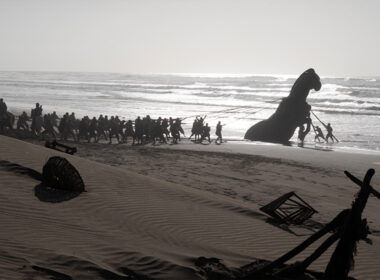
Sixteen years later, it happens. The daughter, Willa (Chase Inifiniti), is a normal teen with the same passion for social justice as her mother. Bob lost his touch and maybe patience to fight and, in his own words, fried his brain with drugs and alcohol. His comfort viewing is sharing a joint while watching the 1966 pro-revolutionary documentary Battle of Algiers.
The man who caught Perfidia, Colonel Lockjaw (Sean Penn), is partially accepted to join a secretive white supremacist society, but to do so, he needs to eliminate any connection to his past. Lockjaw used to have an affair with Perfidia, and he may, in fact, be Willa’s biological father.
So it starts a cat-and-mouse hunt. The revolutionaries, until now dormant, reach Willa before Lockjaw, but Bob can’t reach them because, after so long, he has forgotten the passwords needed to contact them. He’s helped by Willa’s karate sense, Sergio (Benicio Del Toro), who runs an underground operation to move refugees and immigrants, showing Bob there was space and time for his ideology and forming a family. At the same time, Lockjaw uses a group of mercenaries to terrorise the local high school in the hope of finding Perfidia, but accidentally starts a Gen Z riot.
A topical PTA is something to behold. There’s a rift between Bob and Willa’s generation, but also common traits he likes to explore. He’s willing to learn which one of her friends is non-binary to use the proper pronouns, but later has no patience for the revolutionary who finds his approach is “invading his space”. Time has passed, but the fight went on. There’s a contrast between the immigration detention centre of sixteen years ago and now, where children and grown people are crammed into cages. There’s a sense that the bad guys won when Perfidia was caught.
But the fight is exhausting. PTA hits the right note by showing the utmost respect for those who don’t betray their morals. He’s never mean-spirited towards anyone but the white supremacists, portrayed here as a group of rich, old, all-American white men, business owners, politicians, and police officers, probably not too far from reality. On the other side, a group of fractured idealists, each with their own morals and interpretation of these ideals. It’s said the biggest enemy of a leftist is another leftist, but PTA at least shows its passion is in the right place.
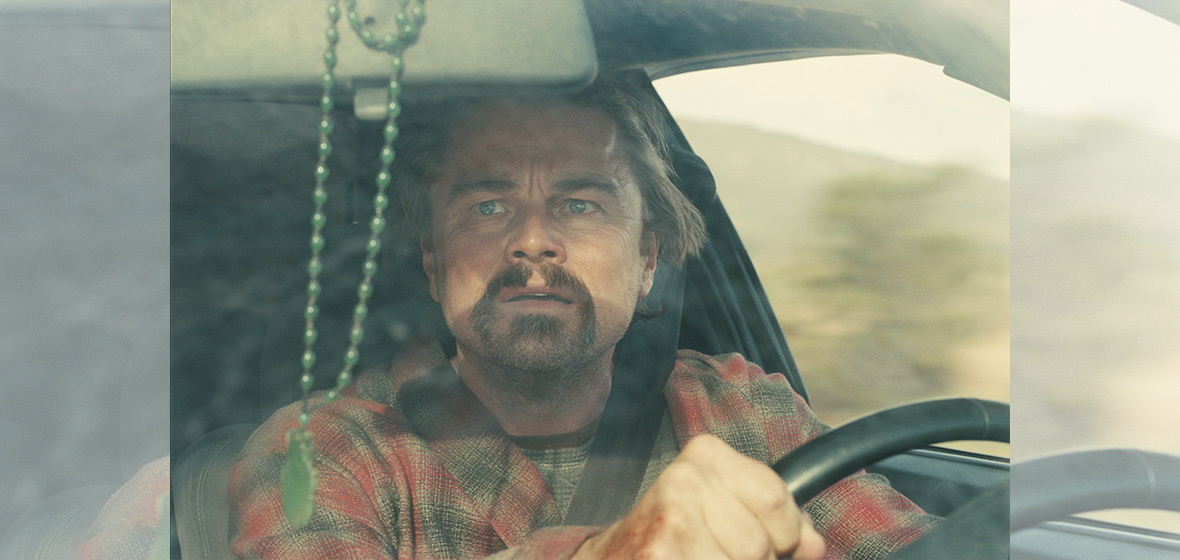
All these ideas are eventually distilled to one simple point. At the end of the day, this is only a film about a father’s love for her daughter (another first for PTA). And he achieves this by keeping his eyes on the proverbial emotional prize. Bob is a good father who, even before the plot kicks into gear, is protective and paranoid about Willa’s wellbeing. DiCaprio plays him as someone who is battling not only an existential enemy but his own shortcomings. Like all fathers, he’s unsure if his instinct is correct, but he doesn’t budge until his little girl is safe.
It doesn’t matter because Willa can look after herself. Inifiniti is the greatest revelation of the film. It’s incredible to see that this is only her first feature. If there’s any justice, this film will do to her what Boogie Nights did to Wahlberg. Taylor is my standout as Perfidia. Fiery and unpredictable, she emanates the kind of energy that people fall in love with and die for.
And then there’s Penn, with a threatening and funny walk like Pee-Wee Herman meets Popeye. His incongruous mumbles sound more erratic as the film goes on. He’s an archetypal villain that Penn resolves by perfectly removing any humanity from him. He’s entirely driven by the mission and the status of joining a white supremacist secret society, of all things.
But this is Paul Thomas Anderson’s film. It may be his most approachable or at least easiest to enjoy. It’s paced impeccably with a slightly over two and a half hours runtime. The first 30 minutes radiate the same energy as Scorsese’s Casino. When the plot finally gets going, it doesn’t slow down even though it effectively cuts between three characters destined to converge in the same place. He shot it all in VistaVision, a horizontal form of 35mm that allows for more expansive negative space and higher definition, brighter colours and is less grainy. For the most part, it’s fine; the cinematographer Michael Bauman (who previously worked with PTA on Licorice Pizza) uses this to push on these intense, glaring, bright and detailed colours. But it’s in the end car chase scene that the format shines through. Shot with what looks like long telelenses, it adds a vertiginous touch to a chase on a straight line in the desert. It’s such a good use, and it looks magnificent, barely any grain.
One Battle After Another is the kind of masterpiece that film lovers are excited to talk about. It’s layered and complex, but, like the best, returns to a simple, effective idea. It’s a film that explodes on every frame, not with anger but with the grounded reality of an experienced person. Seeing the evolution of PTA, from the emotional open-heart surgery that is Magnolia, his third feature, to a film like this is like witnessing an artist who constantly builds his own place in this ever-changing world. He is like Del Toro’s character, caring but still true to his ideals. Because that passion should never leave one person, it should never stop inspiring us. In one of the best needle drops in the film, PTA brings Gil Scott-Heron’s battle cry The Revolution Will Not Be Televised. “The revolution will put you in the driver’s seat // the revolution will not be televised”. Maybe not, but it will be at a cinema near you.
Verdict: 5 out of 5
For everyone who once believed they could change the world against white supremacy and patriarchy. And for everyone who never misses a PTA, which I think is in the Venn diagram of the previous group, it makes a circle.
Spinal Tap II: The End Continues
It’s fitting that the sequel to the mockumentary that grandfathered all mockumentaries comes simultaneously as the new Paul Thomas Anderson. The original This Is Spinal Tap came out when PTA was only 14, but the two went hand in hand for my generation. There was PTA for the cerebral emotional wrecking days; for the comforting viewing, there was Christopher Guest, Michael McKean and Harry Shearer. Or maybe that was just me.
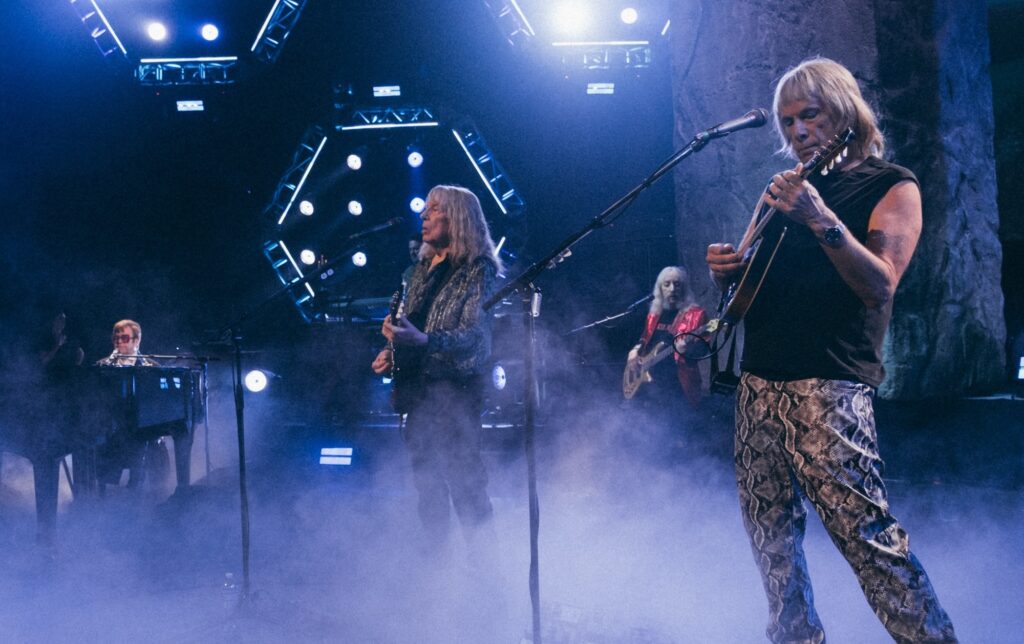
Catching up with the rock metal group, director Marty DiBergi (Rob Reiner) chronicles the lead-up to a reunion concert. Considered mostly forgotten, one of their songs goes viral after a big country star covers it on social media. Hope Faith (Kerry Godliman), daughter of their old manager Ian (actor Tony Hendra passed away in 2021), realises their contract still has one final gig, and she realises this is the right time.
So they re-unite Nigel Tufnel (Guest), David St. Hubbins (McKean) and Derek Smalls (Shearer) for one last celebration of their work, with the help of some celebrities including Paul McCartney, Elton John, and a bunch of drummers scared to take over the role because of a curse that saw eleven (or maybe twelve) drummers in their history dying of weird freak accidents.
There is not much about it, but it gives Guest, McKean, and Shearer a chance to return to their comfort zone. Those are the moments when the film shines. The style of improv comedy that is now popularised by The Office started and was effectively perfected with Spinal Tap and the subsequent films Christopher Guest made, some of which are, if we’re being honest, better than This Is Spinal Tap. In old age, the three make it as if none of the characters have left them. They are older and, therefore, not as full of themselves, but many details that make the characters so unique remain.
If there’s one thing that fails, it’s Reiner, who was understood not to be as talented as the rest of the cast in the first film (he also directs both films, as well as playing the director of the fake documentary). This time, he tries to put himself more on the screen, and after all these years, he hasn’t got much better. His contributions would’ve been bad if they didn’t fit the role of an older boomer trying to be funny to the cool kids. Alas, it’s all accidental.
Spinal Tap 2: The End Continues is only a treat for the fans and no one else. There aren’t many cheap callbacks to the original film (don’t expect anyone saying an amp goes to 11), because no one is trying to hit lightning in a bottle twice. If anything, it’s in simplicity that its pleasure comes, even if not much in it is memorable. The end is a bit too abrupt, but on its way, there are some golden moments, like Paul McCartney giving the band a tip in a song that Hubbins dismisses, and some great lines from a cast of experienced improv professionals, including Chris Addison and Nina Conti.
The original This Is Spinal Tap successfully re-invented the wheel, creating a whole new genre. There has never been anything like it since. This sequel is only a way to hang out with that crew one last time, and if anyone deserves one last turn at singing Stonehenge, it’s these boys.
Verdict: 3 out of 5
For fans of the original film who miss the Tap. Could this have been a direct-to-stream project? Maybe, but after a career so true to himself, Guest (particularly Guest) deserved this one last run.