
By Francisco Silva -
Mother Mary
Director: David Lowery
Writer: David Lowery
Cast: Anne Hathaway, Michael Coel, Hunter Schafer
A Private Life
Director: Rebecca Zlotowski
Writer: Anne Berest, Rebecca Zlotowski, Gaëlle Macé
Cast: Jodie Foster, Daniel Auteuil, Virginie Efira, Mathieu Amalric
Mother Mary
“Don’t listen, this song is cursed”, the screen flashes these words at the start of David Lowery’s Mother Mary. We don’t know if it’s a warning, or a promise, and I’m not sure that by the end you’ll have a specific answer. “Don’t listen” is too much to ask when the talent behind the original songs in this film include FKA Twigs, Charli XCX and Jack Antonoff. “This song is cursed” sounds like a pretty good time.
Mother Mary is an intense sensorial experience. The story here is not as important as the raw emotion Lowery exposes, but for good measure I’ll present you with its compelling premise (if that helps to convince you to watch this in the big screen). Mother Mary (Anne Hathaway) is a pop superstar modelled between Lady Gaga and Taylor Swift, whose dedicated fandom deconstructs her music and poetry with the religious dedication of God-fearing fanatics. The religious parallel is on purpose, not only because of her stage name (we never find out her real name, doesn’t even matter if she has one) but by the visual antics of her show, including Virgin Mary imagery and a halo crown she always wears in her performances.
When the film starts, Mary is preparing the first gig of a new tour, but something doesn’t sit right, particularly the dress. “Doesn’t feel like myself,” she confesses. She runs away to the English countryside and meet her ex-costume designer Sam (Michaela Coel), an artist that accompanied through the beginning of her career, but that Mary dropped when her fame started to become stratospheric. Sam, who harbours conflicting feelings about Mary accepts the task of designing a new dress over the weekend in time for the performance. And so, the two women, lock themselves in a cottage that has the airs of a haunted castle, and slowly deconstruct their past and their insecurities until the work is done.
It’s hard to characterise Lowery. Visually he’s one of the best ones currently working, and his poetry is confronting. In Ghost Story follows ghost (literally someone with a white sheet with eye holes) observing the life in a house across the ages. It included a 5-minute continuous shot of Rooney Mara eating a pie in silence. Then there’s his Disney films (Pete’s Dragon and Peter Pan & Wendy) that merge a childlike wonder with something akin to Terrence Malick. Lowery doesn’t compromise, neither to the audience nor to the studio. Very few filmmakers are brave like that.
This time he learned from his best film, The Green Knight, in the sense that the lyric poetry has a strong theatrical component. The film uses very few sets, and most of them purposely artificial to show they were built on a sound stage. Most scenes are structured like theatre acts, involved by a string of monologues by the two protagonists to the exception of the last one by Sam’s assistant, Hilda (Hunter Schaffer).
It’s a profoundly feminine film, where the entire cast is (which also includes FKA Twigs as a medium who channels a mysterious spirit) female. There’s a different kind of energy because of that, one that pulsates with this deep raw emotion that is hard to comprehend but real enough to be palpable. The relationship between Sam and Mary is never disclosed but there are enough hints. It’s love, maybe not physical, but maybe yes. It’s also jealousy and disappointment. It’s all of it, exposed in one of the most striking scenes as a literal gaping wound from which a spirit (a female one as well) enters and leaves their bodies.
The rollercoaster Lowery builds maybe isn’t the most philosophical one, but neither is the most compelling poetry in the world. Lowery creates a visual palette that leaves clues about his intentions, asking to be studied and scrutinised. The colours blue and red are used in key moments. The camera moves like Peter Greenaway and Stanley Kubrick, which is to say, theatrical and clinical. In one of the film’s best scenes, Mary enters and leaves the stage accompanied by her dancers showing the degenerative progress of her psyche in the passing of time. It’s one single shot that progressively becomes more artificial and dehumanising as Mary loses her sense of self.
And then there’s Coel. Quietly angry, like her character in masterpiece TV show she wrote, I May Destroy You, but now as an adult whose days of rage are behind her, though still harbouring them in her heart. She has a magnetic intensity that shuts you up. Doesn’t chew the scenery, all concentrated passion.
All the elements, the art direction, the music, the performances, the unique visual experience, merge together in its climax, but when the film needs to tie everything together, I felt it lacked a little of fierceness it was promising. Maybe that’s a misstep. Maybe Lowery flew too close to the sun and ended up betrayed by its hubris. Though, I concede, it could just be me. I accompanied, in trance, the entire film until I was yanked back to the reality before the credits rolled. I concede it can be one of those that will click in on a second viewing.
And yet I won’t deny the grandeur of the experience up until then. A uniquely beautiful film, injected by female energy, is a song everyone should listen. A curse that can heal.
Verdict: 4.5 out of 5
For pop millennials who think modern life, and soulless capitalism, made them lose their core self.
A Private Life
One of my favourite pieces of trivia I like to share is that Jodie Foster speaks perfect French. Hey, did you know that Jodie Foster speaks perfect French and dubs every single one of her performances to French? She had a very small role in Jean-Pierre Jeunet’s A Very Long Engagement in 2004, but only this year did she get her first leading role, in the gentle psychological thriller A Private Life.
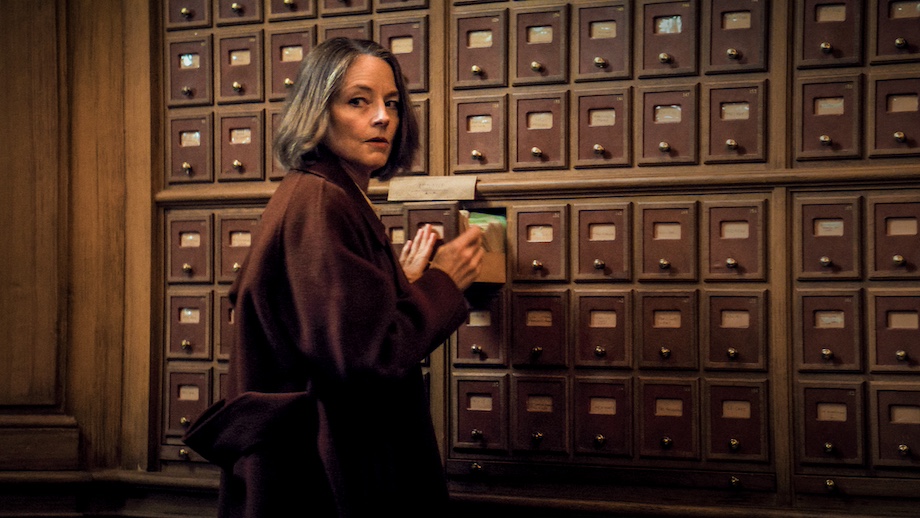
Foster plays Lilian Steiner, an American psychiatrist who lives in France and becomes convinced the recent death of her patient, Paula (Virginie Efira), was murder. Lilian, who is having a small crisis of confidence after one of her patients fires, claiming a couple of sessions of hypnotism did a better job at fixing his issue than years of therapy, is then accused of being responsible for the death of Paula by her husband Simon (Mathieu Almaric). With the help of her ex-husband Gabriel (Daniel Auteuil) she sets out to investigate Paula’s past.
Director Rebecca Zlotowski, who in 2023 directed Other People’s Children, is the type of serviceable filmmaker that can deliver intelligent adult entertainment without much pomp and circumstance. It helps that here she’s working with actors who can easily turn on the enjoyable charm effortlessly, particularly Foster, whose deer-in-the-headlights sleuth is never not funny, Auteuil, who manages to convinces us he still has a lot of sex appeal, and Almaric who is perfect at making us guess if he’s a villain or not.
The French know films like these are the bread and butter of the cinema experience. It can’t all be larger-than-life philosophical meanderings. It doesn’t have to change the world. Sometimes it just needs to change your day.
And I respect that. Zlotowski’s measured and efficient direction is not groundbreaking but it’s also not trying to be. She wants to take her audience on a very simple journey but makes sure no one is distracted by petty little things like cinematic artifice.
The problem is that the story of A Private Life can never live up to the expectation its interesting premise promises. Near the end, Zlotowski corners herself in the threads of the plot and is then forced to use cheap tricks I trusted the film was better than. I understand character journeys, I just don’t believe Lilian needed to be proven wrong on her opinions of hypnotism. And for that to become an important plot point is to try to have its unearned cake and it eat it too.
I’ll take something flawed and simple like this, any day, though. How Zlotowski navigates the sexuality of 60-year-olds is a lesson to other filmmakers. On that matter, her characters have emotional maturity we rarely see in genre films like this. Makes up for a worthy time. And sometimes that’s all we ask for.
Verdict: 3 out of 5
For anyone who knows that to be old doesn’t mean to be boring.
Sydney Film Festival ticket giveaway
The 73rd Sydney Film Festival program is out now, bringing a great selection of upcoming releases, retrospectives, and films eager to be discovered from June 3 to 14. From the 13 titles in competition, special presentations, and documentaries, this year’s selection includes 19 films direct from Cannes, including Cristian Mungiu’s Fjord and Jane Schoenbrun’s Teenage Sex and Death at Camp Miasma. Discover the entire program here.
Highlights from us here at the LSJ Online include the aforementioned titles (Schoenbrun’s previous I Saw the TV Glow was our fourth-best film of 2024), Sheep in the box (Hirokazu Kore-eda), Parallel Tales (Asghar Farhadi), Minotaur (Andrey Zvyagintsev), and Leviticus (Adrian Chiarella). The program this year also includes a showing of Brazilian cinema curated by the director of The Secret Agent, and this year’s President of the Jury, Kléber Mendonça Filho, of which LSJ Online recommends Black God, White Devil (Glauber Rocha) and Neon Bull (Gabriel Mascaro)
For a chance to win two ticket, email your LawID to journal@lawsociety.com.au with the subject line SFF by Tuesday May 19.