By Francisco Silva -
Father Mother Sister Brother
Director: Jim Jarmusch
Writer: Jim Jarmusch
Cast: Adam Driver, Mayim Bialik, Tom Waits, Cate Blanchett, Charlotte Rampling, Vicky Krieps, Indya Moore, Luka Sabbat
The President's Cake
Director: Hasan Hadi
Writer: Hasan Hadi
Cast: Baneen Ahmad Nayyef, Waheed Thabet Khreibat, Sajad Mohamad Qasem
Father Mother Sister Brother
The cinema of Jim Jarmusch is becoming amusingly satirical. His 2019 post-modern zombie-spoof The Dead Don’t Die seemed to herald a new era of observational cinema with direct social commentary by Jarmusch, the man who was once the coolest filmmaker in the world and suddenly woke up with 70 years old, surrounded by people he doesn’t quite consider but who consider him the grooviest of artists nevertheless.
If The Dead Don’t Die didn’t work for me, it’s mainly because the type of in-your-face spoof comedy doesn’t fit Jarmusch’s self-awareness. So, it all comes across as a big wink to the audience, the equivalent of a boomer nudging you with his shoulder after he makes an obvious joke.
Jarmusch works better in silences, with real people keeping secrets from everyone and making jokes that only they understand. It works with its back to the audience, as if he’s having a conversation to himself that the audience is luck to overhear.
Father Mother Sister Brother keeps the new kind of social commentary without the ill-suited comedy gags. So, in a way feels like a classic Jarmusch film but with an added sprinkle of modern musings, which in case brings a little bit of charm.
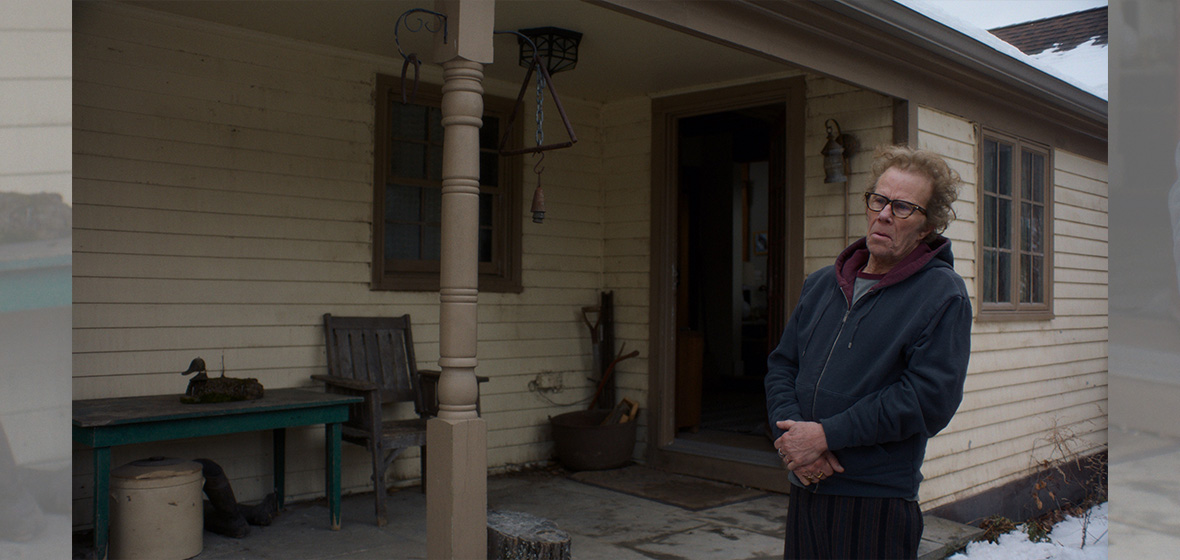
The title refers to the three vignettes that make the story of the film, all slightly like each other both narratively and thematically. Father follows to siblings (Adam Driver and Mayim Bialik)) visiting their ageing and slightly estranged father (Tom Waits) in the countryside. The dynamic of the siblings is gently put to the test by the fact that one of them has been giving more financial help than the other, but also but the slight impression that the father is pretending to be in financial hardship.
In Mother, two sisters (Cate Blanchett and Vicky Krieps) visit their ageing rich mother (Charlotte Rampling) for high tea. The younger sisters hide her true nature and financial stability from the rest of the family, while the other prefers a humble and successful professional life.
And then there’s Sister Brother, about two mix-raced twin siblings (Indyia Moore and Luka Sabbat) returning home to Paris after their parents died in the plane crash. The siblings reminisce about their childhood, the importance their parents had in their upbringing, and the idea of moving from the place where your memories live.
The third, and in my opinion the best, story is an outlier from the other two, particularly because it has a positive and functional image of family. Even if their parents were alive, it gives the sense that their relationship with them was more familiar than the other protagonists. But Jarmusch connects all three stories with these little hints that almost look like verses in a larger poem, rhyming each story with each other. For example, ever segment includes an almost magical detail at the start when a character observes a group of kids skating. Are they thinking about their own fleeting youth? Are they thinking about their inexistant freedom?
And then there are the simple details like the colour palettes, where each story has its own, a reference to cars in the conversation and to drinking tea. It’s like Jarmusch is joining each story, telling us where they fold together.
The result is a melancholic and contemplative piece about complex relationships in the family and how different it makes us from an individual (the twist in the first segments drives the point of being someone different around your own blood across). But Jarmusch’s dry and observational style is slightly at odds with each other. Especially in the second segment where, despite the fantastic performances, the story unravels without reaching a satisfying idea.
For the most part the performances are strong. Krieps as the challenging daughter, with died pink hair and strange will to one-up her sister, is especially brilliant. But Bialik stands out as the one who couldn’t keep up with the pedigree around her, missing both the sadness and the pensive shtick of a Jarmusch character.
Father Mother Sister Brother is a good film about relationship that works like a lovely poem but doesn’t add anything to its ideas. It’s an intelligent ellipsis, an etcetera. It’s enjoyable, but in the filmography of an artist whose thesis are philosophical powerhouses of coolness, it plays like a lesser piece. And in Jarmusch, something lesser is still better than most.
Verdict: 3.5 out of 5
For anyone dealing with their own sibling/parents’ issue. Fear not, this is not triggering. If anything, it’s cathartic.

The President’s Cake
Hasan Hadi’s The President’s Cake is a film that is reminiscent to now flawless tradition of neo-realist Arabic-films centred around kids. Iran had Abbas Kiarostami’s Where Is My Friend’s House? and Jafar Panahi’s the White Balloon. Saudi Arabi had Capernaum. And now Iraq has The President’s Cake, a story about children traversing, in their own way, an oppressive world of adults.
Set in the 90s, the subtitle at the start explains that every Iraqi was supposed to celebrate Saddam Hussein’s birthday despite rampant poverty in the middle of the way against the United States. In the Mesopotamian marshes, Lamia (Baneen Ahmad Nayyef) is a little girl that lives in a small island with her grandmother Bibi (Waheed Thabet Khreibat). At school, Lamia’s name is chosen to provide the class with the cake for Saddam’s birthday, with the repercussion on failing to have potential serious effects on both Lamia and her grandmother. Faced with no money to buy the ingredients, Bibi tries to send Lamia to a friend’s place in the city, thus saving both if the police are called in case they fail to bake a cake. But Lamia, ever resourceful, escapes and joins with her classmate Saeed (Sajad Mohamad Qasem), the son of a beggar and assigned by class to provide the fruit.
The two walk around the city trying to convince merchants to give them the ingredients or doing small menial jobs for a couple of eggs, while Bibi searches for them.
Their journey is compelling because Hadi shoots the film through the eyes of an adult. So, the context of what is happening around them, lost on the children, has strong effects on a savvy audience. So, the world is populated by extreme propaganda, by the threat of death either through the hands of the army or an American bombing. But also, by the crooks, ready to exploit and steal those who need help. In a moment we see a shop owner convincing a pregnant woman to sleep with him for a bag of lentils, and in what is one of the most dramatic sequences, 9-year-old Lamia is taken by another man to a racy movie for the promise a bit of baking powder.
But above it all lies a sense of community, which is a constant in this unofficial subgenre of Arabic films. Culture is put on display and celebrated, as well as the idea that most of the people stand together and in support of each other, against the oppression of their own government and the invasive imperialistic forces.
It’s surprising this is Nayyef’s first feature. Lamia is a complex character, strong and decisive even when she knows she can’t fight back. But the film asks her to show anger, sadness, worry and grief. It wouldn’t have been easy for an experienced actor, but an amateur child with such grasp of emotions probably makes hers one of the most exciting performances of the year so far.
The President’s Cake is a gorgeous to look at. Cinematographer Tudor Vladimir Panduru recreates in digital a perfect seamless look of 16mm, with these popping colours and light-dark contrasts that give it an almost fairytale-like touch against what is a grim and harsh reality.
The script, written by Hadi with the help of Hollywood super screenwriter Eric Roth (Dune, Forrest Gump), falls into a couple of expected Hollywood traps, missing the opportunity for the proud and varied tradition of Arabic storytelling to drive the story. So, it’s sometimes contrived and helped by a deux-ex machina at the end, though if there’s a vindication of Hadi’s instincts, it’s that none of this detracts from the film’s absolute truths, punctuated by an ending that does what endings should always do: bring it all into perspective.
Verdict: 4 out of 5
For a reminder that beyond the dehumanising world of politics, there are very human people