
By Cat Woods -
Lawyers are competitive and strategic by nature, so it’s not surprising that there are plenty of athletes in the NSW legal profession. In the commitment, perseverance, competitiveness, and endurance it takes to compete in Ironman, triathlons, marathons and the like, the same qualities shine as those required to excel in law. Likewise, the skills of listening to and learning from successful mentors and cohorts serve both athletes and lawyers well. LSJ Online spoke to accomplished endurance athlete, former neuroscientist, and lawyer Aaron Camp about the role training and competition plays in his professional and personal life, and how they interrelate.
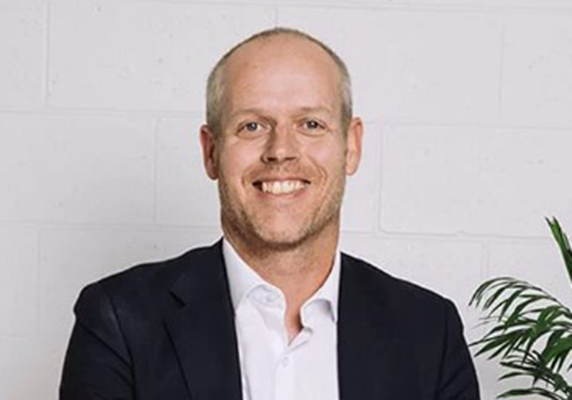
Aaron Camp, a senior associate at Tonkin Drysdale and Partners in Sydney, specialises in commercial law and wills and estates. His stomping grounds are the Supreme Court, Local Court and NSW Civil and Administrative Tribunal over guardianship matters, and contested commercial and estate disputes. Camp has also served on a number of boards including as Director of Member Services for Surf Lifesaving Central Coast, and the independent University of Sydney Ethics Board.
In conversation with LSJ Online, Camp draws the parallels between endurance sports training and the demands of a career in law.
“Going to court can be stressful, it can be difficult and the most obvious parallel to training is resilience,” he says. “In court you can’t control your opponent, and in endurance sport, you can’t control your opponent, the weather, the road surface on your bike, mechanical failures … so you need to be able to deal with that lack of control. Most lawyers and triathletes would say the same thing: the way to deal with it is to prepare.”
Camp elaborates: “When it comes to potential situations, acknowledge them, think about them, prepare for ways that you might be able to address them. And if you do that, then it’s not so emotional when something goes wrong or something unexpected happens. You’re not paralysed by that because you’ve already dealt with the fact that these are things that could happen. You just move through it unemotionally, rationally, and you fix your puncture on your bike, or you acknowledge the gap in your evidence and continue on.”
This strategic approach to law and sports may be a product of experience, or personal qualities, but Camp’s previous career as a neuroscientist also shaped his approach to working symbiotically with stress in his professional and personal endeavours.
“The ability to deal with stress is a physiological process that we all undergo and it’s no different in sport, law, science or any other part of life,” he acknowledges. “What we know about stress is that it’s not always bad. We hear a lot about stress being terrible, and long-term, chronic stress is unhealthy, but stress also plays a really important role in our performance, be it either in court, in any aspect of life, or in sport, too. If you have zero stress, so your body is just not reactive to the environment, you’re not going to perform. Likewise, if you have too much, you become paralysed, you’re unable to rationally, logically, work through problems. So, you make poor decisions, you do not perform at your best.”
To that end, the transition from neuroscience to law wasn’t an overly stressful one.
“I did find it easy,” concedes Camp, “but only in the sense that I spent my entire life in university. I studied difficult things for a long time, and then I was working in neuroscience, studying difficult things. I studied for a long time, studying difficult things, and then working as a neuroscientist, trying to understand difficult things. So, I know how to study, how to learn for myself, at least, so that aspect of it wasn’t difficult for me.”
Indeed, Camp believes the two jobs are pretty similar.
“As a neuroscientist, my job was collect data from undertaking experiments, analysing that data, forming a hypothesis, and then delivering or presenting that data somehow, whether that’s a grant application or a journal article, or a conference presentation. In law, it’s the same. I collect data from clients or from documents that are provided, I analyse that data, listen to what they say, read the documents, understand what they’re about, reach a formal position, or a hypothesis, about the best approach moving forward. And then I present that, either sending a letter to somebody or appearing in court and presenting an argument. It’s actually the same job, the same skills.”
“One of the reasons I moved to law was that, in comparison to trying to cure diseases, law moves really quickly.”
The pace is the key difference, he explains.
“One of the reasons I moved to law was that, in comparison to trying to cure diseases, law moves really quickly. It’s rewarding for me to be able to help somebody who’s sitting across from me, on the other side of the desk, in a sensible amount of time. For a neuroscientist, we’re making small, incremental improvements or building knowledge over a long period of time, and yet, while you’re making a difference, it’s generally something where you don’t see the outcome for a patient in your lifetime.”
Perhaps this is the lure of Ironman competitions, triathlons, and law courts.
Case says his passion for sports and training are reflected in extracurricular workplace activities embraced by his colleagues at Tonkin Drysdale Partners.
“One of the first things that happens in my workplace is that new colleagues get an invite to join the lunchtime walking club, and then some will move on to the run club – which is just me trying to convince people to run with me after work – and some people have gone on to city-to-surf runs, half marathons. Some show up at the Gosford Velodrome [within Adcock Memorial Park] on their new bikes. It encourages them and it encourages me, so anytime someone comes with me is good motivation for me.”
Camp’s longtime engagement with surf lifesaving clubs, both personal and professional, has resulted in many of those he meets to entrust Camp and Tonkin Drysdale Partners with their legal matters.
“Our firm has a close association with surf lifesaving on the Central Coast and has for a long time.”
This year, Camp has planned out his key events well ahead of time (because it’s all about preparation, preparation, and preparation).
“I always do the Run Huskisson half marathon [21.1km] event down the South Coast. It’s a good warm-up event at the start of my yearly training. My wife registered me for the Sydney marathon, which is by ballot, so they pick out random names and somehow, I got selected. The big one for me, and what I train for every year, is Ironman Australia in Port Macquarie. That’s in October 2026, and the goal this time is – for once – to try to relive the past and get a “pb” (personal best). That original PB was before kids.”
Ironman Australia tasks competitors with a 3.8km swim in the Hastings River, 180km cycle along the Pacific Ocean, and a 42.2km run in the heart of Port Macquarie.
Camp says, “I’ve been doing Ironman Australia since 2014. This will be my eighth or ninth completion. I did fall off my bike and get injured one year.”
On his bucketlist? The international one that has had mere mortal athletes shivering in their worn-out runners since 1978. Camp has his eye on the Ironman World Championship triathlon held annually in Kailua-Kona, Hawaii. Over one day, competitors face 226 kilometres in extreme heat, surrounded by lava fields and hundreds of endurance athletes. The event is divided into a 3.8 km swim, a 180km bike ride, and a 42.2km marathon run.
“One day, I’d like to do the Ironman World Championship in Kona, but my chances rely heavily on the Ironman legacy program,” he says. “That program means I can rely on legacy to let me in, rather than [entry] based on performance times.”
The Ironman Kona Legacy Program was introduced in 2012, but the stringent requirements still rule out most athletes. For example, applicants must have been an official finisher in a minimum of 12 full-distance Ironman-branded races (226km) prior to application.
“Having an outlet to flex the body, not just the mind, can only be a good thing.”
Whether it’s a half-marathon, an Ironman, or any other endurance event, Camp says: “Mindset is crucial in these long events. Without question, there will be times you feel awful. Especially with younger triathletes, they can end up over-exerting and diverting from the plan and it just goes wrong from there. Life teaches you that you can keep going and it gets a bit easier at that point, even if I know it won’t be great.”
Though lawyers more inclined to endurance events of reading rather than running may find this hard to relate to, Camp says, “I really believe that Ironman feels like it’s a long way away, but anyone can do it if you set a goal and you’re determined. Having an outlet to flex the body, not just the mind, can only be a good thing. I think it’s a healthy thing to do. I think it makes you better at all the other things that you do in your life as well. I would definitely tell people to get out there.”
Without intending to stoke rivalry between Australian lawyers and their New Zealand counterparts, it’s important to recognise a recent Ironman World Championships success story. In 2020, Wellington-based Natalie Gaskin, of Johnston Lawrence lawyers, came 10th in her age group with a time of 10 hours 38 minutes. She’d last competed at Kona in 2014.
Whether it’s Kona, Kirribilli or Kangaroo Point, NSW lawyers can find a comprehensive list of fun runs, marathons, triathlons and similar events listed on the Running Calendar Australia. On 15 March, the Orange Running Festival is an ideal warm-up to the TCS Sydney Marathon on 30 August.