By Francisco Silva -
Director: Ildikó Enyedi
Writers: Ildikó Enyedi, Tina Kaiser and Corinne Le Hong
Cast: Tony Leung, Luna Wedler, Enzo Brumm and Léa Seydoux
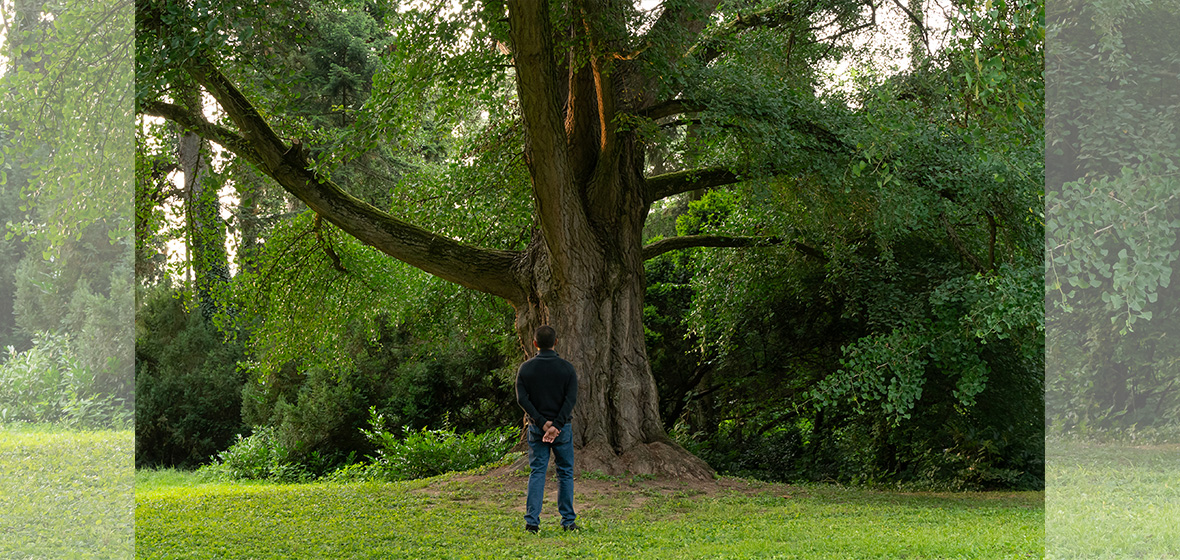
At the centre of Ildikó Enyedi’s quiet and gentle new picture is a large gingko tree in the botanical gardens of a German University. Maybe it’s not at the centre. More like on the side. At the edges. A passive witness of life that neither interferes nor judges. It’s just there, living, growing, becoming a constant in the lives of the people who see it every day. In Wim Wenders’ beautiful Perfect Days, the protagonist, a Tokyo toilet cleaner, eats his lunch every day in the park in front of another ginkgo tree. Every day he takes a photo of its leaves and one day confesses to his niece that the tree is his friend. In Silent Friend, the tree is not humanised quite like that, but almost as a gentle giant, maybe even a deity. A constant in our lives.
The film follows three protagonists in three different eras. In 2020, Tony (Tony Leung), a Hongkonger neurosurgeon who, like the tree, moved from the Eastern Asian to the German university, and during the isolation of the pandemic, finds a renewed interest in his research with the help of a French botanist, Dr Alice Sauvage (Léa Seydoux). Then there’s Hannes (Enzo Brumm), a student in the 1970s, far away from the farm that sheltered him, who is subject to a whole new world of philosophy, human interaction, and romance. And finally is the story of Grete (Luna Wedler), who is the first woman admitted to that University in 1908, against the disgruntled will of the all-male panel of professors.
Enyedi enjoys exploring these three people who, in their own way, are misfits. Tony marries his own cultural isolation with the disconnection society is driven through during the lockdown. The relationship with Sauvage is almost an emotional necessity, and it leads to this almost spiritual experiment where he connects the same brain scanner he uses on children to the tree. “As long as you accept the results will be vague in scientific terms”, Sauvage tells him, but she could also be talking to the audience. Telling us not to expect definitive truths, but just the realisation that life exists even where we can’t see. Vague in scientific terms, profound in philosophical ones.
I understand that this film isn’t the easiest sell, but it’s not a particularly hard watch. Clocking a little over 140 minutes, Enyedi’s camera stands still and slowly observes his characters in what can be defining moments of their lives. Each story ends with what feels like the end of a chapter, not the end of a book, as if Enyedi could always return to them in a different project and add on those elements. It’s the world that changes, that feels definitive. The tree, almost eternal, is a great metaphysical unifier between humans who are finding their own meta, or physical, comfort. Hannes feels disappointment, Tony indulges in human interaction, and Grete experiences inspiration. It’s all profoundly connected, as long as you accept that the results will be vague in scientific terms.
Silent Friend is a serene film that I never found boring. Enyedi’s images, with cinematographer Gergely Pálos, are evocative. Sometimes it reminds me of another serene filmmaker with a grasp of the relationship between nature and metaphysical – Apichatpong Weerasethakul. It may be a patient film that demands patience from its audience. But it rewards us with a profound truth that too much noise and drama would distract us from.
Verdict: 4 out of 5
For anyone who was ever caught looking at a plant and could see the whole universe in it.