

By Henry Ea -
Australia’s space industry is booming, launching new legal questions about property rights and orbital liability. With cheap rockets and private ventures driving a “wild west” in space, decades-old treaties are obsolete. As Australia aims for the Moon in 2026, we explore how lawyers must build the urgent new global framework for this high-stakes frontier.
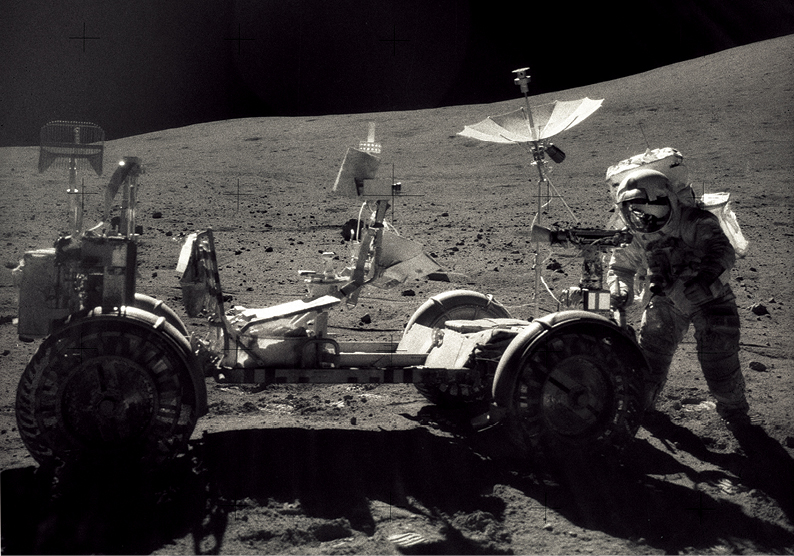
The world held its breath. On 20 July 1969, as a lone foot met the Moon’s dusty surface, humankind’s greatest ambitions were realised. The historic moment was a global spectacle, and Australia was the silent partner making it possible.
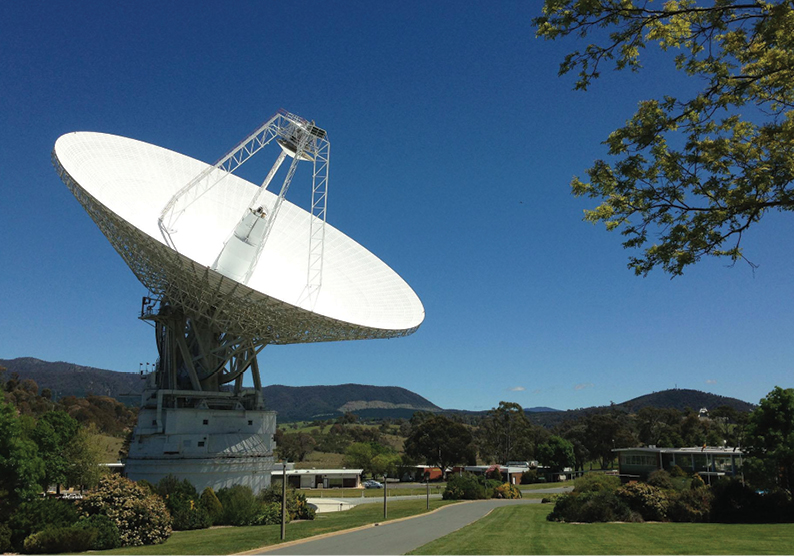
The crucial link beaming those first grainy, unforgettable images to an audience of 650 million people around the world was a small 26-metre dish at Honeysuckle Creek in Canberra, and then later in the broadcast, Houston switched to ‘Murriyang,’ the iconic 64-metre radio telescope, also known as ‘The Dish’, at Parkes in New South Wales. This essential role was no accident: Australia had already been providing vital space tracking support to the United States since 1957, ready for the moment the world needed it most.
Today, Australia’s space industry is booming, pivoting from simple tracking support to significant roles in mineral exploration and military applications. But as rockets get cheaper and space gets busier, this rapid growth is launching us into a complex new legal dimension.
Decades-old agreements, like the Outer Space Treaty of 1967, laid the initial groundwork but failed to anticipate the rise of today’s powerful private companies–the very entities now driving a new era of space exploration. This vacuum has created a genuine legal “wild west,” where critical questions about property rights for asteroid mining and liability for orbital collisions are becoming urgent necessities, not hypotheticals.
With Australia’s own seismic device set to land on the Moon in 2026, the spotlight is firmly on the legal landscape. This burgeoning sector desperately needs legal minds to navigate its ambitions, offering a fascinating and critical career path for lawyers.
So, as we look to the Moon, Mars and beyond, what role do lawyers play, and what form will the necessary global legal framework take? The Journal dives into these questions with key Australian experts, exploring exactly how a new system can successfully govern everything from lunar settlements to ownership claims, and uncovering the risks, opportunities, and pressing regulatory challenges defining this new frontier of jurisprudence.
The scale of the boom and commercial dominance
The space sector has fundamentally changed its economic footing, abandoning its identity as solely a government domain to become a rapidly expanding commercial marketplace that has positioned Australia as a key global player in a phenomenal new era of opportunity.
Scott Atkins, Global Head of Restructuring at Norton Rose Fulbright, came to space law from the world of high-stakes financial restructuring, drawn not by rockets, but by the fascinating commercial dimensions of the space industry and the significant opportunities for legal services.
“There has been a shift,” Atkins says, “[T]ypically, space solutions, space development, technological and scientific breakthroughs, was very much government-driven … we’ve seen with technological and digital change that’s been shifting into the private sector.”

According to Novaspace’s Space Economy Report 2024, the global space economy reached US$596 billion in 2023, with commercial revenues accounting for nearly 80 per cent of this figure, funding everything from communications and imagery to deep-space research. This figure is expected to reach an estimated $1.8 trillion by 2035. Atkins says this represents an enormous compound annual growth rate that dwarfs many traditional sectors.
“[W]hen you look at the financial and economic and commercial dimensions of it, it’s stratospheric, right?”, Atkins quips.
In Australia, this commercial acceleration is made tangible through the Australian Space Agency’s ‘Moon to Mars Initiative’, a significant investment designed to ignite local industrial growth. This initiative is funding the development of ‘Roo-ver’, the nation’s first lunar rover, which is confirmed to fly on a NASA Artemis mission later this decade. This suitcase-sized, semi-autonomous rover (named by public competition to reflect the iconic Australian kangaroo) will demonstrate Australia’s world-leading expertise in remote operations by collecting lunar soil (regolith) for a NASA experiment to extract oxygen, a crucial step toward establishing a sustainable human presence on the Moon and Mars.
Backed by a $42 million government investment, the project is a collaborative effort by the ELO2 Consortium (a mix of startups, universities, and resource sector tech experts). It is designed to create a pipeline of high-tech manufacturing skills, strengthening the nation’s sovereign industrial capability for space and terrestrial applications. This key mission, alongside other programs supporting supply chain development and demonstrator missions, firmly positions Australia as a credible, technology-driven contributor to global space exploration.
A crowded space
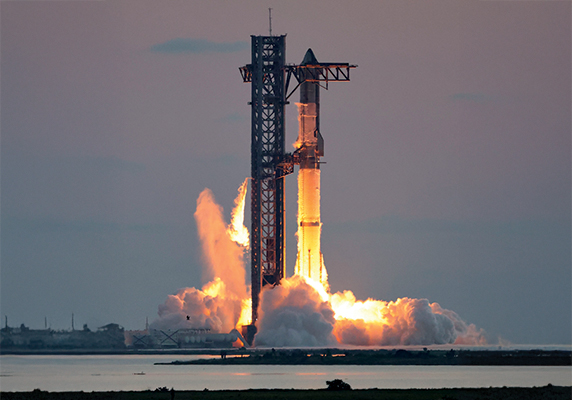
According to the Satellite Industry Association, 259 rocket launches and 2,695 new satellites were deployed in 2024, bringing the total number of active satellites in orbit to 11,539, compared with 3,371 in 2020. This growth is largely due to Low Earth Orbit (LEO) mega-constellations like Starlink and OneWeb.
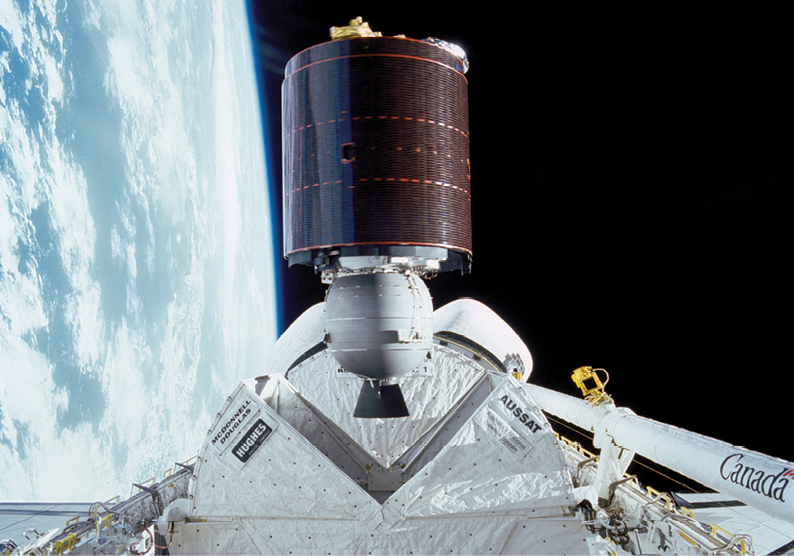
The increasing proliferation of small satellites and mega-constellations raises a growing concern over orbital debris, as there is currently no requirement to remove a satellite from orbit once it’s deployed. Citing European Space Agency numbers, Atkins highlights the staggering scale of the issue: over one million space debris objects (ranging from one to 10 centimetres) and approximately 36,500 larger objects (greater than 10 centimetres) are currently circling the Earth, alongside 2,900 defunct satellites. Because this debris travels at immense speeds (up to 40,000 kilometres an hour in some instances), any collision is catastrophic. Consequently, the sustainability of space has become a critical area of focus for the industry and the United Nations, driven by the urgent need to manage the massive risk and insurance issues inherent in this increasingly congested and hazardous orbital domain.
According to Atkins, the current regulatory landscape for space activity is “very thin”, largely relying on outdated treaties never designed for today’s commercial boom. Recognising this gap, major players like the European Space Agency and the United Kingdom are actively proposing and developing new domestic Space Acts and frameworks. These national efforts represent an emerging global trend, setting out the necessary regulatory parameters to govern modern activities in space and indicating the global move toward a more concrete and comprehensive legal system.
The challenges of an outdated system
The foundational principles of the Outer Space Treaty of 1967 (OST), such as the prohibition of national appropriation of space resources and the designation of space as the “province of all mankind”, create significant legal ambiguity for the surge of commercial activities.
Duncan Blake, a former Air Force legal officer, now conducts research and teaching at the interdisciplinary intersection of law with outer space and military policy and strategy at the University of NSW. His path to space law was driven by military necessity and strategic security.
Blake notes that while space territory itself is not appropriated, the finite resources of orbital slots and radio frequencies are being functionally locked down.
Blake explains that orbital slots and radio frequencies are the two critical, limited resources governed by the International Telecommunications Union (ITU) that make space operations possible.
The core reason the radio spectrum is crucial is simple: satellites need to communicate. Since there are no cables in space, using the electromagnetic spectrum is essential for all space activities. However, only a limited bandwidth of frequencies can penetrate Earth’s atmosphere, meaning these scarce frequencies must be shared among all space users.
The radio frequency spectrum is becoming highly congested. Blake says that to manage this, many operators are accepting a lower priority in using a frequency. This means they openly state the frequency they plan to use but acknowledge they don’t have priority over others. They accept the risk of interference to move their projects forward. While this “shortcut” works when space is relatively large, the more satellites that adopt this approach, the more often interference will occur as Earth orbits become increasingly crowded.
Blake explains that when an operator wants to use a frequency, they or their national regulator must file a notification with the ITU. However, since space is an international business, companies are not always required to get their licensing from their home jurisdiction. This leads to “forum shopping”, where a company might seek out a regulator in another country that offers a faster application process. While speed is appealing for commercial operators, the different speeds of “due diligence” (ranging from three months to 18 months) raise questions about what necessary regulatory checks might be missed by the faster jurisdictions.
“[I]t begs the question, what are those regulators not doing in terms of their due diligence?” Blake questions and notes that this is an area where the law must evolve to keep pace with the commercialisation of space.
But what happens when a single commercial company, licensed by a single nation, effectively occupies a swath of Low Earth Orbit and the radio spectrum required to operate? The sheer scale of mega-constellations like Starlink, whose filings with the ITU number in the tens of thousands, raises the issue of de facto appropriation.
The ITU’s ‘first-come, first-served’ model significantly benefits well-resourced corporate entities. These firms can flood the system with large-scale filings, often for “paper satellites” – made primarily to seize and hoard frequency rights. This practice risks orbital congestion and interference, effectively blocking genuine, smaller space projects from accessing the vital radio spectrum.
This commercial rush creates a tangible challenge to the OST’s equitable access ideals: how can space remain the “province of all mankind” if a handful of giant corporations effectively controls the most useful parts of it?
The OST also places strict international responsibility for all national space activities, whether carried out by government agencies or private companies, squarely on the government. This framework becomes strained in today’s global market, where space companies are often funded, incorporated, and operated across multiple international jurisdictions.
Blake highlights that the central legal challenge posed by private space actors lies in the scope of a government’s responsibility under Article VI of the OST. Unlike general international law, which requires a degree of agency for a government to be responsible for private activities (like cyberattacks), the OST makes governments absolutely accountable for all national activities in outer space, whether carried out by governmental or non-governmental entities.
This responsibility explicitly requires both authorisation and continuing supervision. While authorisation can be implemented via domestic legislation, such as Australia’s Space (Launches and Returns) Act, the scope for ongoing supervision is deeply problematic.
“[I]t’s a very dynamic industry,” Blake notes, “the scope of space activities is expanding rapidly.”
This rapid expansion of space activities has created a significant legal gap, and very few jurisdictions have enacted detailed laws to govern “on-orbit or in-space activities,” meaning national laws must quickly catch up to the technological and commercial realities of a dynamic, rapidly evolving sector.
Blake says governments are not equipped to “look over the shoulder” of every commercial manoeuvre, and this challenge is exacerbated when commercial entities, which lack the longevity of governments, go bankrupt. If a company operating a constellation fails, the current Australian Space Agency (a regulatory and promotional body, not an operational one) lacks the capacity to step in and take control, creating a significant oversight gap.
The complexity deepens with the challenge of “rogue actors” and the intersection of commercial activities with international conflict.
In 2018, US-based Internet-of-Things (IOT) connectivity provider, Swarm Technologies, launched its tiny “SpaceBEE” satellites via an international partner in India, after it was explicitly refused a licence by the US Federal Communications Commission (FCC). Although the company was later issued a hefty fine, the illegal launch demonstrated the potential legal risk that a government could be held internationally responsible under Article VI even when a regulator explicitly refuses a licence.
In conflicts like the one in Ukraine, providing satellite services by commercial entities like Starlink creates a legal grey zone. Blake poses a hypothetical question: “If a commercial entity crosses that line and does so without the authority of the US Government–does that mean that the US Government is therefore at war with Russia?”
“Article VI is the crux of that question, and raises a lot of difficult issues,” Blake notes.
[A] critical issue lies in the physical reality of celestial mechanics: ideal mining sites on the moon, such as permanently shadowed craters where there would be ice, or areas with access to constant sunlight for power, are extremely limited. When a nation licenses a company to operate in one of these finite locations, demanding that other entities be “aware of our operations” and stay safe “outside of our area,” they functionally create an exclusive, controlled zone.
As we move out of Earth’s orbit and look towards the Moon and Mars, the commercial prospect of asteroid and lunar mining creates a profound conflict with Article II of the OST, the non-appropriation principle. While the OST prevents nations from claiming sovereignty over celestial bodies, it fails to explicitly address the right of private, non-governmental entities to extract and commercialise space resources.
Blake says countries such as the US, Luxembourg, and the UAE, which have enacted domestic legislation permitting and regulating space mining activities, argue that the extraction is not inconsistent with this principle.
He says these advocates draw a critical distinction, arguing that they are not appropriating territory, but merely recognising property rights over extracted materials, similar to when a government grants a licence to a mining company, which then extracts minerals from the ground. The company doesn’t claim ownership of the land; it claims ownership of the minerals. In the same way, these nations argue that an entity on the Moon is not claiming the crater, but the regolith (lunar dirt). Blake suggests that there is an apparent “magic point” in the extraction process—the moment the material is dug up, processed, or stockpiled—where it transitions from being an unowned resource to being the recognised property of the commercial entity that performed the labour.
“[T]here are significant issues with that as a … matter of legal theory,” Blake notes. “How can … a national entity which doesn’t actually own that material say that it recognises the rights of a commercial entity over that?”. The inherent conflict lies in a nation attempting to grant property rights over a resource it has formally acknowledged is the “province of all mankind.”
Blake says another frequently raised analogy used to justify resource extraction is the practice of fishing on the high seas. Supporters argue that a nation’s government does not claim ownership over international waters or the fish swimming within them. However, when a trawler returns to shore in Australia or any other country with a haul of fish, that government recognises the trawler’s ownership of the catch.
Blake views this unilateral approach as problematic and the high-seas analogy as a false equivalence. He notes that marine life is (theoretically) renewable, and an international sustainability regime manages its exploitation—both mechanisms currently absent in space. The critical issue lies in the physical reality of celestial mechanics: ideal mining sites on the moon, such as permanently shadowed craters where there would be ice, or areas with access to constant sunlight for power, are extremely limited. When a nation licenses a company to operate in one of these finite locations, demanding that other entities be “aware of our operations” and stay safe “outside of our area,” they functionally create an exclusive, controlled zone.
“[I]t’s actually not quite putting a fence around your area but saying ‘We’re going to be working in this area, it’s unsafe for you to also be in this area’, [which] kind of looks, de facto, like a sovereignty claim,” Blake says.
Despite the formal denial of sovereignty, he warns that this exercise of de facto control over a uniquely valuable resource area begins to resemble the appropriation that the OST was designed to prevent.
Blake adds that the core argument for granting property rights in space is based on the idea of rewarding risk. Entrepreneurs need assurance of a return on investment to justify expending the enormous capital required to travel to and extract resources from outer space. According to this view, without guaranteed property rights over the extracted resources, commercial entities have no incentive to take the financial risk. This logic appeals to many who have only known capitalism as the dominant economic system. “That’s a very capitalistic way of looking at things,” Blake says.
He challenges this perspective by pointing out that the capitalist system is relatively new, only emerging in the 16th century with thinkers like Adam Smith and John Locke. He suggests that capitalism hasn’t proven to be a universally positive system, citing its track record concerning climate change and resource depletion.
He contrasts this with alternative economic systems that have existed for thousands of years, such as those practised by First Nations people.
“I think if your default answer is, ‘Okay, we need to give commercial entities property rights because it’s not going to work otherwise’. Well, I would say you’re not thinking hard enough.”
“[T]here are [other] governance models that maybe we can come up with that don’t rest on that assumption.”

What would regulation look like?
Given the complex and interconnected challenges facing space governance, from orbital debris to resource appropriation, what is the most realistic and practical path forward? The rapid pace of technological innovation is “moving faster than the law,” according to Dr Rebecca Connolly, adjunct senior lecturer at the University of Sydney and current chair of the Space Law Council of Australia and New Zealand.
Connolly emphasises that space regulation cannot be viewed in isolation, as its various components are intrinsically linked. She identifies three fundamental, interwoven principles that any new regulatory framework must address: Space Safety, Space Sustainability, and Space Security.
She explains that the principle of Space Safety addresses immediate, operational hazards, focusing on establishing the rules and technical standards necessary for safe access to, travel within, and return from Space, primarily by mitigating collision risks. Complementing this is Space Sustainability, which acts as the environmental steward, ensuring Space remains usable for everybody, both now and in the future, by tackling the critical issues of orbital debris and preventing the over-saturation of valuable orbital paths. Finally, Space Security recognises that space infrastructure is integrated into critical infrastructure on Earth—affecting military, banking, and communications systems—thereby elevating space governance to a matter of national security that must consider defensive and geopolitical realities alongside commercial activities.
Connolly stresses that these three pillars are inseparable, meaning regulators cannot effectively address one area, such as commercialisation, without simultaneously considering the consequences for debris and conflict.
She also highlights that the issue of space weaponisation is currently at a geopolitical and legal standstill. Although the OST prohibits orbiting weapons of mass destruction, UN debates on expanding space security laws to prevent an arms race are sharply polarised: on one side are the United States and its allies, who favour the development of “soft norms” or rules of behaviour to regulate activity. On the opposing side are nations pushing for a legally binding treaty to prevent, at a minimum, the first placement of weapons in outer space.
“We’re sort of stuck in a gridlock,” Connolly says, preventing the movement on developing any new formal legal frameworks for space arms control or a set of widely accepted norms. She warns that this paralysis is a major challenge because, despite the regulatory stagnation, the space industry continues to advance rapidly, and the reliance on space assets for military command, communications, and control is vital to national security.
“[W]ithout having norms or a framework or binding law in place, we have this rising and escalating potential for conflict from misinterpretation and miscalculations,” she says.
Although various international bodies recognise the urgency of the matter, the core difficulty lies not in recognising the problem, but in breaking the political deadlock to determine the path forward.
Duncan Blake believes the most realistic and effective way forward for space governance is through the iterative development of non-legally binding norms and global harmonisation of national regulations. Given the limitations of creating new, comprehensive treaties, he views this multi-faceted, incremental approach as the only viable way forward.
Blake argues that the prospects for a new, legally binding international instrument (like a treaty) are “pretty limited” due to a lack of consensus. For example, the Prevention of the Placement of Weapons Treaty (PPWT) proposed by Russia and China lacks support from the US and its allies, and for “good strategic reasons”, is unlikely to get support.
Similarly, proposals like the International Code of Conduct on Outer Space Activities and the existing Artemis Accords are not legally binding; the Accords are only politically binding.
Given these political realities, Blake advocates for the development of “norms,” which he defines broadly as “anything that gives rise to an expectation of behaviour.” This iterative development is already happening and will be the basis for space governance.
“[I]t could be anything from a common practice between companies within a supply chain, or it could be technical standards, or it could be policies shared between space agencies,” Blake says.
He doesn’t believe that there will be a single instrument that addresses all of the issues of space governance, but rather “hundreds” or “thousands” of small things.
Blake likens this to the “banal, boring things that we don’t notice … that just work” in everyday society—the unseen infrastructure and standards that normalise an environment. He suggests there are already hundreds, if not thousands, of technical standards and engineering procedures held in common globally that make space operations work, which must be encouraged and recognised as part of the normative framework.
He says this normative development is not confined to diplomacy but must occur concurrently in diplomacy, commerce and economics, and engineering.
Blake is addressing the complexity of national space regulation by championing a new, collaborative approach designed to keep pace with the rapidly evolving industry. He highlights that space governance in Australia, as in other countries, is not managed by a single authority but by a complex array of regulators—including the Australian Communications and Media Authority (ACMA) for radio spectrum, the Office of the Space Regulator for launches, and numerous other bodies (CASA, AMSA, local councils). This fragmentation requires a more sophisticated, iterative process than the current model of written submissions or short, one-way information sessions, which he notes often lack the depth of a proper law reform process.
To bridge this gap, Blake founded WRegSat (Workshops on the Regulation of Space Activities and Technologies) through the Australasian Centre for Space Governance. WRegSat is structured as a deep-dive research initiative focused on a single regulatory challenge over the course of a year, producing a detailed white paper with policy options for the government. Blake’s ultimate vision for this initiative is to promote international harmonisation and mutual recognition of national space laws. He plans to replicate the WRegSat model in regions like the US, Canada, and the UK, leading to an international conference where participants can collaboratively work to streamline regulations. The goal is to avoid forcing international companies to duplicate complex licensing and compliance paperwork across every jurisdiction, ensuring the stability and commercial viability of the global space industry.
Scott Atkins says that regulating space and its rapidly commercialising environment is leading countries toward cooperative arrangements, with the most effective path requiring a higher level of global collaboration and, ultimately, new regulation. Atkins notes that the complexity of governing activity in outer space—due to its unique non-ownership issues—is immense, but the necessity for a framework is now universally accepted. For instance, Australia is actively signalling its interest in greater cooperation and coordination. It recently announced that it will begin negotiations for a Memorandum of Understanding with the European Space Agency, building upon existing arrangements with the US.
This necessity for collective action was powerfully articulated at the recent International Astronautical Congress (IAC) in Sydney, described by Atkins as the “Space Olympics” for the global industry, which was attended by over 7,000 delegates. The official statement from the Global Space Leaders’ Summit declared, “Exploration is our gold standard, but collaboration is our greatest strength. Space is no longer a race. It’s a responsibility we share.” This mindset represents a significant shift away from the “country A vs. country B” competitive model of the past, acknowledging that the sheer scale of current space activity is too vast for unilateral action. This collaborative focus is being supported by a surge in legal thought: of the 4,000 papers submitted to the IAC, a significant number concerned issues of regulation, governance, and legal principles, indicating that the development of a lagging global legal capability is now accelerating to support the exponential growth of the commercial space industry.
Blake highlights the critical importance of integrating Indigenous knowledge systems into how we approach space governance and resource exploitation. At this year’s IAC, he shared how a story about a 6,000-year-old stone circle on a mountain top in Wyoming, US struck him. Astronomers discovered this circle tracked a star’s position, reflecting a continuous, scientific experiment maintained through oral tradition for over a hundred generations.

“[I]t was an ongoing, non-stop experiment for 6,000 years … which is just mind-blowing that you maintain an experiment continuing for 100 generations without digital record keeping, or even paper record keeping,” he recounted.
The example was used to highlight that what is often dismissed as mythology is, in fact, scientific knowledge preserved and passed down in a way that differs from Western paper or digital records. This underscores the profound, long-term connection First Nations people have with the land, sea, and sky.
He says this perspective is crucial because Article I of the Outer Space Treaty states that the use and exploration of space are the “province of all mankind.” Since no single entity speaks for all humanity, we should consider what we all share: our connection to Planet Earth. First Nations people have maintained this connection best, offering a governance model rooted in stewardship and long-term thinking.
“We can learn a lot from understanding a better connection with land, sea and sky, from First Nations people, and that, in turn, should inform how we govern not just outer space, but also everything on earth,” Blake says.
Why lawyers are vital for space
Lawyers are absolutely vital to the future of space, serving as the necessary bridge between technology, science, and policy in an otherwise unregulated environment.
Connolly emphasises that the current state of international and national space law requires legal minds to synthesise expertise from diverse fields, including science, policy, engineering, and the entire STEM sector. At this critical juncture, lawyers provide the crucial understanding of space policy and, more importantly, the mechanism to translate that policy into enforceable law and practice.
“Lawyers are vital in this process. They provide expertise and understanding on how to put into effect those new norms that we’re seeing develop. This is probably one of the biggest fast-moving, topics for international law at the moment, and there’s so much scope for lawyers to get involved,” Connolly says.
She highlights that the rapidly expanding and complex space sector requires lawyers as essential bridges between science, policy, and commerce, creating extensive career opportunities across multiple domains. The demand is particularly high for professionals who can “think outside the box” and understand how to translate policy into enforceable law and develop norms.

This includes corporate space lawyers who serve as in-house counsel, providing general commercial advice alongside expertise in the sector’s unique risks; government lawyers who draft and implement domestic space Acts and protect national security interests; and those working in international institutions and NGOs who address global issues like space security and sustainability.
“[W]hether you’re purely commercial or corporate, or whether you have a government background, there is … a place for anybody that has that sort of legal training to work in this space law field,” Connolly says.
Blake explains that space lawyers are needed because of the wide and complex array of regulations governing the industry.
He notes that, at present, most lawsuits are incidental commercial disputes, such as a contractor challenging the fairness of a government contract award, where space is merely the context, not the legal cause of action. However, he believes specialised, high-stakes space litigation is inevitable and rapidly approaching. Future disputes will arise from satellite-to-satellite conjunctions and orbital collisions, interference with the electromagnetic spectrum, operational failures during complex on-orbit servicing, and liability claims stemming from the nascent space tourism sector. Therefore, the need for lawyers is projected to dramatically increase as the commercialisation of space introduces higher financial risk and legal complexity.
For Australian lawyers, Atkins highlights that the opportunities are right on their “own back doorstep.” He points to a powerful and developing axis of cooperation between Japan and Australia in the space industry. This regional leadership, combined with traditional and deep alliances with the US and the UK, generates a high volume of activity and incredible opportunities within Australia’s jurisdiction.
The International Astronautical Congress was a critical moment for public perception. Atkins believes the sheer physical scale of the event—with thousands of delegates and members of the public attending—will solidify a much greater appreciation and awareness that the space industry is very real, very commercial, and is rapidly shedding its niche status.
In short, for Scott Atkins, the time for treating space law as a speculative subject is over. It is a booming, tangible, and indispensable part of the global economy, demanding the immediate attention and expertise of the legal profession.
“[T]his is all very real. It’s not just flying saucers and spaceships, it’s serious industrial scale, technology and industry and scientific research that’s happening.”