
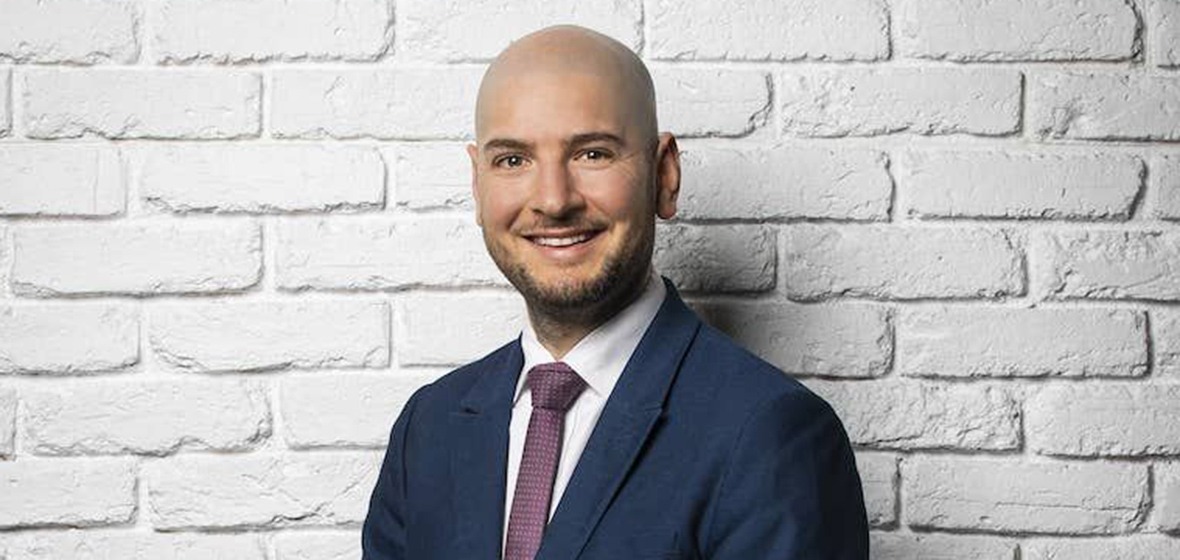
By Francisco Silva -
“I'm a natural extrovert. I like meeting people. I like talking to people. I like chatting to people online. I enjoy being out and about.” So says Andrew Tiedt. If you are a solicitor and have been on LinkedIn at all in the past two years, you have come across one of his daily posts with musings and analysis of cases, resharing of news articles he finds interesting, or notes on anything related to the law in New South Wales.
Tiedt is a constant. A reliable and open source of information on social media that reminds us there is a community of solicitors or law-adjacent professionals who are genuinely interested in the law. The value of holding a strong social media digital footprint grows more every passing day. Tiedt figured out how to make the most of it, and today his account is followed by over 28,000 users.
At the sold out Law Society of NSW 2026 Annual Conference, Tiedt is hosting a panel titled “Speed dating for lawyers – Effective networking for you and your practice.” LSJ Online sat down with him to talk about what makes him so effective at networking, and how his social media presence is an important professional tool. “There’s a stereotype lawyers are studious and quiet,” Tiedt says. “They’re obsessed with books and all they want to do is read and write.”
“I’m a criminal lawyer, I’m an advocate, I’m a talker, I’m a troublemaker, and I enjoy meeting other lawyers and learning about other areas of practice. So, for me, it’s no effort at all to put myself out there.”
It comes from an inherent sense of curiosity, of wanting to learn more about other people and what better way to learn but to ask them questions. He’s the kind of person who works the room after a dinner, walks around and finds someone to talk to.
“I am hearing about other people, hearing about other practices,” he says. “The cliche is, if you [don’t know how] to talk to someone, ask them about themselves, about their jobs. Everyone loves talking about themselves.”
This sense of curiosity moves him to prodding his peers with questions about their areas of law, even when they don’t apply to his professional speciality. Tiedt admits he enjoys hearing about other practices he knows nothing about. A lot of the posts he reads and shares in his social media accounts don’t relate to anything he does professionally.
Tiedt posts a case summary every day with a couple of comments. Other solicitors started telling him they enjoyed them and found the posts helpful for their practice. “They’re written for the wills and estates lawyer who thinks criminal law is interesting, or the employment lawyer who reads the first line and goes ‘I wonder what the court said about that?’” In other words, Tiedt posts for people like him who are driven by their curiosity and interest in the law: unapologetic law nerds. Tiedt didn’t need much encouragement to read and comment about a case.
“But while I’m scratching that itch, what I try to do is write it in a way that a non-lawyer will find interesting,” Tiedt continues. “And the end goal in that respect so that when Johnny employment lawyer or Jane Wills lawyer has their cousin’s brother’s neighbour who has a criminal law problem, I’m the guy they call.”
There are many ways to put your name out there in the digital universe, from using Google Ads, Facebook advertising, or having a go with TikTok videos or podcasts, but what works for Tiedt is engaging directly with his peers on a social media platform specific to professionals.
What can solicitors expect from Tiedt’s panel, that he’ll present with CEO and Founder of The Cornell Voice Advisory, Lucy Cornell? An opportunity for lawyers who are not comfortable networking, to meet a new colleague and build-up a connection, at least swap a business card. “Networking is valuable for all sorts of reasons.” Tiedt says. “For many lawyers, especially those in small practices, it’s a big source of work.” Areas of law often intersect and if a case he’s working drifts into something like family law, Tiedt can call a peer and ask for help.
“The vast majority of lawyers are very happy to answer a phone call from a colleague and chat about an issue,” he says. “And they’re willing to do so on a complete no obligations, no quid pro quo basis.” Tiedt says you just have to take that first step.