
By Francisco Silva -
They look like surreal and nonsensical crude AI-generated drawings, but the cultural impact on Gen Z and Alpha cannot be ignored. Now a talent agency is trying to argue in California that images created by artificial intelligence should be protected by copyright laws, even if that means explaining in court what a Tung Tung Tung Sahur is.
If you know what a sentient Indonesian drumstick, a lady with a cappuccino cup as a head, and a crocodile-bomber plane have in common, you are either chronically online or you’ve been trying to understand why your children are going bananas over these strange images.
The phenomenon is called Italian brainrot, and explaining it probably raises more questions than it answers. They are AI-generated grotesque characters, with bizarre names like “crocodilo bombardillo” and “tralalero tralala”. They pop up in social media short videos, usually on Instagram or TikTok, accompanied by bizarre synth soundtracks and sometimes surreal voiceovers. It’s hard to explain what they are without showing an example, but ironically, showing them only confounds anyone who isn’t in on the joke. Because it is a joke that only Gen Alpha seems to be in on. A by-product of a generation that consumes content in small-byte videos, not for information or intellectual stimulation, but the complete opposite. A paper published by the London School of Economics, Anna Götzfried, and
Maxi Heitmayer suggests the generations that consume brainrot “actively seek content that rejects productivity and meaning-making”.
“The content often employs recursive self-reference, where “the joke is that there is no joke,” creating a meta-entertainment framework that subverts traditional narrative expectations.”
It’s strange, non-sensical images that we are not supposed to understand. In fact, the less we get it, the better they are. In a New York Times article about the trend, a 19-year-old American student admits brainrot is “so ridiculously not funny that it kind of becomes funny”.
But if these AI-created characters are becoming a cultural staple, who gets to profit from their monetisation? This question is central to a trademark lawsuit filed in the U.S. District Court for the Northern District of California, where a French creative agency, Mementum Labs, is in dispute with a video game studio, Spyder Games, over the use of characters Mementum claims to represent. In a nutshell, an American court is looking into a copyright claim from a French company representing an Indonesian man against a Brazilian game developer over an image created by AI.
But this is not the end of it.
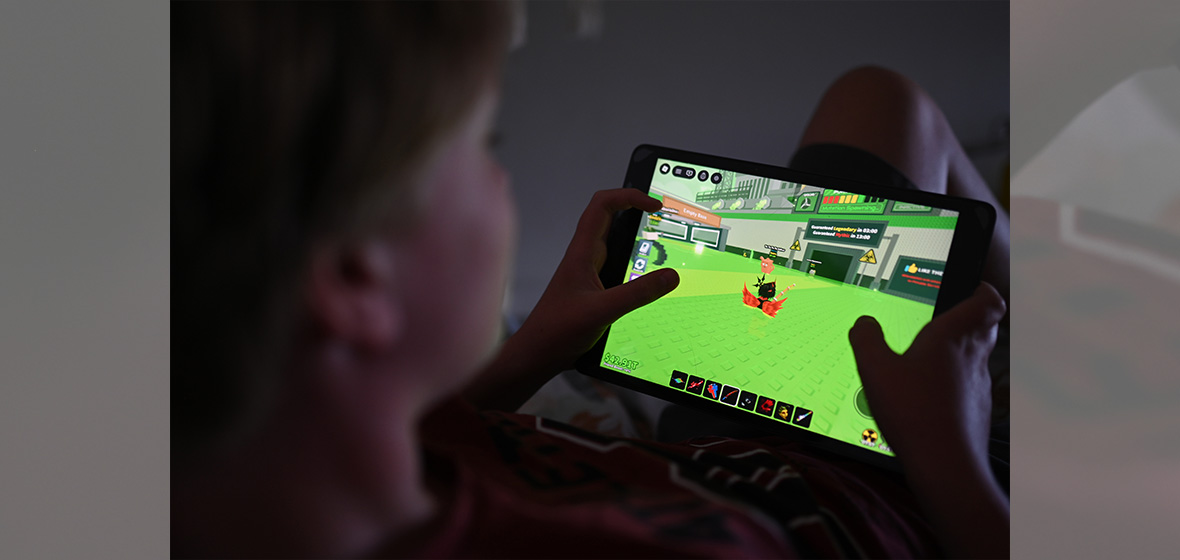
The case revolves around Tung Tung Tung Sahur, an anthropomorphic Indonesian kentogan (slit drum), created by artificial intelligence from a prompt by Indonesian content creator, Noxa. The character’s popularity blew up on social media as one of the most recognisable characters of the genre, featured in hundreds of thousands of AI-generated pieces of content on all platforms. Enter Roblox, another name that your children, nephews and grandchildren can do a better job at explaining.
Roblox is an incredibly successful online multiplayer video game where users can play games created by other users. Imagine a large digital Lego sandbox where you can either build something for others to enjoy or enjoy other people’s content. One of these games was called Steal a Brainrot. Created by a Brazilian game developer who goes by the moniker SpyderSammy, the game pits eight players against each other, with the winner to be the one who manages to steal more famous brainrot characters (including Tung Tung Tung Sahur) from their opponent’s base. At the height of its popularity, the game had over 24 million concurrent players, a Guinness World record.
The monetisation of these AI-generated characters drives Mementum Labs to issue a cease-and-desist letter to both Spyder Games and Epic Games (who publish another game that includes some of these characters), claiming to represent the owners of their intellectual property. Talking to the magazine VICE, Eben Jeda, the co-founder of Mementum, said, “We decided to create Mementum Lab with other artists, lawyers, and researchers to create a legal scope around [AI characters]. We work with the authors, and we’ve started to contact some big companies that use these characters to inform them that there are artists behind them.”
Epic Games ended up removing the characters from their video game and then completed a deal with Mementum to bring them back. But in a claim filed by Spyder Games in November 2025, they argue courts in the U.S. already decided that only works authored by humans can be protected by copyright laws. A counterclaim from Mementum was then filed on 5 June 2026, supporting that the two content creators they represent, ‘Noxa’ and ‘Breno’, included a valid artistic process in the creation of those characters, from their names, backstory, voices and music associated with them. As an example, they state ‘Noxa’ was inspired by his Indonesian culture to create Tung Tung Tung Sahur, claiming both the name (an onomatopoeia that resembles the sound the drum makes) and backstory evoke a cultural reality that is ingrained in the personal experience of the human who created it.
“This is one of those cases where it reminds you why it’s fun to be an intellectual property lawyer”, says Luke Hawthorne, President of the Copyright Society and Senior Associate at Mallesons. “In both American and Australian law, the author really is at the heart of the copyright system. And this case really brings up key issues about what it means to be an author.”
Hawthorne points out that these characters are created through an almost collaborative process that evolves quickly across platforms. “They’re remixed, re-prompted and re-shared [so] it’s really difficult in that kind of context to trace who is making what,” he says.
In Australia, a work is protected by copyright only if there is ‘independent intellectual effort’, meaning there is sufficient human authorship in its creation. A brainrot character created from a single prompt, Hawthorne argues, may not meet that standard. But he also hypothesises that, at the opposite end of the spectrum, if there is skill and labour across 900 or so prompts, that could be argued to constitute sufficient “intellectual effort”.
If the court in California rules in favour of Mementum Labs, it won’t necessarily influence Australian copyright law. “[Australia] is not as rigid yet about the threshold question of whether something is protected or not,” he concludes. “I think we’re still a bit more technology-neutral about authorship in Australia, and wouldn’t approach AI the same way.”