
By Cat Woods -
The former French president Nicolas Sarkozy is out of prison, pending an appeal, after receiving a five-year sentence for conspiring with late Libyan leader, Muammar Gaddafi, to raise political campaign funds in 2007. He has also been fined 100,000 euros and banned from holding public office.
Judge Nathalie Gavarino said Sarkozy had overseen the communication between his close aides and Libyan officials with a view to obtaining financial support for his campaign. The ruling found that there was insubstantial evidence to find Sarkozy was the beneficiary of the illegal campaign financing.
The last French leader to be sentenced to imprisonment following their term in office was Marshal Philippe Petain, accused of collaborating with the Nazis during World War II, and jailed in 1945 for treason.
Sarkozy, 70, maintains his innocence, claiming that he is the victim of a political campaign of “revenge” (per his lengthy X post, published during his drive to prison). Since then, there was a request for release, which was granted and saw Sarkozy out of prison after three weeks in custody.
Despite the revelation of Sarkozy’s relationship with the former Libyan dictator, he was invited to the Élysée Palace by President Emmanuel Macron just days before Sarkozy’s prison sentence began. Macron has expressed sympathy with his predecessor, telling media he was neither going “to comment on or criticise judicial decisions”.
Lengthy legal concerns
His imprisonment was the culmination of more than a decade of legal concerns around Sarkozy’s conduct during his presidency, extending beyond the Libyan campaigning funds. Indeed, a verdict is soon expected on Sarkozy’s appeal against a 6-month prison sentence for illegal campaign financing in the “Bygmalion affair”. He had also been subjected to months of wearing an electronic ankle tag from February this year following his conviction in December 2024 for attempting to bribe a magistrate into revealing confidential information.
An investigation into Sarkozy’s 2007 presidential campaign funding began in 2013, resulting in allegations of an agreement by the Libyan government to secretly provide up to 50 million euros as a means of providing international credibility to Gaddafi through favourable association with the new French president. The legal campaign funding limit for parties is no more than 7,500 euros a year from individuals and any contribution greater than 152 euros must be made by cheque.
Regular payments made by party members, which in 2008 was equal to 35 per cent on average across all political parties, is the primary source of party funding.
During an election, candidates are permitted to receive a further 4,600 euros per year per individual contributor. In 2007, state grants – based upon both the proportion of the vote won in the last round of parliamentary elections and the number of seats won in parliament – were worth 16 million euros in the first round and 21.5 million euros for the two contenders, President Nicolas Sarkozy’s Union for a Popular Movement (UMP) and the Socialist Party of Segolene Royal.
In 2016, Ziad Takieddine, a French-Lebanese businessman, told a French media outlet that he was part of delivering 5 million euros in cash via suitcases to Sarkozy and his former chief of staff. Though Takieddine withdrew the allegation, the investigation withstood Sarkozy’s attempts to close it down. By 2023, financial prosecutors filed preliminary charges claiming Sarkozy was suspected of “benefiting from corruptly influencing a witness”, having attempted to pressure Takieddine to withdraw his allegations. In July 2024, Carla Bruni-Sarkozy was the subject of preliminary charges for her suspected involvement in pressuring Takieddine.
By February 2024, Sarkozy’s guilty verdict was upheld on appeal regarding illegal campaign financing in his failed 2012 bid for re-election. He received a one-year prison sentence, of which six months were suspended, for spending approximately double the permitted maximum legal amount of 22.5 million euros.
In late September this year, Sarkozy could no longer appeal and deny his way out of prison time. The lead magistrate, Nathalie Gavarino, justified the sentence because of the “exceptional gravity” of the case and its potential to undermine public trust.
On 26 September, French authorities launched two investigations into death threats toward Gavarino following information from the magistrates’ union.
The public prosecutor told the court that Sarkozy entered into a “Faustian pact of corruption with one of the most unspeakable dictators of the last 30 years” in reference to Gaddafi, though Sarkozy was acquitted of three separate charges of corruption, misuse of Libyan public funds and illegal campaign funding. A new trial in six months will allow Sarkozy to appeal his conviction for criminal conspiracy to seek election funding.
Public and political reaction
The trial and sentencing have divided the French public and political parties along largely partisan lines. An Elabe poll conducted on 1 October found that 58 per cent of French people believed that the judges “ruled impartially and applied the law,” 61 per cent felt that the immediate execution of the prison sentence was “fair,” and 80 percent did not want Emmanuel Macron to grant Sarkozy a presidential pardon should the verdict be finalised.
On 1 October, Philippe Conte, professor emeritus of private law at Panthéon-Assas University in Paris, published an opinion on the Jus Politicum blog regarding the verdict against Sarkozy. In a subsequent interview with Le Monde, he explained that the threats against Gavarino were senseless, especially considering that the sentence was a panel decision based upon 12 years of a legal process, overseen by “dozens of judges”.
Accountability and consequences
Sarkozy’s prison sentence is far from the first time a former national leader has been convicted and imprisoned, but in the present landscape, it raises questions of accountability and consequences.
Beginning in the 1990s, South Korea investigated and convicted five former presidents. The latest case is the conviction and imprisonment of Lee Myung-bak. On the other hand, on 21 November 2019, Israeli Attorney General Avichai Mandelblit charged Prime Minister Benjamin Netanyahu with three counts of corruption. Netanyahu has routinely used his state powers to delay the trial, most recently using the attacks on Gaza to prolong delays.
At the ASEAN summit on October 27, Malaysian Prime Minister Anwar Ibrahim joked to US President Donald Trump that “I was in prison, but you almost got there”.
Ibrahim was jailed for sodomy and corruption in 1998, though he denied all charges and claimed that he was victim of a political smear campaign. In 2004, Malaysia’s Supreme Court overturned the sodomy conviction and Ibrahim was released, only for new sodomy charges to be filed in 2013, resulting in another jail sentence for the beleaguered politician. In 2016, Anwar was freed as the result of a deal with former Prime Minister Mahathir Mohamad to run as allies in the 2018 election. Since Mohamad ceded his leadership role to Ibrahim in 2022, the Malaysian leader has held the position.
On 30 May last year, Trump was convicted by a Manhattan jury on criminal charges of falsifying business records to cover up his relationship with the porn star Stormy Daniels. He has faced numerous other charges, but unlike Ibrahim and Sarkozy, Trump has escaped prison and largely avoided convictions, which seems likely to continue. On 1 July last year, the Supreme Court’s six-member majority ruled that the president of the United States has “absolute immunity” from criminal prosecution (Trump vs. United States).

Markus Wagner is Professor of Law, School of Law Research Director and Director of the Transnational Law and Policy Centre (TLPC) at the University of Wollongong.
He says, “There’s always this interplay between politics and law that goes back to the founding era of the US that you see mirrored in decisions of the Supreme Court. The most important one is the 2024 question of presidential immunity. Then, there’s a whole history with the US vs. Nixon (1974) and Clinton vs. Jones (1997).”
“The question is, what are the ‘core official acts’ that are immune from prosecution?”
The Supreme Court has ruled that former presidents have absolute immunity for official acts that fall under their “core constitutional powers”, but not for unofficial acts.
Wagner says, “There’s a big ‘but’, though. The question is: what are the ‘core official acts’ that are immune from prosecution?”
This interpretation is fundamental, Wagner says, since Trump is taking a much more expansive attitude to his constitutional powers under Article 2.
“Once Trump’s term has expired, could prosecution then happen?” asks Wagner. “Under the 2024 Supreme Court judgement, only for those acts that supersede the powers of the presidency, so it will be up to interpretation. If the next President chooses to prosecute, then it largely becomes political rather than a legal game. I’d be surprised if a future Democratic President chooses to do that unless there’s a major groundswell from the public. Whether it’s deserved or not, it doesn’t really matter, but you’d start a cycle of whoever steps down would fear being indicted by the next President.”
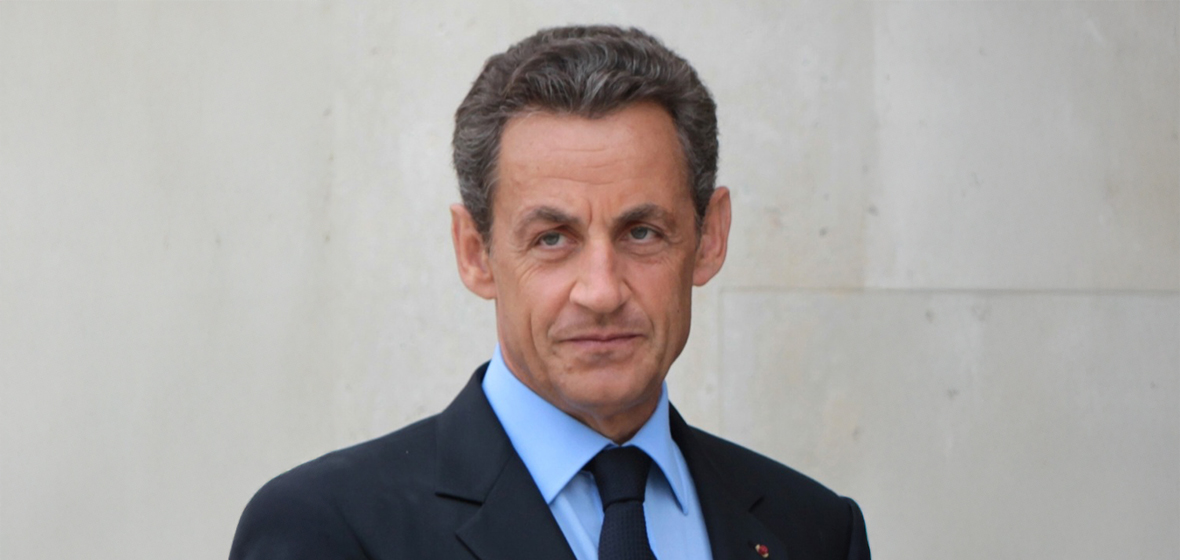
Main image, then President of France, Nicolas Sarkozy, pictured in 2011. (Courtesy, Wikipedia)