By Wendy Yang -
Every generation has at least one ‘it’ toy at the top of every kid’s wish list. From Rubik’s cubes, to Tamagotchis, Beanie Babies, Pokémon cards, the list goes on. As technology advances, games have evolved and expanded to offer in-game purchases, and flashy apps, often involving elements of chance and luck, designed to attract children and adults alike.
Concerned about games and toys creating a gambling risk, overseas jurisdictions like South Korea and Singapore are leading the way with regulation of toys like blind boxes both online and in the ‘real world’. It begs the question, should Australia follow suit?
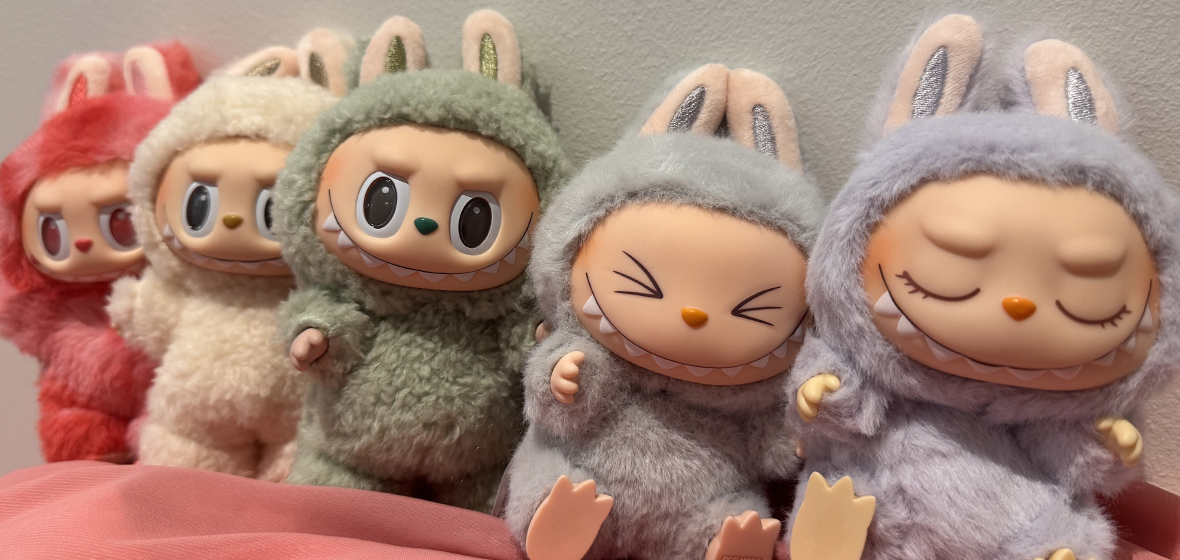
Children want them and celebrities flaunt them as fashion accessories. Labubu dolls were one of the most popular items of 2024 and 2025. At the height of their popularity, blind boxes were sold for double (sometimes multiple times more) than their recommended retail price.
Blind boxes, as the name suggests, are sealed boxes containing toys, keychains, figurines or other items. Consumers don’t know which figurine or item they have until they have ‘unboxed’ it. Social media has been flooded with images and clips of people, both young and old, opening their blind boxes, creating a sense of mystery and drama. And there has been no shortage of videos and photos of people in long lines outside shops waiting to get their hands on a coveted blind box.
While the boxes include a disclaimer that they are not recommended for children younger than 15 years-old, adults and children of all ages are able to buy a blind box in store or online via the Pop Mart app. The app offers a ‘Pop Now’ function which allows consumers to pick, ‘shake,’ and unbox a toy online.
Some overseas jurisdictions like South Korea have already cracked down on digital loot boxes and Singapore recently announced that it will look to regulate blind boxes due to the gambling risks they create.
Is it a game or is it gambling?
The first question is what constitutes gambling? Jamie Nettleton, gambling, commercial and IP partner at Addisons, says in most cases, gambling boils down to a simple trifecta. “[T]here must be a payment, there must be chance, and there must be a prize.”
Nettleton explains that casinos, poker machines, and betting fall under the umbrella of ‘hard gambling,’ while lottery is a ‘softer’ form of gambling. “[B]ut it’s all gambling … and that’s where everything starts becoming very murky … because it fits within the legal definition of gambling, but does it give rise to the same degree of social harm? Same levels of concern as hard gambling?” he asks.
When it comes to blind boxes, lucky or mystery boxes, Nettleton says there is no real clarity as to whether it constitutes some form of gambling and these are the sorts of questions that require interpretation. “[I]t ranges from (and this is not just in respect of blind boxes) making a purchase [where] you’re not quite sure what you’re going to get, and also in respect of where you make actual payments which improve your chances, perhaps of getting something better. Is that gambling?”
In Australia, the minimum age for gambling is 18, lower than the United States, where it is 21. Nettleton explains there is now a real issue with things that may constitute gambling, being played or accessed by people who are under age.
As for toys and items such as Labubus in blind boxes, Nettleton believes “[there] is a question mark in respect of whether they, strictly speaking, constitute gambling. But just by virtue of its prevalence in the real world … is that really considered to be gambling?”
[W]hat is the evidence that suggests that (that) age is the appropriate age? … how do you actually enforce it?
Current legislative landscape
In 2022, the Standing Committee on Social Policy and Legal Affairs adopted an inquiry into online gambling and its effects on problem gamblers. Among other things, the inquiry considered the “impact of current regulatory and licensing regimes for online gambling on the effectiveness of harm minimisation and consumer protection efforts”, the “appropriateness of the definition of ‘gambling service’ in the Interactive Gambling Act 2001 (Cth), and whether it should be amended to capture additional gambling-like activities such as simulated gambling in video games (e.g. ‘loot boxes’ and social casino games), and “the appropriateness of current gambling regulations in light of emerging technologies, payment options and products.”
The final report, published in June 2023, noted that “Australians are increasingly concerned about the exposure of children and young people to simulated gambling and gambling-like activities.” The report identified activities such as loot box features in interactive games and mobile apps, social casino games and more.
Singapore’s Minister for National Security and Minister for Home Affairs K. Shanmugam recently announced that Singapore will introduce regulations outlining the conditions under which blind boxes can be offered to “better manage gambling inducement risks.”
In 2023, the State Administration for Market Regulation in China released guidelines containing a list of items prohibited from being sold in blind boxes. The sale of blind boxes to children under eight was also forbidden with sellers being urged to prevent children from becoming “addicted” to them.
In Australia, Nettleton says games are often subject to classification. “[T]hose restrictions are already in place online,” he says.
On the question of whether in-app games or features like Pop now constitute a game for the purposes of the regulation, Nettleton says this is something the platforms are examining. “[I]n respect of particular apps … they’ve got a degree of self-regulation as well as a mandatory regulation. … it’d be open to them to come to a view that this is not a game. They may have some form of self-regulation which may indicate that the view … taken [in] other countries should also be applied here. After all, the principal platforms are based in the US,” he says.
Given that most of the apps are developed overseas, there is a question of jurisdiction and how to enforce the regulations if the developer is offshore. This has remained a challenge throughout Nettleton’s three decades working in this field.
However, one change is apparent: the increase in ‘localisation’. “[A] lot of these platforms have a local Australian version … or [an] Australian sub-platform which is subject to much greater, much stricter regulation at the local level than it would be if it were just offshore.
“Australia tries to apply its laws to what’s happening offshore, and that is always very challenging…,” he says.
Should there be a mandatory age limit?
There have been discussions about whether an age limit should be introduced for in-app purchases and chance-like games. Nettleton believes there would be a “huge uproar” if the government introduced some form of compulsory age limit for games.
“[W]hat is the evidence that suggests that (that) age is the appropriate age? … how do you actually enforce it?,” he poses.
At the heart of this issue appears to be whether there is a difference between the real world and the online world. “From a regulatory standpoint [in Australia], the answer is yes … [there is a difference] because the online world is essentially regulated at the federal level and … the terrestrial world is mostly regulated by the states and territories in this space,” says Nettleton.
“[I]f you look at the federal law, which is the Interactive Gambling Act 2001, it has this trifecta … But the key point is that the underlying concept of gambling is the trifecta and if you apply that strictly … arguably it applies to mystery boxes played online. But it also applies to all other forms of softer gambling,” he says.
As for whether Australia should follow South Korea and Singapore’s example and regulate blind boxes, or online ‘mystery’ boxes, the jury is still out.
Nettleton returns to the question of whether there is actual or perceived harm. “[A]t the end of the day, that’s a question for society. I state this in a very general sense as harm is often only perceived either by the regulators or by the politicians.”