By Francisco Silva -
The Chief Justice of NSW Andrew Bell is among those paying their respects, after the death of former Barrister and High Court Chief Justice, Sir Anthony Mason, describing him as one of Australia's “greatest judges and public servants”.
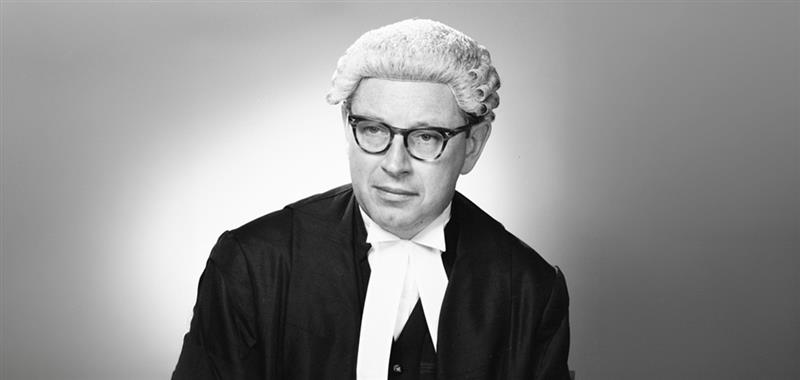
Sir Anthony Mason AC KBE GBM KC, one of Australia’s most renowned and celebrated judges, passed away on the night of the 17 March 2026, a couple of weeks before his 101st birthday.
Appointed Solicitor General for the Commonwealth of Australia in 1964 when he was only 39 years old, Mason became a High Court Judge in 1972 for the next 23 years, the last eight as Chief Justice. During his years in the High Court, Mason sat in some of Australia’s most recognised cases, including Cole v Whitfield and Mabo v Queensland.
After his retirement at the age of 70, Mason continued to serve as a judge in other constituencies of the Commonwealth. He sat on the Hong Kong Court of Final Appeal for two decades, before and after the handover from the United Kingdom to China, was the President of the Court of Appeal of the Solomon Islands and served as an ad hoc judge on the Supreme Court of Fiji.
In a heartfelt statement, Chief Justice Bell, remembered the influence Mason had in his career, having served as his Associate straight after he completed his undergraduate law degree. “I counted my year in Sir Anthony’s chambers as one of the most important and formative of my professional life,” Bell said.
“To observe at close quarters this master judicial craftsman at the peak of his powers was an opportunity as rare as it was invaluable,” adding that “[a] very fine Australian has left our midst but his impact and legacy will continue.”
On social media, Attorney General Michelle Rowland said Mason was “guided by a deep respect for fairness and for the rights of all Australians.”
“He will be remembered for his wisdom and intellect, and his enduring contribution to our legal system, academia and public life.”
President of the Law Society NSW, Ronan MacSweeney emphasised Mason’s “remarkable achievements in the law”, particularly “the recognition of native title and abandonment of the doctrine of terra nullius in Mabo v Queensland (No2); and the recognition of a constitutionally implied freedom of political communication in Australian Capital Television v Commonwealth.”
“We are immensely proud that the Law Society will continue to play an important role in continuing Sir Anthony’s legacy through our administration the NSW Young Lawyer’s Sir Anthony Mason Constitutional Law Essay Competition.”
Image credit: Australian News and Information Bureau – National Archives of Australia, Public Domain.