
By Francisco Silva -
Hamnet
Director: Chloé Zhao
Writers: Chloé Zhao and Maggie O'Farrell, based on Maggie O'Farrell's novel
Cast: Jessie Buckley, Paul Mescal, Jacobi Jupe
No Other Choice
Director: Park Chan-wook
Writers: Park Chan-wook, Lee Kyoung-mi, Don McKellar, Jahye Lee, based on the novel by Donald E. Westlake
Cast: Lee Byung-hun, Son Ye-jin
28 Years Later: The Bone Temple
Director: Nia daCosta
Writer: Alex Garland
Cast: Jack O'Connell, Alfie Williams, Ralph Fiennes, Chi Lewis-Parry, Erin Kellyman
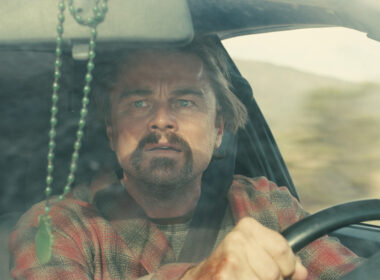
Hamnet
Chloé Zhao’s Hamnet wants the audience to feel the pain of loss so strongly, it never stops reminding us that sadness is constant and never-ending. It revolves around our very human gut reaction of addressing pain with a cathartic guttural cry, a howl that is heard the next town over lest someone thinks you don’t suffer enough. It’s aided by the kind of intense performance every actor strives to do, so it’s a good thing this level of emotional distress is in the hands of Jessie Buckley whose rawness has been present since 2017’s Beast. Here she’s not just acting, she’s not just chewing the scenery, she excretes tears, spit and sweat to the screen lest we think Zhao is not taking loss seriously. Hamnet is so insistent in this that it eventually devolves into diminishing returns.
Based on Maggie O’Farrell’s best-selling novel (O’Farrell also co-wrote the script with Zhao), this is the story of how Agnes (Jessie Buckley) and Will (Paul Mescal) lost their son Hamnet (Jacobi Jupe) and, in a way to rationalise his grief, Will would eventually write his most famous play, Hamlet. The fact that Will is in fact Shakespeare is not really a surprise, but the film plays it so strangely coy, only saying his surname accidentally at around the third act mark.
During the first half Agnes’ and Will’s love for each other develops. Will is drawn by Agnes’ mysticism. She’s playing with a falcon in the forest, looking like a magical elfin creature who she courts despite his family’s complaints for she may or may not be a witch. All good reasons for young Will to charm Agnes, if there’s a person who thrives in forbidden love, even if in this case there may be a chance of truth. Agnes has a vision that Will finds success, and she will die with two children.
Will and Agnes marry and have three children, defying the fate of her vision. One of her children is stillborn, until Agnes breathes life into her. But a vision is a vision, and as the success of Will takes him away to London for longer spells, their son Hamnet passes from the plague.
What follows is a hard deconstruction of a couple confused and unaware of how to deal with grief. Agnes blames Will for not being around (though she was the main catalyst for him to pursue the career away) and the relationship breaks apart as the two, in their way, try to accept and reason with what happened. Which eventually leads to the play and Agnes addressing the death of her son.
It’s not surprising that Buckley and Mescal are so good in this. This is the kind of film serious thespians thrive in to show their capacity to control the emotions of our audience. But like Zhao’s previous Nomadland, the issue isn’t in her capacity as a filmmaker to work with great actors, it’s in the way she completely misunderstands the basic concept of the emotional core of her film.
My opinion of Nomadland is that it looks liked it was directed by a filmmaker who didn’t understand food insecurity, so she could glamorise poverty without having to address the harmful factors that lead to it. And not to drive the point that filmmakers need to experience something to portray it, so it shouldn’t matter that Zhao’s father is a billionaire, but one needs to understand on at least a profound philosophical level.
So, I don’t mean to be cruel when I say that Hamnet looks like a film of someone who never had children. Zhao admitted to Vanity Fair that her reason not to be a mother was by choice, so to channel the suffering of a mother in grief she compared it to breaking up a long-term relationship. Disregarding the tone-deaf idea that the two are comparable, this confirms that Zhao misses the point of her characters. Grief is an all-consuming exhausting shadow that hangs over us, triple so if it’s a parent who had to bury their child. How do we move on from this? No one knows but moving on we must.
In Nanni Moretti’s masterpiece The Son’s Room, a family faces a similar problem and it’s painful to see, for example, how they navigate the difficulty of something simple like how to laugh again, or playing a game, they used to play together as a family. That tension between the crushing emptiness of the loss and the need to move on is the centre point of grieving, regardless of how different everyone is at addressing it.
The big climax of the film commits not the sin of misunderstanding Shakespeare’s Hamlet. The little I know of the Bard is that his wit and sharpness is not exclusive to his comedies, and yet the play that takes over the whole of the third act is an emotional anchor to Agnes to give her, of all things, closure (there’s no closure, not that Zhao is aware of it). The disappointment is that Zhao is technically proficient, knows how to work with actors and how to tug one’s heartstrings the right way. There are some cheaper shots, like playing the finale to Max Richter’s On The Nature of Daylight which at this point should be banned from being used in film for at least a decade, but she remains a competent visual filmmaker.
There’s a detail I noticed at the end that serves as an apt metaphor for Hamnet. Zhao puts a little cameo of herself in the audience. Not in the middle of the common people, standing up surrounding Agnes as she’s trying to rationalise her husband’s decision to homage their dead child in this play about revenge, but up there in the balcony, next to all the nobles, looking down on the reality of the common folk she neither connects nor understands, but attentively observes.
Verdict: 2 out of 5
For fans of intense drama tear-jerkers with touches of Terrence Malick, big sweeping piano crescendo, and grandiose performances. Not a lot of depth in it, though.
No Other Choice
Before Bong Joon-ho’s Parasite established Korean cinema fiercely in the mainstream, there was Park Chan-wook. Idiosyncratic and rebellious, his films were widely accepted by both the art-house and the cult film crowd. His visual style has notes of bravado we rarely see, and it’s punctuated by incredibly stylised violence and big sweeping ideas. Nothing is more genre for an auteur, it’s not a surprise that Chan-wook broke into the scene when Tarantino gave him the jury’s prize in Cannes for Oldboy.
Since then Chan-wook has been an interesting filmmaker to follow. His films, while never having reached the height Oldboy, regularly feature in most critics’ best of list of the year, particularly for his air-tight plots filled with twists and turns, and a visual style that is swooping and kinetic. But, as opposed to Joon-ho, his American is not as prolific, after Stoker (with Nicole Kidman and Mia Wasikowska) showed a filmmaker not that curious to step outside his known reality.
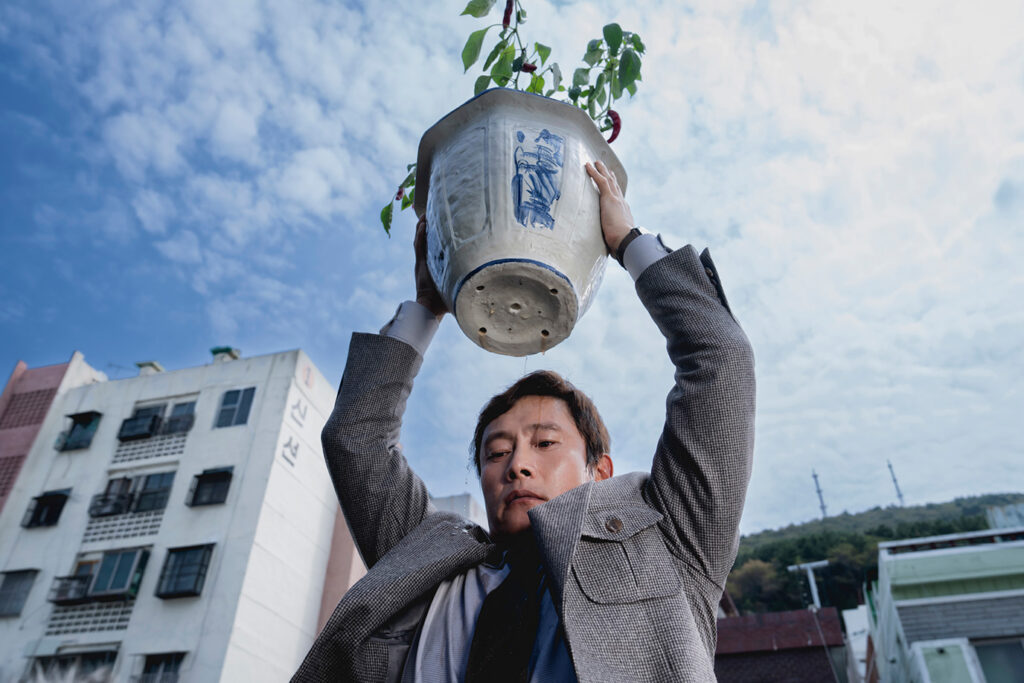
No Other Choice follows similar patterns from Chan-wook’s filmography but sees him addressing themes more in Joon-ho’s realm. The film follows Man-su (Lee Byung-hun), a successful employee in a paper company who is unexpectedly fired when the company he worked for decades is purchased a consortium of American business who offer little regard to the employees. His life thrown out, he faces eviction from the childhood home he proudly bought, forced to have his wife Miri (Son Ye-jin) quit her tennis lessons and start working again, and considering cancelling their daughter’s cello lessons. Even worse, their labrador dogs move to Miri’s parent’s house, in a moment of double disgrace as he managed to disappoint his children and his in-laws.
Unable to find a job in a shrinking business like paper, he starts to idolise another engineer from a competing company who posts regularly on social media. It’s from there that he devises the most convoluted plan – if he creates a fake company with a fake ad, he’ll be able to sort out the competition, learn who could potentially be above him, kill them, then kill the influencer and there will be no one left to take over that role but him.
If it sounds ridiculous, it’s because it is, but desperate times ask for desperate measures, and like Man-su keeps repeating: he has no other choice.
Anyone familiar with his style know that nothing will be easy to Man-su, but I like how Chan-wook has him learn from his mistakes. The first man is a confusing mess of mistakes (and the film’s best scene to the sound of a classic Korean Pop song) that he only narrowly escapes, which makes the following two more methodical and cirurgical. Even when eventually his wife and police start to suspect him, Chan-wook doesn’t let him even question his actions, having him constantly doubling down.
Chan-wook has never been that interested in the hazardous effects of capitalism in modern South Korea. In fact politically, and maybe even philosophically, his films set a thesis quite early that is only developed after the bones of the action is gone. The result is often a highly-entertaining feature with a very basic idea, a suggestion of one that Chan-wook never lets it get in the way of the plot.
Is that wrong? Of course not, especially when the point made is so strong and correct. There is no redemption or lesson to be thought at the end. Man-su will learn that to be the in the system, you have to trick it. That’s a depressive thought, but have you looked outside? Do nice guys win?
Verdict: 4 out of 5
For anyone willing to be taken for a wild entertaining ride and perhaps have their personal thoughts about capitalism validated.
28 Years Later: The Bone Temple
Who could’ve guessed that over two decades after their seminal zombie (sorry, infected) epic 28 Days Later, filmmaker Danny Boyle and writer Alex Garland would return to the world in last year’s 28 Years Later and knock it out of the park (the film reached number seven in our best of the year countdown). It was not just a return to form but a complete and holistic understanding of how a universe changes since the last experience. And it’s punctuated by one of the bravest epilogues of recent memory (stop here if you have never seen the film for spoilers ahead): our young hero Spike (Alfie Williams) is saved from a horde of infected by, of all people, a group of ninja-fighting, trackies-wearing group of people inspired by notorious British monster Jimmy Saville. It makes sense, in the universe of the film, the apocalypse came before Saville’s horrific actions were found out, so a bunch of children who grew up idolising them when the infected attacked, would probably continue to do so if it all merged with their own trauma of the event.
28 Years Later: The Bone Temple, written by Garland but this time directed by Nia daCosta picks up exactly where the previous one ended, with young Spike being inducted into the group helmed by a delicious evil Sir Lord Jimmy (Jack O’Connell). For his first task to see if he’s good enough to join the “fingers”, the group of Jimmy followers who all wear a Saville-like wig and are all named Jimmy, he needs to kill one of them, which he does by hitting them accidentally in an artery. The only way for Spike (now Jimmy as well) to survive is to follow the group as they terrorise local communities in the name of a rudimentary version of Satan, and hope for an opportunity to escape.
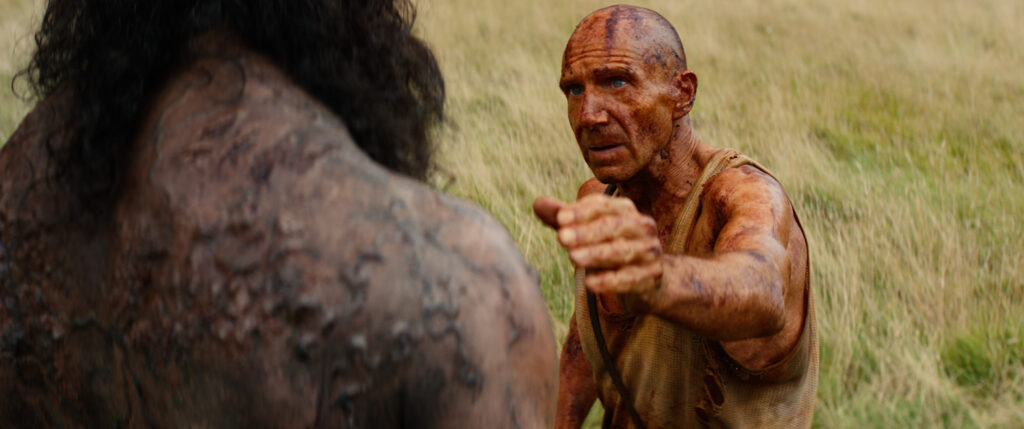
In the meantime we continue the story of Dr Kelson (Ralph Fiennes), the not that sound but also highly intelligent doctor Spike tried to have save his mother to no avail in the first film. Kelson who lives in an ossuary of his own making (the bone temple of the title) starts experiment sedatives with the Alpha infected from the first film which he names Samson (Chi Lewis-Parry) and believes to reach some breakthroughs in the quest to maybe reverse the infection. It’s theirs the funniest scenes, shot like a stoner hang-out movie between a crazy doctor and his own version of the Frankenstein Monster. It also perfectly pairs with the scenes with the Jimmys, that are horrific and hard to stomach.
If anything Bone Temple is darker and bloodier than its predecessors. Something more curious that there aren’t many infected in the film anyway, which relies on the cruelty of man to find its horror core.
For all the work Boyle, and daCosta who stands her ground very well here, it’s getting more and more likely that the driving force of the film is Garland’s rebellious take on the apocalypse. If the first 28 years took us away from the safety of community, this sequel introduces organised religion as a form of death and control. Jimmy Crystal has the demeanour of a preacher grifting his way through a group of confused teens to consolidate his power. In Garland’s Civil War he had a similar pessimistic take on the capacity of humanity to heal in the thick of end of times. But like in Civil War, Garland leaves space for hope and good. If it’s enough to turn things around, the third chapter in this saga will hopefully tell us.
Verdict: 4 out of 5
For everyone who saw last year’s 28 Years Later and was as surprised as we were that this series not only has legs, it’s exactly what we need right now in this moment.