By Ian Ellis-Jones -
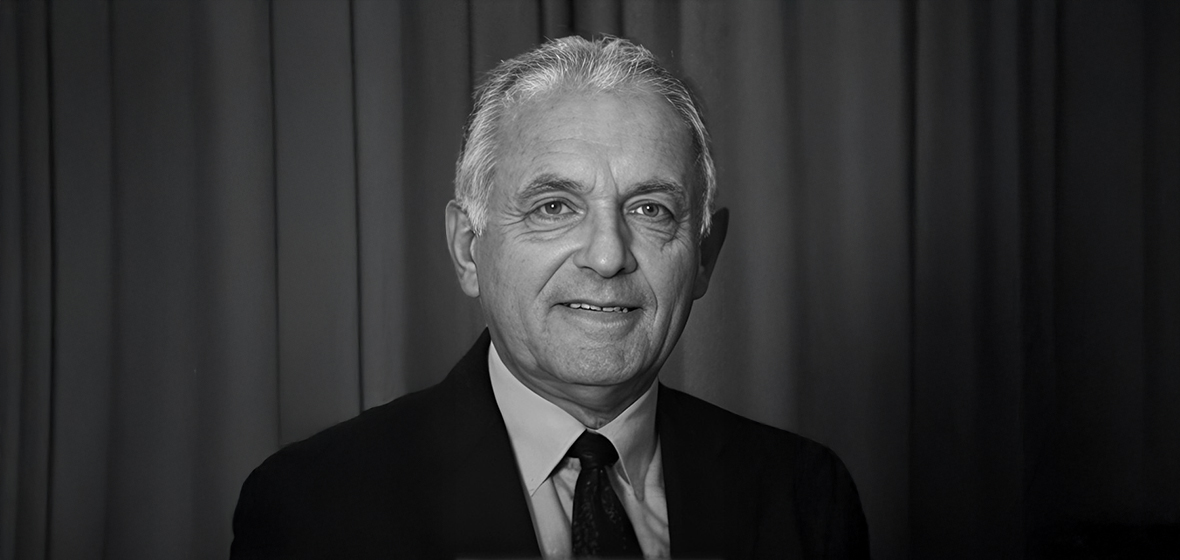
William Arthur (Bill) Henningham PSM LLB, solicitor and mediator, died at Lane Cove on 12 August 2025 after a long illness, aged 88.
Bill was born in Greenwich, on Sydney’s Lower North Shore, on 26 August 1936, the only child of William Arthur and Jessie Dorothea (Raith) Henningham. He grew up in Greenwich and Palm Beach, receiving his secondary education at Manly Boys High School and Sydney Grammar School. He worked as a cadet journalist with The Sydney Morning Herald from 1954 to 1956 before embarking upon a law degree at the University of Sydney where he graduated with a Bachelor of Laws degree on 10 April 1962.
Bill was admitted as a solicitor of the Supreme Court of NSW on 9 February 1962. The Chief Justice at the time was Dr H V Evatt who signed Bill’s admission certificate. He was always quite proud of that fact. He was articled with Dibbs Crowther & Osborne before teaming up with Roger Parker in 1963 as Parker & Henningham where he partnered for 20 years. As a lawyer, Bill was entirely client-focused and results-driven. He had great attention to detail but never lost sight of the overall objective. He preferred mediating disputes rather than litigating them, but when litigation was inevitable he would throw himself into it with gusto and determination.
From 1980 to 1983 Bill was a member of the executive committee of the Local Government Association of NSW. In 1983 he was appointed the full-time secretary and principal solicitor of the Local Government and Shires Associations of NSW (LGSA), holding those positions until 1990. It was during those years that I first met and interacted with Bill. During most of the period that he was at the helm of the LGSA, I was the manager of the legal branch of the NSW Department of Local Government (DLG). We clashed at times, mainly because some of the ministers for local government whom I served didn’t care that much about local government. Their main concern was to ensure that councils didn’t become an electoral liability for state government.
“Bill was a strong believer in local government but he was also a tireless and fearless opponent of maladministration and incompetence.”
While at the LGSA Bill fought hard for meaningful recognition of local government in the Constitution Act 1902 (NSW), but the constitutional recognition that was ultimately granted was quite hollow and cynical. In that matter and others I was seen by Bill at the time as being somewhat of an obstructionist. Eventually he came to understand the limitations imposed on me and others at the DLG. Bill was a strong believer in local government but he was also a tireless and fearless opponent of maladministration and incompetence. He cared greatly about the environment and became increasingly politically progressive in the many decades I knew him.
In 1990 Bill formed his own consultancy and training firm known as Communisult. In that same year he became a consultant to the law firm of Sly and Weigall, now Norton Rose Fulbright. I had already joined that firm as a senior solicitor in January 1989. We worked together in the Local Government and Development Division of the firm until September 1992. Shortly thereafter, he approached me about joining forces. I agreed, and in November 1992 we formed the boutique law firm Henningham & Ellis-Jones. Together Bill and I wrote several published works on local government law and presented numerous foundational courses, seminars and workshops on the then newly enacted Local Government Act 1993 (NSW).
Within a short time of its formation, Henningham & Ellis-Jones had secured as clients several NSW local councils, some of whom were quick to say to us that they had felt let down by a couple of large city law firms who had previously acted for them. Even after our law partnership was amicably dissolved, so that I could pursue other activities including full-time lecturing at UTS, I continued to work as a consultant to Henningham & Ellis-Jones, and later to Bill’s own firm Henningham Law, for many more years. In all, we worked together in private practice for 11 years.
Bill always had a great interest in local government and the local community, perhaps stemming in part from the fact that both his parents had been active in the local community and his father had been a member of Lane Cove Municipal Council from 1937 to 1941 and from 1954 to 1956. The Greenwich Progress Association, the precursor to the Greenwich Community Association, was formed on 8 December 1944 in the home of Bill’s parents, with his father being elected president. Bill himself served as an alderman of Lane Cove Council from 1976 to 1983, including four terms (1977-1981) as mayor and chief executive officer, as the mayor was in those days. He was an executive member of the NSW Council of Social Service (NCOSS) from 1973 to 1975 and was president of the Community Aid Service, the Centrehouse Association, and Greenwich Memorial Community Centre Association. As mayor of Lane Cove, he presided over the formal opening of the innovative Lane Cove Plaza in November 1977. The plaza was the first local pedestrian mall created in NSW by closing off part of a main street.
As mayor, Bill was a strong advocate of open government and public participation in decision-making processes. He arranged for public seminar workshops to be held by the council in 1979 to assist with local government planning, and the Lane Cove Sport and Recreation Task Force was created. During his terms as mayor the council initiated a traffic study and sponsored a family day care scheme. In 1981 the council-sponsored Project Environment was launched to raise awareness of the need to protect the local environment. Project Environment played an important role in the Lane Cove community for some 15 years. In the lead-up to the 1980 council elections the threatened amalgamation of councils was a dominant issue. Bill was a staunch critic of enforced amalgamations and arbitrary dismissals of councils and rejected the notion that larger councils were more effective and efficient. During his four-year tenure as mayor, he served on a wide range of local and regional community associations and committees. Throughout the decades Bill maintained his wide involvement in community activities, including serving as president or chairperson of no less than five local community organisations. He was the facilitator of Lane Cove Community Alliance and the president of Riverview Community Association. He was awarded the Australian Public Service Medal (PSM) in the 1990 Australia Day Honours List, and in 2009 he received the Lane Cove Citizen of the Year Award.
Bill and I crossed paths many times in our later years in the law. Between 1999 and 2017 I worked on a part-time contractual basis as an in-house lawyer at Lane Cove Council. Bill lived in the local government area and would often write strong letters to the council complaining about one matter or the other, usually with just cause. Often these letters came to me for an expression of opinion and sometimes even the drafting of a response. This presented for me no end of conflicts of interest. I would generally recuse myself but occasionally I couldn’t resist the temptation to draft a reply to Bill, for someone else in the council to sign. The next time I would see Bill he would say, ‘I know you drafted that letter. It had you written all over it.’ We would both laugh. He had a wonderful sense of humour and laughed in an unforgettable huh-huh-huh manner.
Bill was a sometime member of the Local Government Liaison Committee of the NSW Department of Planning, the Law Society of NSW Committee examining the review of the Local Government Act, the Employment Council, the steering committee established by the Australian Ministers for Local Government to investigate options for reform in local government public liability and professional indemnity, a working party established by the NSW Minister for the Arts on review of allocation of state funding for local government libraries, task forces established by the NSW Minister for Local Government investigating a proposed Local Government Commission and other issues, and the City of Sydney Sesquicentenary Citizens Committee. In 1984 he gave evidence on land use policy to the Senate’s Standing Committee on Science, Technology and the Environment.
“He was a foundation member of the Environmental Planning and Development Law Committee of The Law Society of NSW.”
For many years Bill was a part-time lecturer and examiner in the subjects of Local Government and Planning Law and Conveyancing in the Legal Profession Admission Board/University of Sydney Law Extension Committee Diploma in Law Course. On at least one occasion he was honoured to give the occasional address at a graduation ceremony. He was a widely experienced trainer of local government elected members, staff and intended candidates for election to civic office. He was a foundation member of the Environmental Planning and Development Law Committee of The Law Society of NSW and was the author or co-author with me of several chapters on local government law and practice in LexisNexis Butterworths Local Government Planning and Environment NSW, Commentary, vol C. He was a member of the publishing committee that produced The Environmental Law Guide (1992) and wrote many published articles and monographs on local government law and practice, environmental planning, and alternative dispute resolution. A qualified and highly experienced mediator, Bill was a member of the mediation panels of The Law Society of NSW and LEADR and IAMA [now Resolution Institute] and was an assessor of mediators in mediation training courses. He also served as a commissioner of public inquiries under the NSW Local Government Act and was a registered tax agent.
In May 2007, some 45 years after his law graduation, Bill helped organise a reunion of people who graduated in law in that year. They included Murray Gleeson and Michael Kirby, the latter delivering the keynote address and who was introduced by Bill to the attendees. Five years later Bill helped organise a cocktail party reunion celebrating 50 years since their graduation. Bill’s lifelong friend and fellow 1962 graduate, solicitor David Ross, was on the organising committees of both of those events. Fittingly, David would later deliver the first eulogy at Bill’s funeral.
Bill had many interests outside the law and local government including gardening, art and music. One of Bill’s avocational interests, which I didn’t share, was sailing at which he was extremely adept. Sometimes he would take me out on his yacht and I felt seasick before I even got on the vessel, despite being full of Dramamine. I can’t say that I greatly enjoyed these experiences but I was constantly amazed at how he managed to sail the vessel singlehandedly and so masterfully. He could also shoot a mean game of snooker. In his later years Bill took up boules and enjoying singing in a community choir.
Given the difference between our ages, Bill was in many ways a father figure to me. I would tell him that but he didn’t warm to the idea even though I meant it as the greatest compliment I could pay him. Still, there’s an even greater compliment I can pay him—and I also told him this more than once. Bill was the most decent and honourable person I ever had the pleasure and honour to work with. He was also a great mentor to me and he greatly assisted my family during some difficult times.
Bill is survived by Wendy, his wife of 60 years, their three adult children and their respective partners, and their five grandchildren.
A celebration of Bill’s life was held in the Palm Chapel of Macquarie Park Crematorium on Thursday, 21 August 2025.
Ian Ellis-Jones was a friend and former colleague of Bill Henningham.