By Henry Ea -
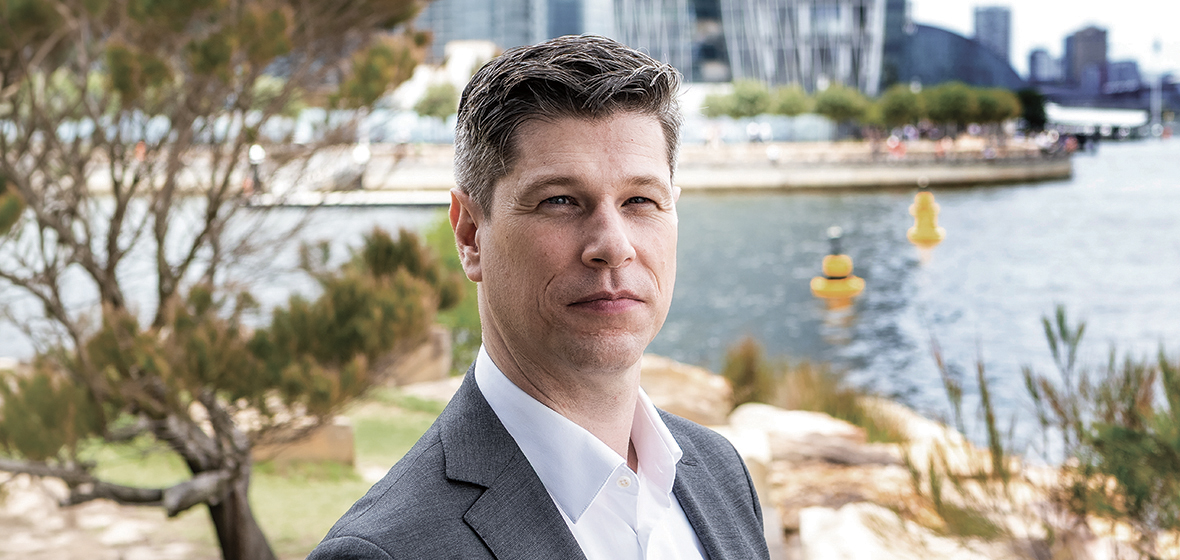
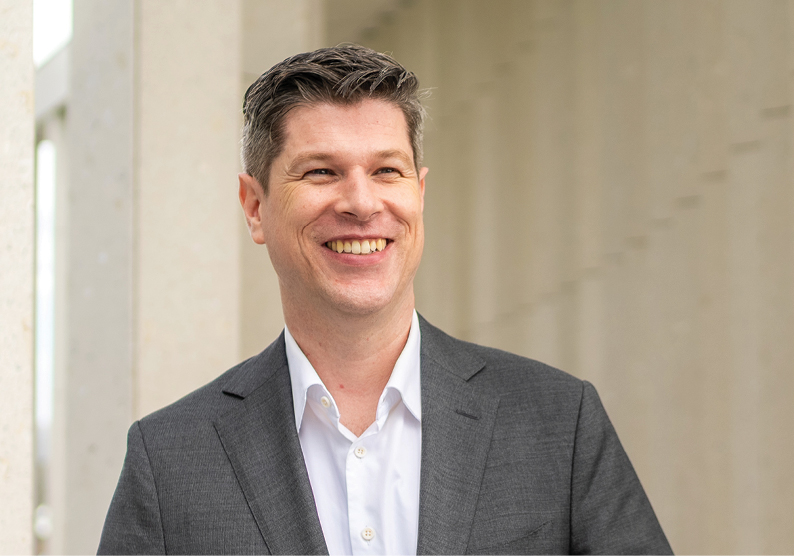
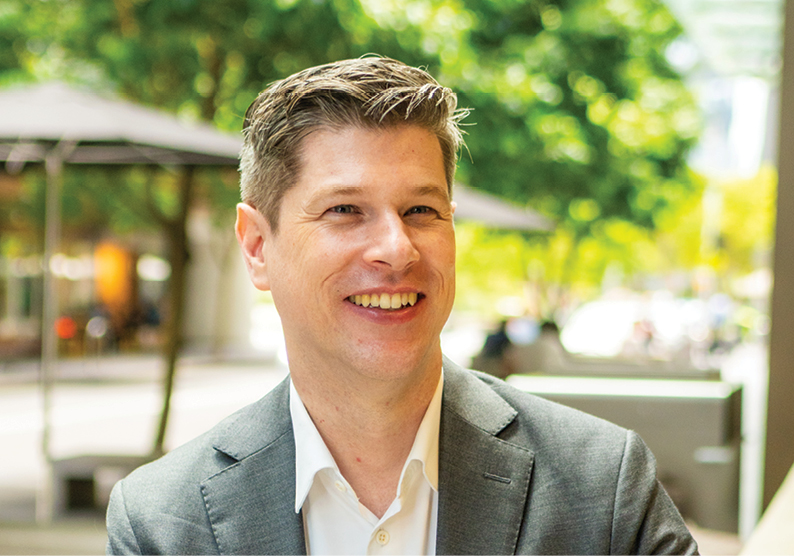
Profile: Timothy Stutt, Partner. Head of Environmental, Social and Governance. Herbert Smith Freehills Kramer.
From “accidental lawyer” to a global leader in ESG, Timothy Stutt’s career has been anything but a straight line. Whether navigating high-stakes “shadow” crises or translating complex financial risks into board-level strategy, Stutt remains focused on the “happy pursuit” of getting it right in a transformative era of mandatory reporting and long-term climate targets.
Sunlight spills across our meeting room at Herbert Smith Freehills Kramer. Floor-to-ceiling windows draw the eye toward the sprawling green of Hyde Park, a vibrant sanctuary hemmed in by Sydney’s ever-evolving skyline and a poignant reminder of the natural world at stake in a shifting climate.
I’m speaking with Timothy Stutt, Partner and Head of Environmental, Social and Governance (ESG) at the firm. For him, this environment is more than a view. It serves as the backdrop for a practice dedicated to the interconnected legal challenges and fundamental shifts currently redefining modern corporate governance.
Stutt’s path to leadership was anything but a straight line. Rather than a standard climb up the corporate ladder, his career was shaped by a series of unexpected pivots: from the hands-on reality of working in a family business to the high-stakes world of analysing global investment portfolios in California’s wine country. It’s a winding trajectory that gave him the sharp, commercial perspective he brings to his legal work today. “I’m actually a bit of a Sydney transplant, although I’ve been here now for about 11 to 12 years,” Stutt shares.
He grew up in the leafy, southeastern suburbs of Melbourne, spending his early years in a pocket of Burwood that, much to his parents’ eventual disappointment, was reclassified as Camberwell shortly after they sold the family home.
“Mum and Dad were a bit horrified when they sold the house, because six months later it was reclassified as Camberwell. Suddenly, prices jumped by $100,000, which back then was probably a fortune.”
They eventually moved six blocks away to Ashburton, a neighbourhood that was, for a long time, a “sleepy” stretch of High Street defined by fish-and-chip shops and a distinct lack of alcohol licences.
“[I]t was a chicken and chip shop, fish and chip shop, a couple of supermarkets, a couple of banks, couple of pizza stores, a TAB, and that was about it.”
“I’m probably one of those people who is an accidental lawyer, it’s not as though I ever really had a set idea of what I wanted to do.”
It’s a far cry from the modern Ashburton that now boasts a cocktail bar and a brewery, a transformation that remains a constant point of disbelief whenever he reconnects with old neighbours.
He attended Catholic schools that prioritised a friendly, collegiate community over high-pressure academics. He has very fond memories of that time. His parents, however, might recall it with more stress. This was mostly due to his habit of “cramming” and finishing assignments in the early hours, right before they were due.
“I’m one of three,” Stutt shares, “I have an older brother and an older sister.”
In the family hierarchy, he was a middle-ground blend of his two older siblings. His sister was the epitome of discipline. “We used to laugh that if dad had a heart attack while she was reading for school, she’d finish the chapter before calling the ambulance for him,” Stutt shares with a laugh. His brother was the opposite: naturally bright but completely disinterested in the traditional school structure. Stutt fell somewhere in between. He had enough of his sister’s reliability to get the work done, but enough of his brother’s streak to do it entirely on his own terms.
“I’m probably one of those people who is an accidental lawyer,” he shares, “it’s not as though I ever really had a set idea of what I wanted to do.”
The accidental lawyer
Stutt’s career path was never defined by a singular ambition. Instead, it was shaped by a desire for flexibility. After finishing school with high marks, he found himself with a wealth of options. He ultimately chose a law and commerce degree at Monash University because it felt like a “blank Scrabble tile”, a versatile tool that would keep as many doors open as possible.
At 18, he recalls lacking a clear vision for his future, a sense of uncertainty that persisted into his 20s. However, drawn to language-heavy subjects, he says, “law seemed a natural adjacency for some of that.”
But an unease set in during his time at university; he often felt he was pursuing law more by default than by passion. “I didn’t necessarily love legal education at university,” he says.
He found the early curriculum, heavy on rote memorisation and abstract principles like that of property or tort law, to be frustratingly divorced from the practical world. To balance this, he minimised his time on campus to focus on work, splitting his energy between a research role at the Victorian Legal Services Board and Commissioner and his family’s computer store.
“[I] wound up minimising university hours to the extent that I could reasonably get away with it and working a couple of jobs.”
He was far more captivated by the nuts and bolts of the family business. Though he could have done without the bank reconciliations, the tangible side—marketing, sales and troubleshooting—commanded his focus in a way textbooks couldn’t.
The turning point in his education came during an exchange at Monash University’s Prato Centre in Italy. Immersed in the European summer and taught by top judges and legal experts, he found the structure he had lacked. Mandatory attendance and strict deadlines enforced consistency, quickly raising his grades from passes to high distinctions. This shift enabled him to engage with law on his terms through electives such as Aerospace Law and Comparative European Legal Systems. Studying in a “sweaty classroom in an old Palazzo” opened his eyes to legal systems beyond Australia and England. Yet, by his fourth year, he found himself in a familiar predicament: “My grades had picked up, but I wasn’t quite sure if I wanted to be a lawyer.”
As graduation neared, he joined the ‘frenzy’ of clerkship applications, despite having no legal pedigree and little idea what the job entailed.
“I didn’t have any lawyers in the family … Well, certainly no one closer than a second or third cousin,” he says.
He recalls, “I thought, why not? I’ll send out applications like everyone else and see what happens.”
Stutt says while his improved grades weren’t enough for some firms, Freehills prioritised commerciality and gave him a chance. They valued his diverse work history and unique subject choices over a perfect transcript, offering him a path that led to a full-time role in 2008, just before the GFC hit. For the first time, he experienced true professional autonomy. He thrived in an environment where he could “run as fast and as far” as his ambition allowed, finding a genuine passion for the commercial side of the law, from business development to the momentum of client matters.
His career at Freehills began with three eight-month rotations, starting with the Head Office Advisory team, the group where he is now a partner. Entering this field during the GFC provided a trial by fire in high-stakes corporate governance, where he addressed issues ranging from shareholder activism to insolvency and directors’ duties. He then moved to Employment, which complemented his advisory work with a focus on executive transitions and investigations. His final rotation in Commercial Litigation brought a mix of complex, smaller cases but the demanding workload prompted him to seek new challenges.
“I was swimming amongst the documents and wanted to see a bit more of the world,” Stutt says.
The pivot
Feeling submerged in document review and eager for a global perspective, he applied for a prestigious MBA scholarship through the Japanese Ministry of Education to further bridge his knowledge gap between law and global business.
By the time the scholarship was approved, he’d settled into the advisory team and was building his client base. Still, the opportunity was too good to refuse.
Departing the familiar halls of Freehills for a year at Hitotsubashi University Business School in Tokyo, he embraced the chance to live and study in Japan as a once-in-a-lifetime pivot.
Stutt explains that the scholarship, which selects just two candidates per country to foster future leaders with a deep understanding of Japanese business, was incredibly generous, covering his tuition and providing a tax-free bursary for living expenses alongside subsidised housing that, despite his initial fears of it being “small and bleak”, turned out to be quite comfortable.
But his career would take an unexpected turn during his MBA. His finance professor, who was also a portfolio manager, recruited him to join his investment fund in Sonoma, California. He spent the next year and a half in the U.S. working and analysing a portfolio that was 80 per cent Japanese equities and 20 per cent global blue chips, effectively bridging the gap between his legal background and international finance.
Though he enjoyed the rigour of market analysis and investing, he eventually realised he could not envision a long-term future in the investment industry. Instead, he saw his path leading back to law and began focusing his efforts on returning to the legal profession with a broader commercial perspective.
“If you don’t understand what the performance metrics are, it’s hard to draft for them [or] deal with disputes around what they mean in practice.”
Return to law
Returning to the Australian legal market in 2013 proved more challenging than expected. The market was sluggish.
He jokes that, for a moment, it looked as though he might relocate to the Cayman Islands.
But luckily, he found a way back to Freehills as a Solicitor. However, this professional return was complicated by a significant personal one: he had met his now-husband, Scott, while working at the investment fund in Sonoma.
Sonoma is a picturesque region in Northern California’s wine country, characterised by rolling vineyards, historic plazas, and a relaxed, rustic elegance that distinguishes it from its more commercial neighbours.
Stutt recalls life there as a sun-drenched, “Sideways-esque” experience of convertibles and weekend wine tastings.
“Instead of having a bunch of crotchety guys in the car with me, it was my husband, Scott and his dog, going from place to place,” Stutt says, referencing the 2004 comedy-drama movie.
However, the social scene in Sonoma for young gay men was practically non-existent; he was essentially the only one in town.
“I think there was me, the barista at Starbucks, who was part-time barista, part-time drag queen, and Scott.”
He and Scott met while Scott was working in the wine industry nearby, and after a nine-month-long distance relationship following Stutt’s move back to Australia, Scott joined him, eventually trading a role at Apple for a new chapter in Sydney.
Scott’s career was the primary catalyst for Stutt’s move to Sydney, a transition made remarkably seamless by Freehills’ integrated team structure. Because his group operates as a single unit across Sydney and Melbourne, he was able to retain his clients and team while simply changing his physical office location.
Today, he and Scott have settled into a leafy, community-minded pocket of North Sydney where the neighbours use WhatsApp groups to dodge parking inspectors.
“[W]e still query whether we’re Sydneysiders, in that, while we have a mortgage here, we’re not necessarily beach goers or joggers or run club type people.”
Despite a decade-plus in the city, they remain Melbournians at heart. “[W]e’re kind of wine-tasting, sarcastic cafe people,” he jokes.
Path to partner and the rise of ESG
Stutt’s path to partnership was built on a “drumbeat” of long-term relationships, some stretching back to his days as an article clerk in 2008. In the world of governance and disclosure, the work follows a steady, cyclical rhythm of AGMs and reporting seasons, allowing him to grow alongside a high-quality, stable client base. However, because advisory work lacks the “explosive” growth often seen in M&A, he knew his partnership case needed to highlight a clear growth trajectory. He saw that trajectory in the rise of ESG.
Over his career, he had watched various waves of regulatory focus pass through–from GFC-era solvency issues to executive remuneration and diversity–but ESG felt like a true inflection point due to its sheer breadth and the holistic way clients were beginning to view it.
Stutt realised that while the firm was full of world-class specialists, his clients didn’t want siloed advice. They needed someone to connect the dots between environmental regulation, employment conduct and board-level disclosure.
He frames his role as the “Chief Coordinator and Cheerleader,” bridging the firm’s various experts to provide a unified solution. When he began the promotion process in late 2020, he predicted his practice would eventually be one-third ESG work; within a year, the ratio had completely flipped to two-thirds ESG.
“[T]hat was very validating … that clients saw ESG as a connected set of issues, and the approach that we were taking as a firm—bringing together people from different areas to help solve the problems —was going to be the best path forward.”
This validation justified a strategy to move away from “business as usual” to create an integrated practice that captures everything from front-end advisory to back-end contentious matters. It’s been a rewarding shift that has proven his hunch: ESG isn’t just a sub-topic of law, but a fundamental evolution in how modern companies must be governed.
Stutt says the birth of Freehill’s ESG practice was more an act of initiative than a formal appointment.
“I think, at the time we were pulling together the ESG practice, we didn’t really have a leadership structure … So, I was a slightly self-appointed head of ESG, in that the firm was backing ESG, and they recognised that I was pushing it forward.
“[I] had to come up with a title which was going to help explain that I was helping do that, and have clients understand that too, but I didn’t necessarily want to weigh into the politics of having to set up a whole new practice area or anything like that on a global basis for the firm,” Stutt says.
He chose the title of Australian Lead for ESG, a strategic choice that gave him a platform to drive the practice forward as a Senior Associate while bypassing the need for too much firm process. This move proved perceptive as the firm’s momentum in Australia soon aligned with similar growth in the UK and a formal structure was put in place.
Remarkably, what began as a small, informal effort has since matured into a sophisticated global leadership structure, expanding from just one or two people to a team of eight heads across Asia, Europe, the US and the UK, all overseen by a global chair.
Today, the team’s work is defined by the fact that ESG regulations move at varying speeds across different borders. Their collaboration is less about bureaucratic meetings and more about real-time, practical knowledge sharing. For instance, because Australia is roughly a year ahead of the UK in implementing mandatory climate reporting based on the International Sustainability Standards Board (ISSB) S2 standards, Stutt has been able to provide the firm’s London team with a “look ahead” at the specific crunch points their clients will soon face. This cross-jurisdictional co-operation allows them to turn local challenges into global insights, ensuring that even as jurisdictions diverge, their strategic advice remains one step ahead of the regulatory curve.
Providing this level of foresight requires more than legal knowledge; it demands deep technical fluency with the data that increasingly drives these global regulations. Stutt’s extensive background in finance has served as a cornerstone of his legal career, reinforcing his belief that financial literacy is indispensable for navigating the complexities of corporate law. He observes that the most successful practitioners invariably master the “language of finance” to better interpret corporate disclosures and investment strategies, even if they lack formal training in the field. This expertise is particularly vital when managing executive incentives and performance metrics; as he notes: “If you don’t understand what the performance metrics are, it’s hard to draft for them [or] deal with disputes around what they mean in practice.” Without a fundamental grasp of how these targets are calculated and the discretion surrounding them, a lawyer cannot effectively draft agreements or resolve the nuanced disputes that arise in a commercial context.
Beyond the numbers, his time in the finance industry revealed a surprising truth: the core skill sets of a financial analyst and a corporate lawyer are nearly identical. Whether he is “hoovering up” market data to pick a stock or analysing legislation to solve a legal puzzle, the process remains the same.
“[P]eople are ambitious. They’re trying to achieve a goal, and they’re running at it 100 miles a minute, and in that context, people can put their best foot forward in an unhelpful way.”
“[T]he skill set was very similar to what I was doing as a lawyer, where you’re reading a whole bunch of cases or commentaries or legislation … you have to try and decide what you think it means in practice for the problem that you’re staring at, and then you need to be able to communicate that view in a way where it’s going to be accessible to them, and they’re going to be able to understand it.”
In his practice today, he often reflects on a framework shared by his mentor: that a lawyer is equal parts interpreter, insurance and moral support. He notes that, while lawyers provide the technical interpretation of the law and the “insurance” of an external expert opinion, much of their value lies in being a trusted sounding board. His finance background deepens this “moral support” because he can unpack their issues through both a legal and financial lens. He is not just providing a set of rules, he is helping them navigate their most complex business decisions with a clarity that bridges the gap between the spreadsheet and the law.
But with companies staring down a 2050 net-zero target, Stutt believes the interpreter role is the most important. “The reality is, it’s a complex problem and understanding the issues and providing clear advice is most important. It helps clients chart a path through what’s required of them and understand their directors’ duties in that context.”
The challenges of a shifting climate
Helping clients bridge the gap between high-level ESG goals and the quantitative metrics that satisfy boards and investors begins with understanding that “investors are not shy about saying what they want.” While the landscape was once a regulatory vacuum of voluntary, inconsistent frameworks, we have reached a major turning point with the first year of mandatory climate reporting. Stutt explains that this shift, largely driven by the Australian version of the ISSB S2 standard, was born out of investor frustration with the lack of comparability between companies. For companies, it is now about the “crunch points” of data accuracy, consistency and meeting the same rigorous informational requirements across the board, including for unlisted entities.
“[W]hat can be a bit more challenging for companies is understanding how much is enough, because different investors will say different things or have different areas of focus or require different information, and finding a way in which to balance some of that can be challenging.”
However, Stutt notes the real challenge isn’t just disclosure, it’s risk management. Under the broad umbrella of a director’s duty of care and diligence, boards must proactively manage material risks, but in the sprawling world of ESG, “trying to cover the whole world” is a recipe for failure.
“[W]hen you’re considering ESG, and you’re having to think about human rights and climate, and you’re thinking about sexual harassment and sexual assault response, and you’re thinking about diversity and inclusion, you’re thinking about a whole range of things.”
He notes that companies that successfully translate these issues into actionable outcomes start with a rigorous materiality assessment.
“There’s always an element of horizon scanning for the next kind of emerging issue,” Stutt adds. “Unless you’re actually understanding what the emerging issues are, you’re not going to be ready to be able to assess the impacts for your company and embrace changes. So, horizon scanning has become a core part of what a lot of companies do in the ESG space.”
By determining whether their primary risks lie in land access and Indigenous relations, employee safety, or the emerging frontiers of AI and cyber resilience, they can focus their capital and strategy on the issues that truly move the needle.
“[T]here is a wealth of information to dig into specific issues,” Stutt suggests, pointing to the frameworks and guidance published by bodies like the UN Global Compact Network. “But unless you have done the exercise to understand which issues are most material to the business, it’s really difficult to funnel down.”
This process effectively strips ESG of its abstract nature, transforming it from a broad set of social concerns into a rigorous business strategy. To an investor, a company that can articulate why certain issues are material and demonstrate how they are being mitigated, is a company proactively managing its long-term prospects. Ultimately, Stutt’s role is to help clients cut through the noise of dozens of competing ESG topics, distilling them into the handful of risks that represent a genuine threat, or a significant opportunity, to their bottom line.
Net zero and political cycles
Advising a board on maintaining a 2050 Net Zero target within the constraints of short-term political cycles requires a total rethink of corporate legal obligations. Stutt says, in Australia, directors’ duties are owed to the company as a whole, including both current and future shareholders. This legal framework is actually quite conducive to long-term thinking. It gives boards the “licence” to prioritise strategies that ensure the company’s viability decades from now, even if those decisions involve high upfront costs. The challenge isn’t the law, but the psychological discomfort of the balancing act: weighing a known, quantifiable capital outlay today against the unquantified, shifting risks of global warming and future energy mixes tomorrow.
“[Y]ou don’t know the pace at which global warming is going to hit. You don’t know what the energy mix will be in the future. You don’t know what some of the benefits might be in a quantitative sense. So that balancing exercise for boards is really uncomfortable,” he says.
To navigate this, Stutt encourages boards to focus on rigorous processes rather than perfect prediction. Courts and regulators are generally reluctant to second-guess commercial decisions, provided the board can demonstrate a judicious, well-documented interrogation of the issues. The goal is to move past the “paralysis” of uncertainty. By documenting how they weighed immediate expenditures against long-term resilience, boards protect themselves from liability while ensuring the company adapts to emerging risks. Ultimately, inaction is its own risk; a board that fails to evolve is often more vulnerable than one that makes a carefully considered investment in a sustainable future.
As a leading voice in the industry, Stutt has advised companies that “all things are possible through good disclosure. Be frank about your progress and start the review process early.”
He explains that being direct about implementation gaps is actually a strategy for minimising legal exposure, not increasing it. While activists or NGOs may not always like the message, it is far harder to legally challenge a company that is transparent and data-backed than one whose ambition has outpaced its demonstrable progress. Stutt says the team often sees companies come unstuck with an unintentional overstatement.
“[P]eople are ambitious. They’re trying to achieve a goal, and they’re running at it 100 miles a minute, and in that context, people can put their best foot forward in an unhelpful way.”
To prevent this, Stutt’s team implements a granular verification process when reviewing sustainability reports, similar to the rigorous due diligence once reserved for prospectuses and IPOs. By treating ESG disclosures with the same level of verification as financial transactional documents, companies can ensure their claims are robust and defensible.
In an era where different stakeholders hold conflicting views on energy mixes and technology pathways, it is vital for boards to benchmark their strategies against broader market and technological trends.
“In Asia and Australia … there was an investor need. The government stepped in to try and meet it with legislation. We’ve aligned ourselves to an international framework, and we’ve just done it. I think that adds a lot of certainty, and it gives companies a pathway forward, which is helpful.”
This helps ensure their chosen pathway to a target is not just an internal ambition, but a defensible commercial position. Ultimately, by starting the review process early and being frank about the “how” and “where” of their progress, boards move away from the risk of greenwashing and toward a posture of substantiated, credible governance.
This move toward credible governance is being further solidified by a shift in the global regulatory climate. While the US reconsiders its stance on ESG and Europe “right-sizes” its heavy regulatory load, Stutt says Australia has taken a pragmatic “keep your head down and get on with it” approach. By aligning with international frameworks like the ISSB, the Australian Government has provided a degree of certainty that resolves the “how to be all things to all people” dilemma companies previously faced when juggling multiple voluntary standards.
“In Asia and Australia … there was an investor need. The government stepped in to try and meet it with legislation. We’ve aligned ourselves to an international framework, and we’ve just done it. I think that adds a lot of certainty, and it gives companies a pathway forward, which is helpful.”
He says while the system isn’t perfect, and will likely require some smaller, low-risk entities to report data that will be costly and time-consuming, it provides a clear, stable pathway forward.
The real challenge of being a “first mover” is that Australian companies currently lack a library of peer examples to follow, leading to a fair amount of “staring into the void” as they draft their first mandatory reports. However, with ASIC signalling a pragmatic and proportionate enforcement approach, and 30 June year-end companies poised to learn from the 31 December cohort, the market is quickly moving from uncertainty toward a standardised baseline of disclosure.
Stutt says while smaller companies falling outside the three mandatory reporting groups won’t face a strict legal obligation to report, they will increasingly encounter “bottom-up” pressure through contractual requirements and commercial leverage. As those at the “top of the tree” seek to fulfil their own mandatory disclosure requirements, they are likely to build information-sharing clauses and target-setting into investment management agreements and supply chain contracts.
Effectively, the reporting burden is being funnelled down the value chain. While large entities may initially rely on high-level emissions factors and estimates to bypass the need for granular data from every individual supplier, this is likely a temporary reprieve. Over time, smaller businesses will find that providing transparent ESG data is no longer just a regulatory hurdle for the few but a commercial necessity for anyone wishing to remain a preferred partner in a sophisticated global supply chain.
Podcasting and life outside of law
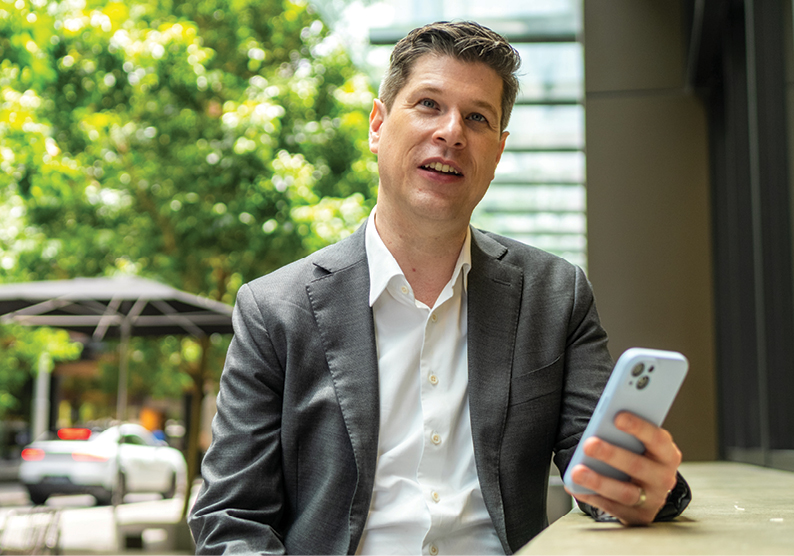
Beyond his primary duties, Stutt co-hosts The Third Wheel, a Herbert Smith Freehills Kramer podcast exploring the most pressing ESG issues shaping the Australian landscape.
The team’s approach to The Third Wheel is intentionally sporadic; they prefer to jump on interesting issues as they arise rather than sticking to a rigid, scripted schedule. Stutt and his co-host, Mel Debenham, a partner specialising in envirnomental and planning law, firmly believe the best episodes happen when guests are “off the cuff” and riffing on what genuinely interests them. Of course, convincing high-stakes lawyers to chat unscripted for 30 minutes is easier said than done. The desire for polish and preparation often creates a natural friction with the hosts’ “unprepared” philosophy.
Beyond the office, Stutt shares that he and his husband are avid wine enthusiasts, though they have a slight problem: they are significantly better at collecting wine than drinking it.
What began as a local interest has evolved into an international logistical puzzle; due to prohibitive import duties, they maintain a “virtual cellar” in Napa, where their collection is professionally warehoused alongside their growing stock in Sydney’s western suburbs and their own home. They recently travelled to the US with the noble objective of “drinking down” the inventory, but in a classic collector’s paradox, they naturally discovered enough new favourites to return with more bottles than they started with. Their collection has reached the point where it feels almost too nice for a casual weeknight on the couch, leaving them with an impressive, ever-expanding cellar and very few practical pathways to actually finish it all.
Rising from the shadows
On reflecting on his chosen area of law, Stutt says that corporate governance is fundamentally an optimistic discipline; it’s about the “happy” pursuit of getting things right the first time through sensible policies and robust duties. But there is certainly a side of his practice that is difficult to discuss: the “shadows” of crisis management. While his M&A or litigation colleagues often see their names in the Australian Financial Review alongside high-profile deals or court victories, governance lawyers frequently work on the most sensitive, confidential matters where things have gone wrong. These real-world stress tests are where the most profound learnings happen, yet the sensitivity of these files means they remain strictly behind closed doors.
This confidentiality, however, is precisely what gives his team at Freehills its competitive edge. Because they hold such a significant market share, they see more “private” examples of what works—and what doesn’t—than anyone else in the market.
They are able to offer their clients an “unobservable” advantage: the collective intelligence gathered from steering countless companies through crises and investor scrutiny that never makes the front page.
While it can be slightly frustrating not to talk publicly about their most complex work, the real value lies in being the “interpreter” who can guide a board based on a wealth of market practice that simply can’t be replicated or observed from the outside.
As the morning light shifts across the skyline and we wrap up, I take one last look out the window of the meeting room. There’s another reason I was so struck by the sight of Hyde Park tucked into the city—it’s the perfect metaphor for Stutt’s own story. A story of transformation and progress.
His journey, from those early days searching for ‘options’ to leading a global ESG practice, has been anything but a straight line. Through every unexpected turn, he’s made a habit of leaning into the unknown, facing the challenge of shifting regulations and uncertain futures head-on.
It’s a reminder that leadership isn’t really about following a map; it’s about navigating the winding roads on your own terms while keeping your eyes on what matters most.