By Caroline Wagner -
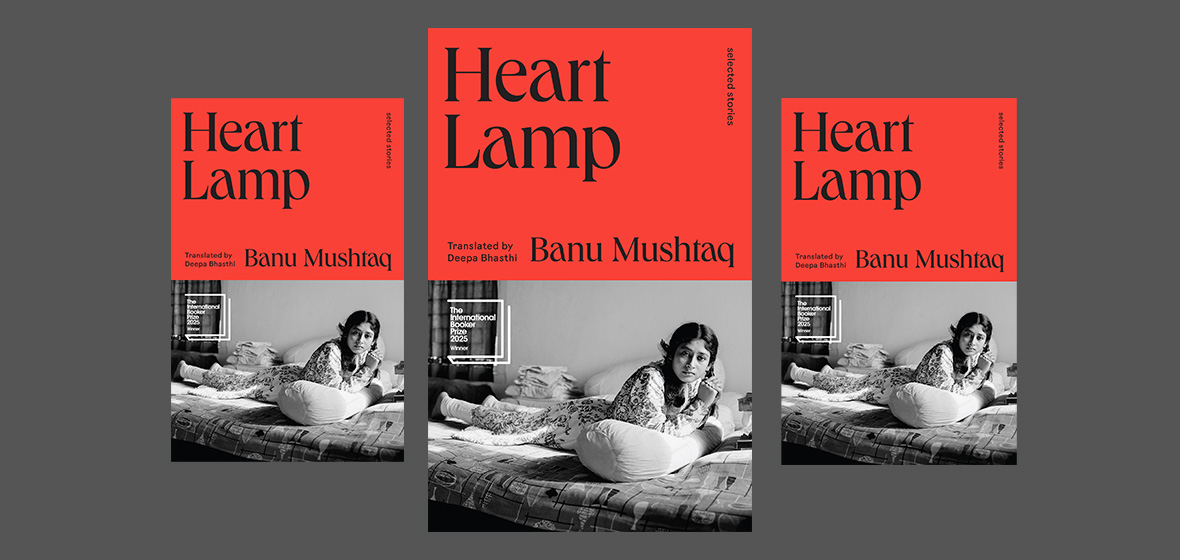
Heart Lamp, the first Kannada-language winner of the International Booker Prize, is an extraordinary, moving collection, capturing an oppressive but complex milieu.
This is not a translation of an existing book; the twelve stories in this collection were published in the Kannada language between 1990 and 2023, and chosen by translator Deepa Bhasthi from author Banu Mushtaq’s wider repertoire of stories.
The personal is very much the political here. Mushtaq is a lawyer, an activist, and a journalist. Her stories, furnished with vivid characters and rich prose, chronicle the lives of women in patriarchal southern India – lives over which they have very little control. We become privy to their relationships with men and other women, and the way they struggle against the boundaries set for them. Amid this, we see the failures of the men who have authority in these communities.
A mutawalli figures as a central character in two stories. (A mutawalli is a trustee of a waqf, which is an endowment to a charitable or religious cause.) In the first of these two stories, a mutawalli fails to notice his son’s illness as he attempts to correct the mistake of a Muslim man buried in a Hindu cemetery. Not inconsequential to the mutawalli in considering the cost of this mission is the popularity and support he will gain from its success. He admits this only to himself. In the second, a mutawalli, who does not properly understand Islamic law, refuses to help a destitute woman whose estranged husband will not pay for the lifesaving medication their baby needs.
Repeated is the threat of a husband leaving his wife; whether it is parents hesitating to marry their daughter to a man from another town, as he can more easily leave her, or the women living with the fallout of a husband already gone. In the story for which the collection is named, we see a woman named Mehrun considering a particularly gruesome suicide when she is met with blame and hostility from her family after her husband leaves her for another woman. “But the lamp in Mehrun’s heart had been extinguished a long time ago. Who should she live for?”
The characters who populate these busy stories are impressively observed. Despite the often grim subject matter, one is compelled to read on. I felt hopelessness that echoed the characters’ feelings, but Mushtaq made the reader feel their joy, anger, and guilt as well.
Her humour and deep empathy for her characters are preserved in this translation. (One husband bemoans the immaturity of his wife earlier in their marriage, when she was eleven. Another becomes obsessed with his sister-in-law’s shoes and plots to steal them.) In her own words, Mushtaq says her stories “are about women—how religion, society, and politics demand unquestioning obedience from them, and in doing so, inflict inhumane cruelty upon them, turning them into mere subordinates. The daily incidents reported in media and the personal experiences I have endured have been my inspiration. The pain, suffering, and helpless lives of these women create a deep emotional response within me, compelling me to write.”
The translation elides italics and footnotes for the Kannada, Arabic and Urdu words which remain untranslated. In her translator’s note, Bhasthi explains that italics—aside from being visually distracting—keep these words alien to English-language readers. She invites the readers to learn the words and experience language as the characters do. Pausing to look up translations can feel disruptive, although ultimately, the treatment of language is more immersive and not substantially different from looking up the definition of an unfamiliar English word in a book. Bhasthi goes into how she retained the quirks of spoken Kannada, as well as a biography of the author.
Bhasthi sums up Mushtaq’s career with the Kannada word bandaya, meaning resistance, dissent, and a litany of similar ideas. Not every heroine here is a dissenter. Some remain the victims of their circumstances, unable to escape their fates. But to tell their stories is itself a kind of resistance.
Max Porter, the chair of the International Booker Prize 2025 judges, called Heart Lamp “something genuinely new for English readers,” and certainly it is unlike anything I’ve read. A perfect choice for Women in Translation Month.