By Cat Woods -
The Economist Intelligence Unit's 2025 Global Liveability Index includes three Australian cities. The annual ranking assesses more than 150 cities on 30 factors to define the top cities based on safety and security, health, housing, culture, education, and access to nature.
In mid-June, the Economist Intelligence Unit (EIU) declared that Copenhagen had taken top position, toppling Vienna from its three-year peak ranking. Denmark’s capital achieved a perfect score of 100/100 for stability, education, and infrastructure. Within the peak 10 choices, three Australian cities are in the top 10: Melbourne (4), Sydney (6), and Adelaide (9). LSJ Online took a bit deeper look into what factors made the top 10 cities, especially Australia’s top rankers, so liveable. And, why are European cities dominating the index over Asia and the Middle East?
Within the 10 most liveable cities designated by the EIU, Osaka is the only Asian city, and Auckland the only other city apart from European cities. Cities in western Europe and Asia have consistently dominated the top of the rankings. A ranking above 80/100 is considered the highest tier of liveability.
What causes cities to gain and lose liveability?
As much as they dominate the top rankings, many western European cities have also moved down the ranks in 2025. All of the UK cities (London, Manchester and Edinburgh) have likewise dropped down the ranks, which the EIU attributes to “widespread riots and rising homelessness”. Other cities to lose their liveability rankings include two Canadian cities (Calgary and Toronto), which received lower healthcare scores along with two other Canadian cities in the index. However, North American cities remain highly sought-after places to live in, with all 21 reporting the highest tier of liveability.
While the top 10 list gains the most attention, the cities that rise and fall are perhaps the most interesting factor. What has changed in terms of policy, geopolitical climate, or socially, to affect the liveability of these locations? The Middle East and North Africa region registered the most significant gains in overall liveability, which the EIU puts down to advancements in healthcare and education within cities in Saudi Arabia and the UAE.
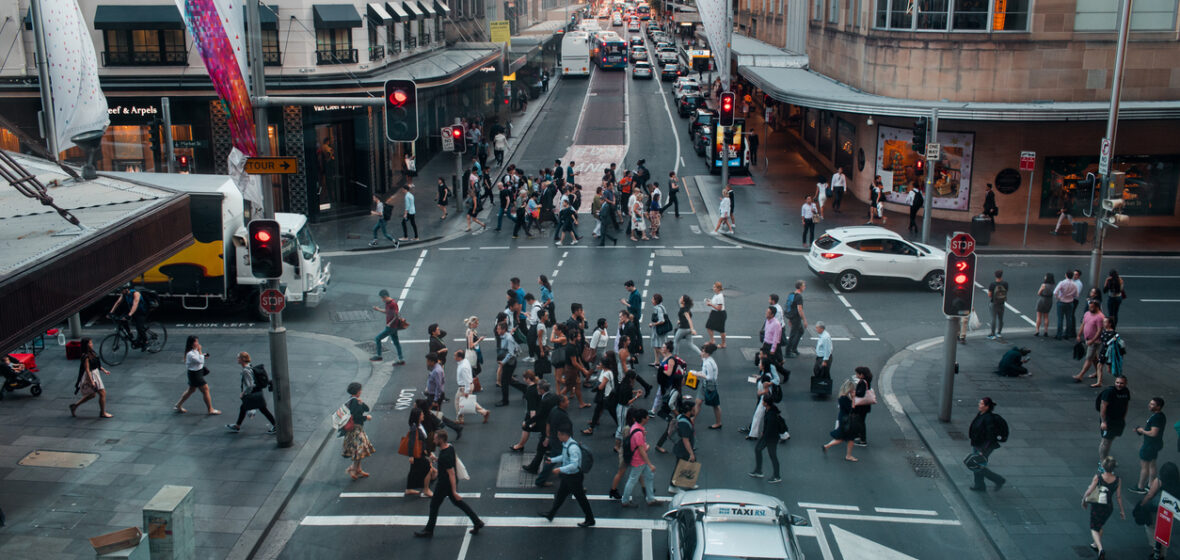
Melbourne once dominated the Global Liveability Index. Over seven consecutive years, it was named the world’s most liveable city, though it dropped to eighth place in 2021 and tenth in 2022. Still, it has hovered within the top five globally for the past three years. Sydney maintained its overall liveability score of 96.6 to Melbourne’s 97, and both cities matched perfect scores for healthcare and education (100), stability (95) and infrastructure (96.4). Melbourne ranked higher in the culture and environment category, scoring 95.8 to Sydney’s 94.4.
Monocle ranks Paris as the prime city to live in
Approximately a week after the EIU released their annual index, lifestyle brand Monocle released their 18th annual Quality of Life Survey, which ranked cities according to their own system of scoring. The top 10 list this year was headed by Paris, which shot up the rankings largely owing to its preparations for the Paris Olympics in 2024 – which encompassed housing, transport, security, and infrastructure measures. Mayor Anne Hidalgo’s urban planning initiatives were credited with improving the “cleaner, greener and safer” capital, while maintaining the historic, signature architecture for which Paris is beloved.
Importantly, the city has dedicated its planning towards a sustainable city that embraces less traffic and greater green space. The enhanced cycle-lane network saw a doubling of cyclists between 2023 and 2024, along with the introduction of a faster rail connection between Paris-Orly Airport to Saint-Denis Pleyel station in 40 minutes. There is also a plan for an urban forest, to which the city has committed to plant 170,000 trees by 2026. In terms of policy, Paris – which has long been an expensive city to live in – has a committed social housing policy, which enables low-income Parisians to live close to, or in, the central city area (mixité sociale or socially and economically diverse districts).
Housing, healthcare, and urban green areas are fundamental
Madrid took second position, boasting, Monocle says, “the highest life expectancy (86.1 years) of any metropolis in Europe”. Vitally, Spain’s capital has a robust healthcare system, where public hospitals have a comprehensive system of data-gathering and intensive training for healthcare workers. The Madrid region has the highest private health-insurance coverage in Spain (close to 37.5 per cent). Manuel Martínez-Sellés, the president of the city’s Official College of Physicians, told Monocle: “Good public-private collaboration often allows for more efficient and decisive medicine. In Madrid we have the best hospitals in Spain, 11 medical schools (more than many European countries), the nation’s leading biomedical research centres, strong and responsive primary care, shorter waiting lists for surgery than in other regions, very active prevention and early diagnosis programmes, and exemplary out-of-hospital emergency services.”
Rounding out the Monocle top 10 are Athens (best for nightlife), Barcelona (best for urban greening), Vienna (best for housing), Zürich (best for mobility), Mexico City (best for conviviality), Lisbon (best for safe streets), Tokyo (best for cleanliness), and Estonia’s capital of Tallinn (best for start-ups).
Australian cities could take a leaf from some of these cities’ policy innovations if Sydney, Melbourne, or Adelaide is to climb the annual indexes of either the EIU or Monocle. In Lisbon, community policing has proven effective. Police officers are assigned to neighbourhoods for the long term, enabling familiarity with residents and partnerships with neighbourhood associations and social services. This enables a joint effort to prevent or address drug use or homelessness through a mix of health, social, and community support.
Meanwhile, Japan’s capital city has heavily invested in cleanliness, forgoing public bins but servicing public toilets and keeping the streets looking flawless. The Clean Authority of Tokyo’s waste management budget for the central wards is ¥105bn this year, of which ¥83bn is dedicated to cleaning.
Australia’s National Urban Policy draft
The National Urban Policy draft, released in May 2024, revealed a landscape of contrasts. The five largest capital cities increased in population, with nearly 35 per cent of renting households spending more than 30 per cent of their income on rent. Importantly, while the inner city residents had better access to health infrastructure (clinics, hospitals, on-call staff) and transport options, those living in disadvantage in the middle or outer city edges tended to face greater housing, employment, and health barriers.
According to the draft, through the 2023–24 Budget, the Australian Government committed:
- $11.9 million to establish a new Cities and Suburbs Unit to deliver on its urban policy agenda, which includes delivery of a National Urban Policy (informed by an Urban Policy Forum of experts), production of regular State of the Cities reports, and provision of support for National Cabinet urban planning matters to be discussed in Planning Ministers’ Meetings.
- $150 million for an Urban Precincts and Partnerships Program to help transform our cities and suburbs in partnership with state, territory and local governments, and local organisations. This program supports transformative investment in urban Australia based on the principles of unifying urban places, growing economies and serving communities. This program will fund the development of precincts through facilitating planning, design and consultation, leading to business cases for investment-ready proposals, as well as a stream to support delivery of larger-scale precinct projects.
- $200 million for a Thriving Suburbs Program to provide investment in community and economic infrastructure that enhances liveability and prosperity in suburban communities. This program provides funding for merit-based and locally driven projects that address shortfalls in priority community infrastructure in urban and peri-urban communities.
In December 2018, Infrastructure Australia – an independent statutory body that advises government and councils – reported that between 2017 and 2047, Australia’s population is projected to increase by over 11 million people. Approximately 80 per cent of this growth will occur in the five largest cities: Sydney, Melbourne, Brisbane, Perth and Adelaide. The focus of their report, “Planning Liveable Cities“, was on sequencing: the careful timing of delivery of housing, accompanied by necessary infrastructure and services to meet community needs: hospitals, parks, public transport, libraries, schools and access to food and pharmacy outlets.
The same concerns raised in their seven-year-old report are still obstacles to liveable cities in 2025. Australia’s three-tiered governance structure impedes timely and consistent design and construction projects, resulting in battles over funding or supervision over infrastructure delivery and maintenance. The report called for a greater focus on strategy to align various levels of government and councils on a holistic vision.
To that end, the NSW Government’s ‘Growth Infrastructure Compact’ model under the Greater Sydney Commission exemplified a top-down approach to viewing the needs of a place, before mapping the way those needs will evolve and be met through services and systems. The first pilot area focused on the Greater Parramatta and Olympic Peninsula area, defining an infrastructure baseline and growth scenarios and including local and state government agencies in a shared ‘compact’ that included agency budgetary commitments, to prioritise, sequence, and deliver the necessary infrastructure and services for the area to support its growth.
Ultimately, Infrastructure Australia emphasised the necessity of engaging community from the very beginning of any process measuring their needs, growth, future needs and wants, and what they value and prioritise in their city at present.
Another strong element of Melbourne, Sydney and Adelaide’s impressive liveability ratings could be attributed, in part, to the efforts they are jointly making towards becoming night time economies (NTEs). The Council of Capital City Lord Mayors invests in annual research into Australian cities’ night time economies, focusing on simplifying regulatory requirements like liquor licensing and trading hours, providing grants to live music venues and artists, better distinguishment between all-night zones and quiet residential areas, enhanced street lighting and extended public transport operation hours, outdoor dining and festival areas, and enabling digital maps of the city showing what is available and when.
The enhanced street lighting, security measures, availability of public transport, and greater focus on zoning and the necessity of avoiding sound and light pollution on residents and wildlife inevitably make a city more liveable across both day and night – if it’s done carefully, accounting for existing residential areas and – of course, in dialogue with the residents, business owners, and workers within that district.