
By Dr Jemimah Roberts and Dr Catherine Gascoigne -
Snapshot
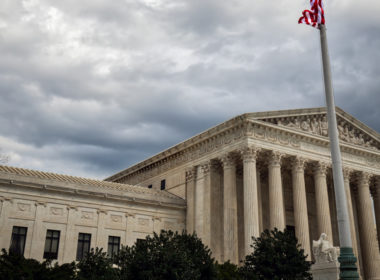
- In a landmark 6-3 decision, the US Supreme Court ruled that sweeping tariffs imposed by President Donald Trump shortly after his 2025 inauguration exceeded powers delegated to the President under the International Emergency Economic Powers Act.
- The decision resulted in a significant divide within the Court’s conservative bloc, with three Republican appointees—Roberts CJ, and Gorsuch and Barrett JJ—joining the majority to strike down the tariffs.
- Notably, the judgment left crucial questions regarding remedies unresolved, including the refund process for tariffs already collected. For Australian practitioners, particularly those advising clients with international trading interests or exposure to US markets, understanding these developments is crucial to providing informed advice in an increasingly volatile global trading environment.
Upon returning to office in January 2025, US President Donald Trump swiftly made tariffs a centrepiece of his second administration’s economic policy. On 1 February 2025, the President issued three executive orders imposing tariffs at varying rates on imports from Mexico, Canada and China, citing concerns over illegal fentanyl trafficking from these regions. One month later, on 2 April 2025, the administration announced its so-called ‘Liberation Day’ tariffs which introduced a 10 per cent duty for all US trading partners, with dozens of countries facing even higher rates. These ‘reciprocal’ tariffs were justified as a response to ongoing and significant trade deficits.
Trump asserted that his authority to impose these tariffs was derived from the International Emergency Economic Powers Act, Pub L No 95–223, § 202, 91 Stat 1626 (1977) (codified as amended at 50 USC §§ 1701–1706) (‘IEEPA’). This law grants the President power to take certain actions in response to a declared national emergency arising from an ‘unusual and extraordinary threat … to the national security, foreign policy, or economy of the United States’ (§ 1701(a)). Specifically, the President is authorised to ‘regulate … importation’ of ‘property in which any foreign country or a national thereof has any interest’ (§ 1702(a)(1)(B)).