By Karl Hoerr -
When Dubbo solicitor Amy Lonsdale set out from Sydney more than a decade ago, it was meant to be for six months: part work, part adventure. The ANU graduate joined Legal Aid NSW for her Practical Legal Training (PLT). “It’s laughable now,” she tells LSJ Online. “I packed … a tent and I’d sort of decided … I’d work but then I’d explore The Warrumbungles and I’d just have this really awesome work life balance and a bit of a random kind of six-month experience.”
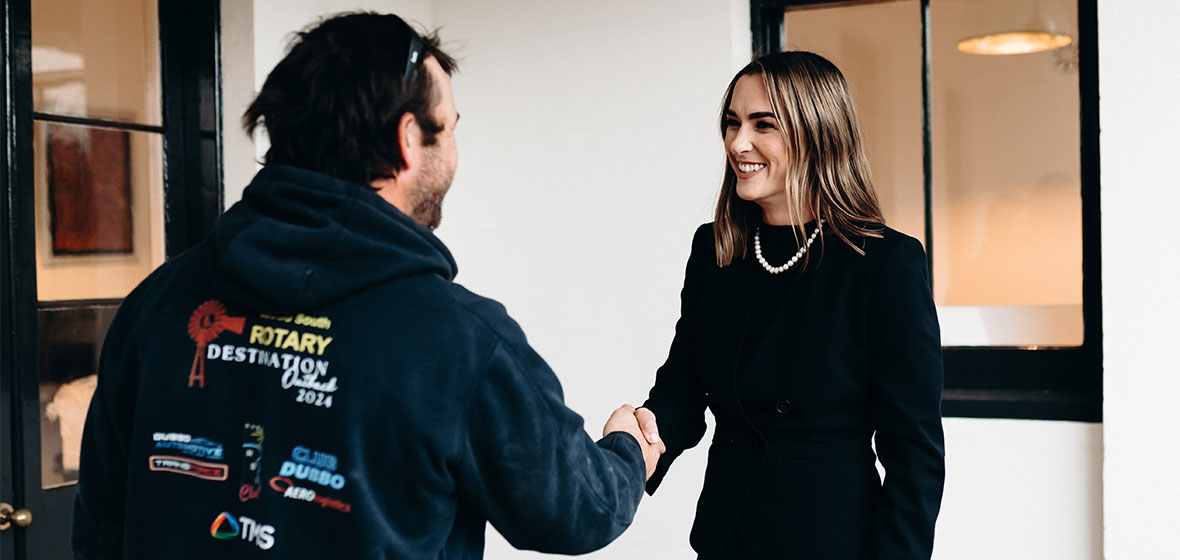
Fast-forward to 2025, Lonsdale is now the Principal of her own firm, Lonsdale Legal. It’s a return to private practice, after eight years as a prosecutor with the Office of the Director of Public Prosecutions (ODPP). “I really want that community touchstone experience again,” she says.
We spoke earlier this week as the Law Society of NSW was preparing to host its Rural Issues Conference in Sydney, where the issue of talent acquisition and retention for rural, regional and remote (RRR) law firms, was one the topics up for discussion.

At the same time, the Law Society has been encouraged by early interest in its new regional jobs board, Careers in the Country. In its first week of operating, the platform posted 25 vacancies across 13 Regional Law Society areas. Law Society of NSW President Jennifer Ball says this indicates “healthy demand for solicitors in the bush”.
Ball says Careers in the Country builds on the Law Society’s previous advocacy on securing better legal services outside major centres. “The Law Society has long advocated for improved access to justice in rural, regional and remote (RRR) communities because they are among the areas of greatest legal need in our state,” she points out.
“The breadth and depth of country legal work can provide early career lawyers with a strong foundation of practice experience on which to build a thriving career in the law, as well as lifestyle benefits of living and working in the regions.”
To Lonsdale, a country career can be particularly suitable to those who are highly motivated. “If you’re someone who likes to do things, and someone who likes to seize challenges and issues and wants to be part of the solution, not just … standing back and letting it all wash over you, Dubbo is a really great place for that.”
In addition to being able to afford her own home, with the help of a career grant at the time, Lonsdale also met her husband in the region.
“The misconception is you’ll get left behind or you won’t get the exposure. But I actually think it’s very different, you do get to step up to these roles that, on anyone’s read, are well above you.”
She recalls having the goal early in her career of being part of a full, final hearing in family law. Lonsdale was astounded at how quickly a lawyer could get through their ‘bucket list’ professionally. “I was 23. There was no way you were going to get instructed in that but within the first, probably, realistically year, you were instructing Senior Counsel,” she explains.
“The misconception is you’ll get left behind or you won’t get the exposure. But I actually think it’s very different, you do get to step up to these roles that, on anyone’s read, are well above you.”
Lonsdale also points out that lawyers typically have a profile in a regional community. “We still have that mentality of people who are in public-facing office, whether it be police officers, lawyers, doctors, you are considered leaders of the community and so you are valued in that role and I don’t think that necessarily translates in metropolitan areas.”
And Lonsdale can attest to the rewarding nature of staying in a community and being part of how it evolves. “You see the good and bad, but you see children that, now that I’ve been doing this 11 years, I can remember them being toddlers and now you’re seeing them on the street and you’ve made an impact in their life that you can tangibly see,” she explains. “They’re not anonymous people and you’re not anonymous to them.”