By Karl Hoerr -
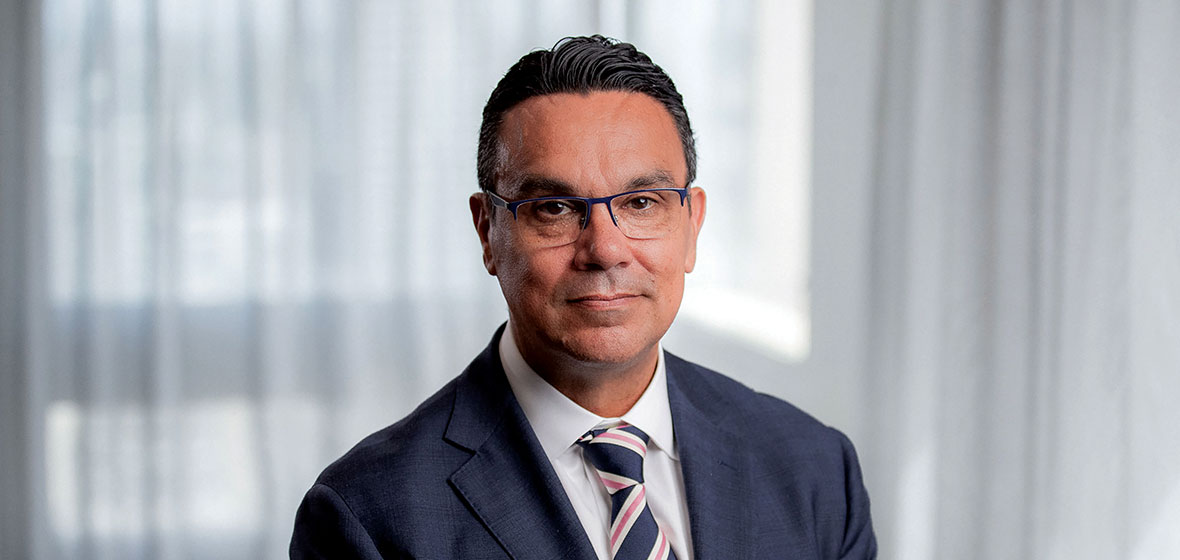
As CEO of AUSTRAC, Brendan Thomas is overseeing significant changes to Australia’s Anti-Money Laundering and Counter-Terrorism Financing laws. The Wiradjuri man is no stranger to taking on big reform and explains why maintaining a focus on the intent of change is so critical.
Could you describe the experience of leading AUSTRAC at such an important time for the regulator but also for the entities that will soon be subject to the new AML/CTF laws?
It’s a really exciting time. AUSTRAC’s a really dynamic organisation. It’s a great place to work and it does incredibly important things for our country in terms of making us safer from crime and all sorts of bad people.
And the coming of what we’re … calling the tranche 2 reforms is a great opportunity to strengthen that even further. I mean, it brings money laundering controls, but really, financial security controls across the entire Australian economy and from where we sit in AUSTRAC, we can really see the nature of the criminal flow that we’re dealing with here, the volume of illicit money coming into the Australian economy, how nimble and agile the criminal groups are that are profiting from that kind of money laundering and we can really see how they’re taking good, honest Australian businesses for a ride and kind of jumping through the loopholes in our systems every time they see them. The opportunity to lead these changes and work with these new industry groups around money laundering just makes our country safer.
For solicitors (who provide a designated service), what is changing and why?
Solicitors* will come under Australia’s money laundering regulation from the middle of this year and that will bring them into line with their counterparts in pretty much every country in the world. So internationally solicitors and the equivalent of solicitors are covered by money laundering regulation.
But it means (they) need to do a couple of things. They need to register with us at AUSTRAC and we’ll make that as simple and easy as possible. They need to have a money laundering program and again, we’ll help people understand what that is. But it’s really about controls, understanding what kind of money laundering or financial risk their business might be exposed to. And then, what do they need to do to mitigate that risk?
But the large thing they need to do as part of that is to understand their customers. A big part of this program is making sure, for a lawyer doing business, that they’re really confident that they’re dealing with who they think they’re dealing with. So the person sitting in front of them or the company that they’re dealing with is who they think it is, and if not, to ask them questions to try and satisfy themselves that the dealing there that they’re having isn’t suspicious or illicit. And if they can’t satisfy themselves with that, they report it to us in a thing called a suspicious matter report.
They need to have a chief money laundering officer, but that can be the principal of the firm if it’s a small firm and they’ll need to train their staff in their money laundering program and that’s largely about how to identify customers and how to report items of suspicion.
Why is communication so important for these reforms?
People really need to understand why we’re doing it. This isn’t legislation or regulation for its own sake. There really is a big problem that we’re dealing with here. The Australian economy is exposed to significant illicit money, and that money comes from all sorts of places.
The illegal drug market in Australia is worth more than 12-and-a-half billion dollars a year. So, if you think about that, 12-and-a-half billion dollars, not a single cent of that is listed, all of it is illegal.
As that money is passing through our economy, and it does, it’s all being laundered. The growing problem that most people in Australia are now aware of, illicit tobacco, the Illicit Tobacco Commissioner suggests that’s worth somewhere in the realm of over $7 billion.
That’s close to $20 billion a year going through the Australian economy. And so by working with us through these reforms, lawyers in particular play a really vital role in identifying where those risks might occur, where people might be abusing our systems, and in particular the kinds of services that we’re dealing with, (such as) real estate purchases and real estate transactions.
And we see a lot of illicit money coming into the Australian property market. We do see that, we know it’s here, we can see it with our intelligence. And we also see a lot of criminal groups establishing company and corporate structures to hide their identities and to hide and move illegitimate money to try and make it look legitimate.
“We see a lot of criminal groups establishing company and corporate structures to hide their identities and to hide and move illegitimate money to try and make it look legitimate.”
How do you expect to measure the impact of the reform and over what period of time?
We expect to see initially more reports coming from, say, lawyers and legal firms where they’re seeing areas of suspicion and then we expect to be using that information with our law enforcement partners to start to take legal action against criminal groups. But ultimately, we want to see less illegal money coming into the Australian economy.
We’ve done a lot of work at AUSTRAC in the Australian casino industry. We had a major problem as most people know, it was exposed through a number of royal commissions and inquiries, of tens of millions of illegal dollars coming in from organised crime groups throughout Asia into Australia’s gambling industry, and being washed through that industry to try and make it look legitimate.
We took some pretty strong action to get that industry to focus on that problem and we’ve seen that money go from our economy. There’s still a challenge in money laundering in the gambling sector, but we don’t have those people turning up with tens of millions of dollars that they used to wash through our economy.
What would you say to practitioners who might be apprehensive about ensuring they are compliant with the new regime?
Look, we appreciate most practitioners and most legal businesses in Australia are small, they’re small businesses, small numbers of staff. They work incredibly hard. I used to be the chief executive of the NSW Legal Aid Commission and we worked with thousands of small legal practices in NSW. I understand the pressures that they’re under just to make ends meet and to pay the bills, and I appreciate people running small businesses want more regulation like a hole in the head. But this is really important regulation. They don’t need to be apprehensive about it.
It is relatively straightforward and I’m encouraged when people are worried about being compliant because it means they’re conscientious and they want to comply with the law.
Our business is to make it hard for criminals to profit from their crime, not to prosecute small businesses for administrative glitches. We don’t do that and we have no intention of doing that when these new laws apply.
And we also expect that this area is brand new for a lot of legal businesses. Many people have never dealt with the concept of money laundering before, so don’t know that in any detail. And the legislation is brand new and hasn’t applied in Australia before either. So we don’t expect people to be perfect in their application of it and we expect people to get better the more often that they do that and the more they understand the nature of the problem that they’re dealing with in a regime that they’re coming under.
We’ll keep speaking to the Law Society and law societies around Australia so that we’re getting feedback in real time from legal practitioners on their experiences of these laws. And if we need to amend and shift and change what we do to help people comply better, then we’ll always do that.
You previously worked on reform at the NSW Department of Communities and Justice. How has this prepared you for your current role?
I’ve spent most of my career in the criminal justice system and led lots of reform around domestic violence. I led the implementation of Aboriginal Circle Sentencing courts in NSW, the creation of regulatory bodies, so I’ve got a lot of experience managing big reform.
In my role at the Legal Aid Commission, where I was the CEO for five years, we successfully got an extra $80 million a year to pay private lawyers more effectively in their bills and we streamlined the processes specifically to try and make it easier for people to do business with us. I’ve got a lot of experience working with small law firms around how to try and make things easier and simpler for them. And I’ve got a really deep appreciation of the challenge and the stress that they face in running those small legal practices and have a lot of regard for the work that they do and the value that they provide the Australian economy and particularly the rule of law in NSW.
“Our business is to make it hard for criminals to profit from their crime, not to prosecute small businesses for administrative glitches. We don’t do that and we have no intention of doing that when these new laws apply.”
What stood out for you in that previous work and why is change often so difficult to take on?
You’ve really got to focus on what you’re trying to achieve and my career in managing major reforms has really focused me around making sure you’re always focused on that outcome. What is it that you want to achieve because of this reform rather than focusing on reform itself.
And that might mean that we have a very laser like focus here on making it hard for criminals to profit from their crime. That’s what this is about. That’s all it’s about. It’s about making it hard for people to launder money and for people to move illicit finance through the Australian economy.
Ticking compliance boxes and regulation for the sake of regulation and red tape for its own sake is nothing that we want to have anything to do with. It is very focused on that end result of making it harder for criminals to profit from their crime and my experience managing major reforms just means you’ve got to keep your eye on that result.
You were also CEO of Legal Aid NSW. What did you find rewarding about that role and what impact do you think you had?
It’s a really rewarding place to work. Legal Aid provides incredibly vital services for some of the most vulnerable people in the community. People come to the Legal Aid Commission when they’ve got nothing at all, often no home, no income, no freedom, no liberty and the only
thing they do possess is the rights that are afforded to them by the legal system in NSW. And the Legal Aid Commission is their tool to access those rights and to help enforce those rights.
Often people coming to the Legal Aid Commission were coming at the point where their life had completely unravelled, everything has gone to hell in a hand basket and those lawyers need to try and get them out of their hole.
And it’s not just about applying the law, but often about trying to help people solve life problems in a way that involves the legal and the justice system. It was also a fundamental part of the administration of justice in NSW.
Because we engaged the private legal profession so much in the work that we did, it really gave me a strong appreciation and value for those small legal practices all throughout NSW. The justice system wouldn’t function, particularly outside of Sydney in country towns, if it wasn’t for small legal practices and people wouldn’t be able to access their rights or enforce the law if it wasn’t for them. They really are a bulwark of our democracy and my work at the Legal Aid Commission really taught me that.
Learn more
You can find out more about captured services, and more by visiting the Law Society of NSW’s AML/CTF Hub.
*Only legal practices that provide a ‘designated service’ (as defined by the AML/CTF Act) will come within scope of Australia’s new AML/CTF regime.