
By Cat Woods -
In 2025, Legal Aid NSW opened their Moree office in response to a surge in demand from the region during the previous year. More than 22 per cent of the Moree Plains population are Aboriginal or Torres Strait Islander, and the Legal Aid team comprises an Aboriginal Field Officer and both the Civil Law Service for Aboriginal Communities and Family Law Service for Aboriginal Communities.
LSJ Online spoke with Family Lawyer and Solicitor in Charge, Haney Cho, Kimberley Hamer, Director, Aboriginal Services, Legal Aid NSW, and Kamilaroi woman, Aboriginal Field Officer (AFO) Lola Craigie, to find out what impact the service is providing through a dedicated, physical space in Moree, how the demographic and demands differ to other regions of NSW, and what the funding landscape looks like for the service.
As Kimberley Hamer explained, “We are proud to have a dedicated culturally safe space for clients, particularly Aboriginal clients, at the Moree office. It is an amazing addition to the office as it provides our clients the ability to engage with our lawyers and other staff in an environment that is warm, welcoming and comfortable. It is so important for us to create a safe space as we know our clients may be experiencing distress as a result of their engagement with the justice system. Legal Aid NSW consulted with community who fully supported the inclusion of a culturally safe space at the site.”
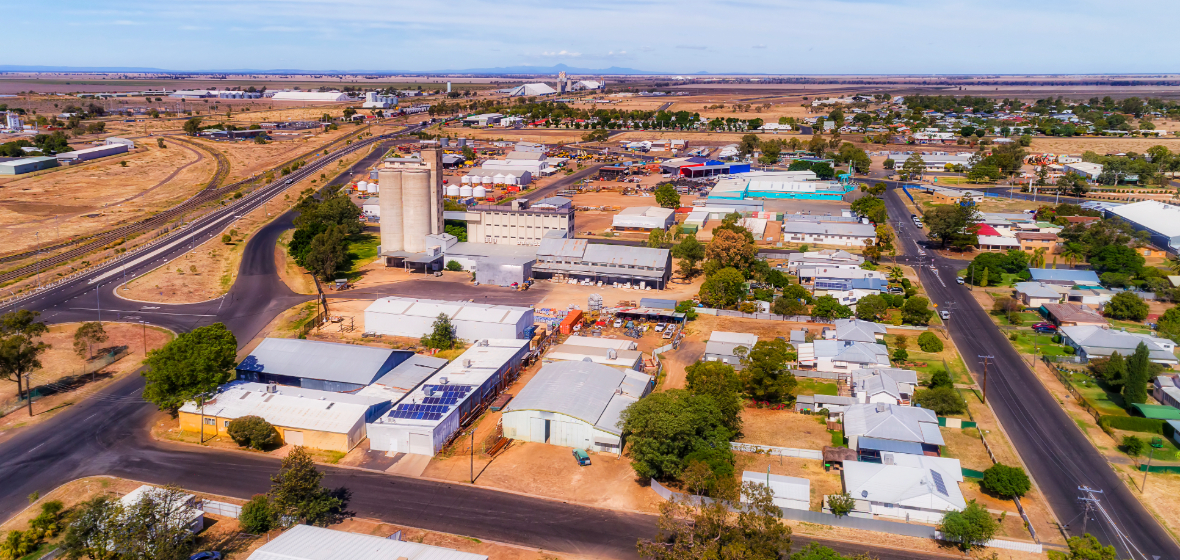
Moree Plains Shire sits 640km northwest of Sydney and 473km southwest of Brisbane. Located on the Newell Highway, it is “one of the most agriculturally productive local government areas in Australia” according to the council website. Alongside agricultural dependence, there’s also a strong manufacturing industry. The town has also had to deal with a significant crime problem. However, in September, data from the Bureau of Crime Statistics and Research (BOCSAR) relating to the number of youth charged and issued a court attendance notice between June 2023 to June 2025, indicated a 25 per cent drop in car theft in the New England and north-west region, though break and enters and robbery offences remained stable.
The Law and Justice Foundation of NSW population data for 2025 indicates that 310 domestic violence (DV) related assault incidents were reported in 2024, and a surge in DV related stalking, intimidation and harassment, from 86 incidents in 2020 to 147 in 2024. By the end of 2024, 774 Apprehended Domestic Violence Orders (ADVOs) were in force. The number of breaches of ADVOs resulting in NSW Police proceedings had risen from 144 in 2020 to 193 last year, though 358 ADVO breaches were recorded in Moree. The number of eviction applications made by private and social housing landlords was lower in 2024 than previous years, but 62 eviction applications for social housing residents is still high when there are approximately 331 social housing properties in Moree Plains LGA (2021 Census data, cited by the report).
Moree shopfront opens
On 24 July, Legal Aid NSW opened the Moree office to meet increasing demand for advice and support relating to family breakdown, parenting or child support issues, housing concerns, fines, debt, employment, access to, and engagement with the NDIS, Centrelink, or criminal matters.

While telephone and online services remain available to the community, the shopfront offers an in-person avenue for individuals and families to find the best person, or service, to address their issues. It solidifies the previous fly-in-fly-out services to the region, especially as young people are overrepresented in the demand for legal advice and help. While education through drop-in clinics is a major priority of the centre, especially where culturally safe advice and information is fundamental to establishing trust and engagement, Legal Aid also provides legal advice and representation for clients with criminal law issues at Moree Local Court and Moree Children’s Court. Solicitors from Legal Aid’s specialist Aboriginal family law and civil law units are available for appointments at the office or nearby where it is needed.
In 2024–25, Legal Aid NSW provided 1,256 services to people in the Moree region, a 33 per cent increase over four years.
At the time of opening the centre, Legal Aid NSW CEO Monique Hitter said, “This is so important for local communities, to have access to permanent and on-site legal services… We will complement the work of other support services in the region by focusing on unmet legal need. We will collaborate closely with existing local services so that Legal Aid NSW is an option for the community when they have a legal problem.”
Service embraced by community
With more than 22 per cent of the Moree Plains population being Aboriginal or Torres Strait Islander, the office will provide a permanent base for Legal Aid NSW’s Civil Law Service for Aboriginal Communities and the Family Law Service for Aboriginal Communities, and they will be able to offer drop-in advice clinics for Aboriginal clients.
“Clients can now drop on when it suits them and being in a regional location, we often have clients visit as they are passing through town.”
Solicitor in Charge, Haney Cho, says the community has responded well, including staff at the courts. A local Magistrate has expressed appreciation for Legal Aid’s ongoing physical presence in the area.
“Clients who have difficulty communicating via telephone and/or email, don’t have access to technology including some First Nations communities, those who cannot read or write or who prefer face-to-face services have particularly benefited from our shopfront location. We can now respond more quickly to client needs because clients can speak to us anytime during office hours. Clients can now drop on when it suits them and being in a regional location, we often have clients visit as they are passing through town.”
Demand for help has been constant, and 365 services have been offered since the opening on 21 July. The team has also welcomed civil solicitor Jaime Winslow and family law solicitor Tonyka Jamieson in temporary positions. And services have expanded to cover Inverell, Gwydir and Narrabri Shires.
Cho says that most often, “legal issues include advice and representation for criminal law matters, domestic violence, Apprehended Violence Orders, Care and Protection, separation and parenting arrangements, accidents and injuries, fines and housing.”
Most of the Moree team’s work involves representing clients in court and providing other legal services like advice and minor assistance (such as one-off correspondence, referrals to other services).
“Education is another important component of our work and we offer this through Community Legal Education (CLE) sessions where we provide free workshops, information sessions, webinars and resources to educate the public and community workers about the law and how to get legal help,” says Cho.
Aboriginal Field Officer provides a bridge between the law and community
One of the team’s key assets is Lola Craigie, explains Cho.
“Having an AFO in the Moree office has been particularly important to ensure we are meeting community needs in a culturally safe way. Our AFO, Lola, has the trust of the community and can help clients not only navigate their legal matter but receive non-legal, social support. The solicitors often consult Lola regarding how to best assist First Nations clients, and she is often present at client meetings to make them feel more at ease. Lola also educates staff so we can tailor our approach and services to First Nations clients.”
Craigie says it’s a role she relishes, “On any given day, my role might include sitting down with clients to explain legal processes in plain language, linking community members to our solicitors for criminal, family or civil law issues or organising and promoting outreach clinics so services come out to the community rather than expecting community to come to us. Beyond the tasks, my role is really about relationships. It’s about earning trust and showing up consistently. It’s about making sure that when First Nations people contact or walk into our office or one of our outreach clinics they are met with understanding, respect and genuine care.”
Between the online, phone, and in-person communication, there are also visits to remote communities to ensure they know they have an avenue for help if they need it.
“[E]very time we help a family stay together or a person feel heard, we are making a real difference.”
“I also see my role as being a bridge: A bridge between Legal Aid NSW and the community; A bridge between culture and system; A bridge that helps our mob feel supported, informed and empowered,” Craigie says.
“It’s not always easy work. There are times when the issues our clients face are complex and heavy, but it is important and rewarding work—because every time we help someone understand their rights, every time we help someone, every time we help a family stay together or a person feel heard, we are making a real difference.”
She adds, “I am committed to continuing this work, to listening deeply, to speaking up when needed, and to ensuring our services keep improving for First Nations people.”
Legal Aid NSW CEO, Monique Hitter says, “I am incredibly proud of what the team in Moree have accomplished in just six months. Their work is an outstanding example of how we make access to justice possible in regional and remote areas of NSW. This work is part of our broader mission to meet growing unmet legal need in regional areas.”
She adds, “In Moree we have seen first-hand how having a physical presence in the community has improved access to justice for disadvantaged people like the elderly, Aboriginal peoples and those who don’t have access to digital technology. This physical shopfront has also allowed us to build on our relationships with the community and do important work like community legal education.”
Harsher bail laws, increased bail accommodation only part of the picture
As for the NSW Government, the approach to regional and youth crime, particularly in Moree, has championed stronger bail laws balanced with “wraparound” services.
On 7 November, the government announced a further $23 million in funding for programs targeting at-risk youth, which includes $12 million to go to Moree, Tamworth and Kempsey to work with local communities to find and develop services that help youth already engaged or at risk of engaging in crime.
A 2021 inquiry by Just Reinvest NSW, a First Nations advocacy group, reported that “the link between unaddressed health issues, including access to health issues – and interactions with the criminal justice system is already well made out. Undiagnosed, unaddressed and untreated cognitive impairment, mental ill-health and trauma are concerningly prevalent in young people going through the youth justice system.”
Whether there will be additional plans and funding for health, social and education engagement hasn’t been made clear. It’s evident, however, that Legal Aid’s small but mighty Moree team will be kept busy for the foreseeable future.
The office is located at Unit 3, 25 Auburn Street, Moree NSW 2400 and can be contacted via LawAccess in 1300 888 529.