By Wendy Yang -
Homelessness is a pervasive issue in society. The rising cost of living and housing crisis in New South Wales are putting greater pressure on individuals and families. As a profession, what can be done to help those in need?
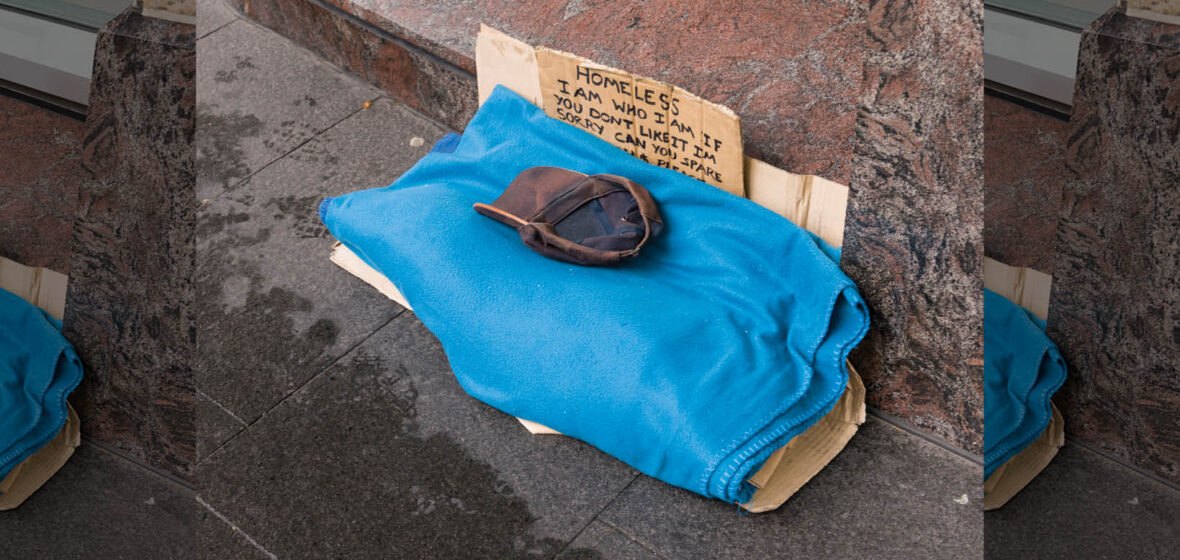
According to the Australian Institute of Health and Welfare’s ‘Specialist homelessness services annual report 2024-25’, around 67,800 people sought help from a specialist homelessness service (SHS) in NSW between 2024-2025. The report found that a greater percentage of women experienced homelessness than men at a state and national level and 3,600 individuals reported sleeping rough in the previous month in NSW. Notably, 4,000 of those who sought help were young people and 5,200 were children in families being assisted.
The annual report also found that close to 289,000 clients were helped by specialist homeless services (SHS). These services provide accommodation or assistance to those experiencing, or at risk of homelessness.
Legal services like the Homeless Persons Legal Service (HPLS) at the Justice and Equity Centre (JEC), provide specialist assistance to women through the HPLS Women’s Service, they assist with housing issues, advice and representation for those facing criminal charges that may result in homelessness, and assistance in a range of other areas including advocacy.
Kira Levin, principal solicitor of the HPLS, explains the service was established in 2004 “to meet people where they’re at”. She acknowledges the diverse range of issues faced by homeless people, including where they are going to get their next meal from, where they can shower, and what to do if their identification documents are stolen.
The service has witnessed an increase in the number of women sleeping rough in the past 12 months in Sydney. Levin explains that women often experience homelessness in different ways. For example, a woman residing in unsafe accommodation is homeless and that is “tertiary homelessness”, and a woman who cannot leave her home because she does not have anywhere else to go is also homeless.
Levin says for some people, trying to maintain tenancy or housing can be challenging for different reasons. She points out increased rents and the housing crisis have impacted people, including those who may not have experienced homelessness before. “[They] find themselves in a situation where they are homeless because they might be on the social housing list, but you wait a long time to get a social housing property sometimes.”
Levin admits that tenancy is the service’s biggest civil law area and the criminalisation of homelessness is still prevalent. She acknowledges that there is still a lot of stigma surrounding homelessness.
Glenn, who is a member of StreetCare, Justice and Equity Centre, has lived experience with homelessness. He says there are many different reasons for homelessness, including mental illness, cognitive impairments and other factors. Glenn tells LSJ Online there’s a myth that homelessness is a choice. “It isn’t,” he says. “Homelessness is when you run out of other options and that can apply to just about anyone.
“I’ve come across people who have had marriage breakdowns for example and the stress of that has caused them to end up in a situation where they have no other options.”
Glenn acknowledges that many of the rough sleepers he encounters are often suffering from some form of trauma. It can be “emotional trauma, it could be physical trauma, but trauma underlies pretty much all of it”, he says.
For those who have experienced or are experiencing homelessness, they often encounter stigma which can manifest in different ways. “It comes across as an attitude … in the language used. Quite often people will be felt to be less … people will treat them with a condescending or demeaning attitude and that’s broadly across society generally. …
“[I] think one of the reasons why people behave like that is fear, uncertainty and doubt. They see this. They know it could happen to anybody,” he says.
“Fundamentally homelessness is about survival on a day-to-day basis and it’s Maslow’s hierarchy of needs. You’ve got security, shelter, food, all those sorts of things.”
Glenn, Member of StreetCare, Justice and Equity Centre
These people may have experienced betrayal since they were young and the institutions that were supposed to assist them, have let them down, and this retraumatises them further.
In terms of demographics, Glenn says homelessness spans all generations and when asked about whether he is seeing an increase in the number of young people sleeping rough, he explains they are seeing more people sleeping rough generally. “[T]hat’s a function of the housing crisis. … I’m certainly observing … there’s a lot more family units that are starting to rely on food services … because they can’t pay all the bills and eat,” he says.
Given the current economic climate, services like StreetCare are seeing an increase in the number of people accessing homeless services. “I am seeing on a daily basis, new faces every day out on the street. Primarily a lot of those are economically driven … they just can’t afford to live and so consequently they end up homeless,” says Glenn.
In August 2024, a public toilet inquiry was formed to examine and report on public toilets across NSW. Hearings were held in early 2025 and the final report was published late last year. The inquiry shone a spotlight on the different types of issues faced by rough sleepers.
“Fundamentally homelessness is about survival on a day-to-day basis and it’s Maslow’s hierarchy of needs. You’ve got security, shelter, food, all those sorts of things. …
“[I]t’s a difficult life in the sense that you have to organise your life around if you want to eat … you can’t just go to the fridge and grab a snack,” says Glenn.
He says there are practical considerations like ensuring that you are around when the food services arrive and if you are not able to store your belongings anywhere, you have to carry them around. “[S]ometimes some people carry around a huge amount of luggage and not having anywhere to put them. Then of course you’ve got the weather conditions. …
“[I]f it’s wet and cold … and all your gear gets wet, you’ve got nowhere to dry it, so what do you do? You sleep wet.”
Glenn points out that while there are temporary accommodation options out there, places are limited and finding a place to sleep can often be a problem. He acknowledges that privacy can be an issue for rough sleepers. “[If] you’re out in the streets, then you have no privacy whatsoever and that’s problematic,” he says.
Another common issue is personal hygiene. As Glenn elaborates, there are not enough facilities available for people to wash their clothes or have a shower. While there are two main facilities in Sydney’s CBD and mobile units that come around, you have to coordinate use of those facilities with the timing of everything else. “You don’t have the freedom of movement, as it were, [whereas a] person who isn’t homeless does,” he says.
Those experiencing homelessness often face a range of issues from housing to tenancy issues and dealing with police. Glenn explains that for many people experiencing homelessness, they often suffer from complex mental health issues, and they can be triggered by the sight of a police officer. “[S]o far as StreetCare is concerned … we talk with law enforcement, we talk with government generally in order to try and change the policies and reduce barriers for people,” he says.
The Protocol for Homeless People in Public Places (the Protocol) is a handy guide for police, institutions and service providers on how to navigate interactions with homeless people. The Protocol “guides government, non-government organisations and businesses to interact and engage with people experiencing homelessness.” It sets out the circumstances where a person experiencing homelessness can be approached, how the approach should be made, and provision of additional support or help where required.
The Protocol is due to undergo a review in June this year. Kira Levin would like the Protocol to be enforceable. “[I]t’s a rights-based statement. …
“[I]f it has some kind of enforceability so that you could challenge a decision because people hadn’t complied with the protocol in making that decision, that would be really awesome,” she says.
Glenn says most people who are homeless have not made the conscious decision to live that way. “[S]ome of these stories are horrendous, and they’ve had no chance from day one so I think empathy is definitely something that we could do with more of, no question,” he says.
Ronan MacSweeney, 2026 President of the Law Society of NSW, has selected the HPLS as his President’s Charity this year. He says, “The free legal help delivered by the Justice and Equity Centre’s Homeless Person’s Legal Service can be life-changing to people who would otherwise face insurmountable barriers [to] secure stable housing. …
“I’ve been conscious of this vital work for more than two decades, when members of my team at Minter Ellison volunteered their time. Their commitment reinforced [a] fundamental truth of our profession; that we must never lose sight of our responsibility to advance social justice and use our skills to support those who would otherwise struggle to access legal advice and representation.”