
By Wendy Yang -
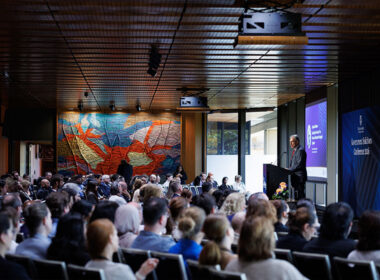
A groundbreaking NSW diversion program that aims to break the cycle of offending has won the Gold Award at the annual Australian Crime and Violence Prevention Awards held at Parliament House in Canberra last Thursday night.
The awards, organised by the Australian Institute of Criminology, acknowledge programs that ‘reduce crime and violence in Australia.’ They also help to promote public initiatives and assist governments to identify and improve projects that decrease violence and other types of crime in the community.
The Magistrates Early Referral Into Treatment (MERIT) program, run by the Department of Communities and Justice, in partnership with NSW Health, the Local Court of NSW, and NSW Police, helps people at risk of recurrent progression through the criminal justice system due to their alcohol and drug use.
The program strives to break the cycle and help enhance participants’ wellbeing by diverting people into treatment. Run over a period of 12 weeks, the voluntary program offers individualised case management, counselling and referrals to other health and social services.
People can be referred to the program by a range of people from police officers, a magistrate, a solicitor, family member or they can even self-refer. If the party is assessed as eligible and suitable, the judicial officer adjourns the court matter to allow the person to partake in the program.
The program underwent expansion in 2023. Prior to its expansion, the program was available at 62 Local Courts across NSW. By 2026, it is expected that the program will reach around 93 per cent of eligible participants at more than 85 sites across the state.
Chief Magistrate Judge Michael Allen said the “award is a testament to the dedication that underpins MERIT’s approach to justice — one that prioritises rehabilitation, health, and long-term community safety.
“The program addresses the underlying issues of offending through treatment, and professional guidance rather than punishment alone.
“It enables the court to understand how alcohol and other drug use might contribute to offending behaviour and what options exist for the offender to address that use.”
Department of Communities and Justice Secretary Michael Tidball acknowledged the positive role that MERIT has played in the community.
“For more than 20 years, MERIT has been changing lives by helping to reduce reoffending and deliver better health outcomes for individuals and communities.
“This award reflects the commitment, collaboration, and innovation that underpins the MERIT program, delivered by the Department of Communities and Justice in partnership with NSW Health, the NSW Local Court, and NSW Police.
“It provides such important recognition of the vital role that diversion and therapeutic programs play in an effective justice system, alongside other crime prevention initiatives,” he said.
Candice, who went through the MERIT program, tells LSJ Online she was a daily street-based drug user for years and had committed different crimes from shoplifting to property crime to support her drug use. She explains that instead of a custodial sentence, she was offered the opportunity to do the MERIT program. “[I] think [it] is important that we supply access to diversion because so many people get in trouble because of these things, wouldn’t be committing crimes if it weren’t for their drug use, which … was true for myself as well,” she says.
Candice went on to work a few jobs and runs a consultancy now. “[H]aving that opportunity, it’s invaluable to be able to course correct and get my focus where I needed it to engage in treatment and counselling…,” she says.
A study, published in March this year, by the National Drug and Alcohol Research Centre at the University of NSW, found that those who took part in the MERIT program were 21 per cent less likely to reoffend in the 12 months following completion of the program, and 27 per cent less likely to receive a prison sentence.