By Karl Hoerr -
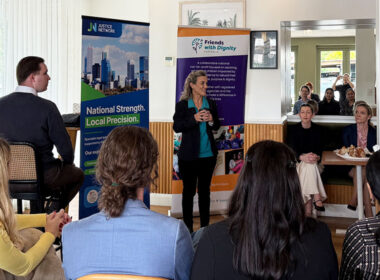
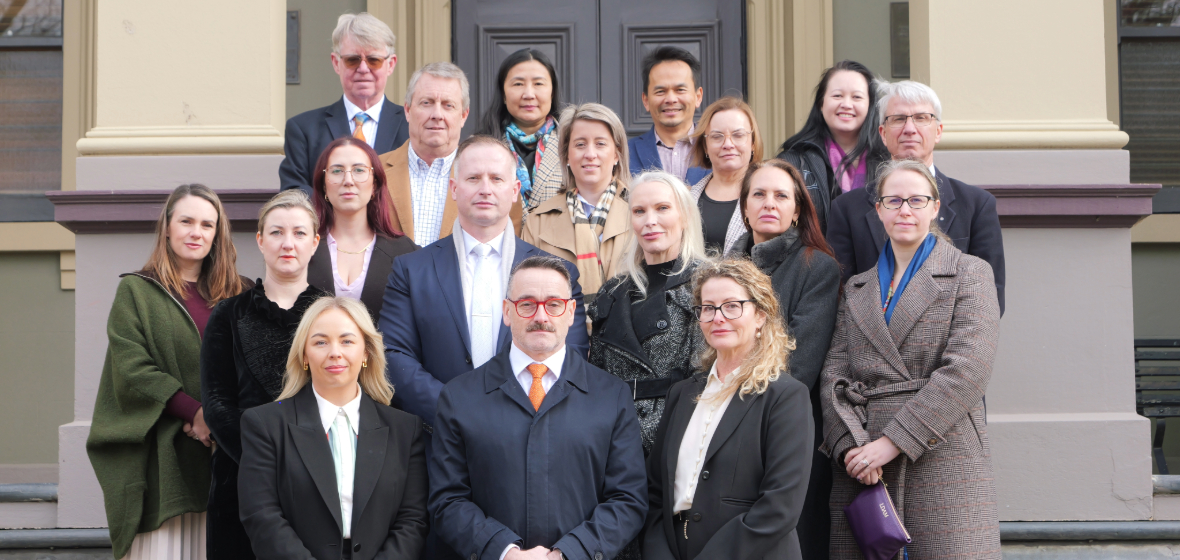
Law Society of New South Wales President Ronan MacSweeney has called for a publicly available, long-term justice infrastructure strategy for the state. He made the remarks at a Regional Justice Summit in Orange, in Central West NSW, where Regional Law Society Presidents from across the state gathered to discuss the most pressing issues confronting legal practitioners, including Legal Aid funding.
The summit coincides with the launch of a Law Society social media video campaign, designed to draw attention to the need for greater support for court upgrades and legal assistance. The campaign features practitioners from different parts of NSW, speaking about the impact of these issues for their clients and themselves.
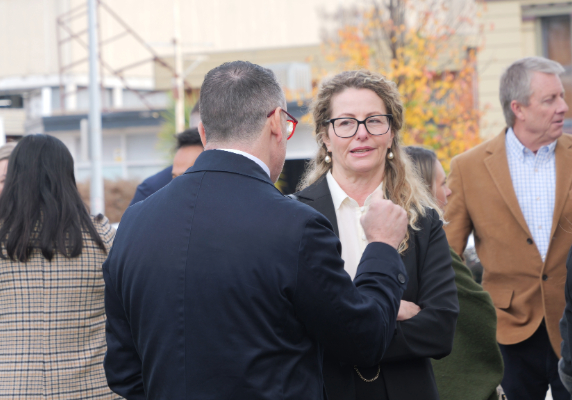
MacSweeney was joined outside Orange Local Court by Law Council of Australia President Tania Wolff and Central West Law Society President Danielle Ford.
Ahead of next week’s NSW budget, MacSweeney said the Government needed to identify how future infrastructure needs are going to be met. “We’re calling on the Government for a publicly available long-term justice infrastructure strategy, which actually maps out the plans for how we modernise the courts with modern digital systems, AVL, and also upgrades [to] courts that badly need those upgrades,” he said.
MacSweeney said there was also a need to plan for population growth in more developed areas such as Sydney and Newcastle. “Justice infrastructure is no different than other forms of social infrastructure, including schools and hospitals,” he said. “And you need a plan for that, you need it to be budgeted and it needs to be delivered.”
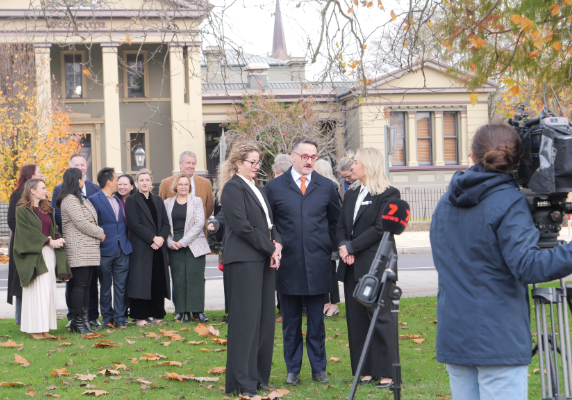
Asked about the impact of inadequate court infrastructure on people, Ford explained how the lack of suitable spaces and the existence of single entry and exit points, can be traumatising for victims. “If you’re a victim of a violent crime, you’re going into court, you’re entering through the same area,” she said. “There is an insufficient number of conference rooms, there is an insufficient number of safe rooms. So, again, it’s causing secondary trauma for these people who have already been through so much – victims of family violence, sexual violence, it’s really horrific,” she said. “And I think court systems could be improved by investing in that physical infrastructure.”
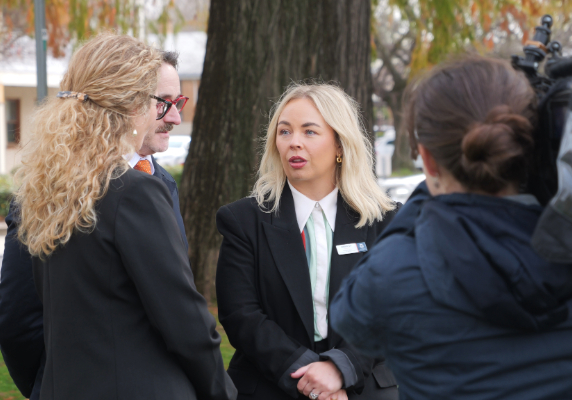
Ford said better audio-visual link services would prevent the need for legal practitioners and accused people having to travel hours to court, for a mention that might otherwise take 10 or 15 minutes. “I’m really delighted to have the Law Society of NSW out here today to raise the profile on access to justice,” she said.
Law Council President Tania Wolff said there are many situations where people need a lawyer and everyone should be able to access one when necessary. “It should be as basic and expected as being able to access a school or a hospital,” she said.
Wolff said the Law Council was deeply concerned that this was getting harder, as lawyers who’ve been doing essential Legal Aid work for many years, reconsider their future. “[M]any are stepping away from this work because it is simply not financially sustainable to continue to do so anymore,” she said.
“People like Danielle are having to travel hundreds of kilometres to service their client. And there’s a real risk that soon in Australia, your ability to access justice might depend on your postcode and that is something that we can’t afford to risk,” she said.
Asked what was at stake, Wolff said it was people being able to get the legal help they need, when they need it. “If people cannot have their matters resolved in a way that is safe and appropriate for them, there’s going to be less confidence in the justice system than there is now.”
Main image, Ronan MacSweeney and Tania Wolff with Regional Law Society Presidents visit Orange Local Court as part of the Law Society of NSW’s Regional Justice Summit. (Photo: Karl Hoerr)