

“[We acknowledge] that the reason why our people have so many legal issues is because this country wasn’t designed for us.”
By Francisco Silva -
Celebrating 30 years of operation, Eleanor Duncan Aboriginal Services is a staple of support to the Aboriginal community of the Central Coast. LSJ Online spoke to the CEO about their unique philosophy, relationship with the local legal services, and the importance of standing up and supporting some of the most vulnerable people in the country.
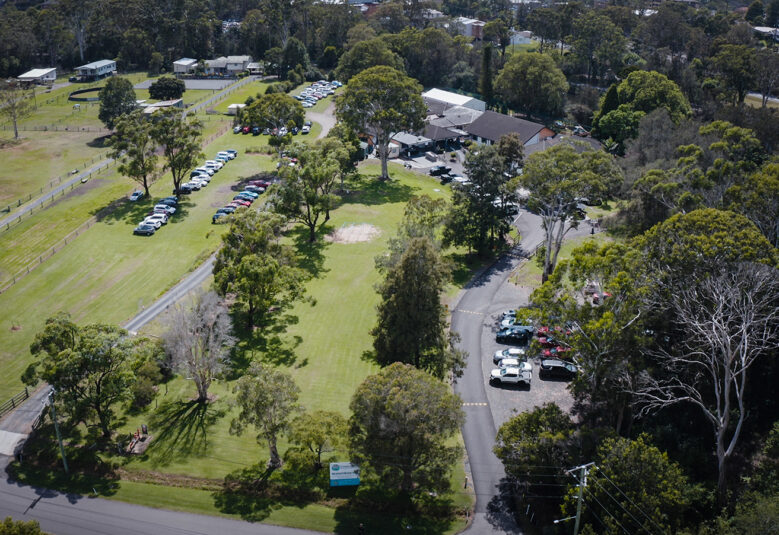
On this sunny summer afternoon, the entrance to Eleanor Duncan Aboriginal Services has an air of calm. The building is nestled by the tranquil shores of the Wyong River that separates it from the town of Wyong on the Central Coast. A row of trees shields the building from nearby traffic. A clearing opens up directly to a large paddock, continuing for kilometers into the distance where Wyong Creek and the Ourimbah State Forest are. The symbolism isn’t lost on anyone who looks at this view, the building faces the vast and plentiful land of the Darkinjung people, away from the city and the harsh forces that condition First Nations people. According to the 2021 census, there are just over 17,000 First Nations people on the Central Coast, representing almost 5 per cent of the region’s total population.
Named after the first Aboriginal registered nurse in New South Wales, Eleanor Duncan Aboriginal Services delivers 52 services of care and support to the Aboriginal and Torres Strait Islander community on the Central Coast. They started precisely 30 years ago, in December 1995, as a community-controlled health centre and since then has grown to deliver a wider range of services from medical, dental, social, wellbeing, emotional, youth services, mental health, drugs and alcohol support and suicide prevention. They help people after they leave a hospital from an acute inpatient stay, they have women’s groups, men’s groups, mums and bubs, child and family services, antenatal, prenatal, DV support, men’s behavior change programs and programs to promote healthy cooking. The list goes on.
“[We’re] very fortunate to have key drivers like [the Central Coast Community Legal Centre (CCCLC) team] and have not one but two solicitors on board who are completely immersed in our environment here at the Eleanor Duncan,” says Belinda Field, the group’s CEO. “The relationship between our organisation and the CCCLC is a flagship, maybe one of a kind, and I think the Central Coast is really leading by example in terms of partnering with grassroots organisations where, in particular, legal expertise is missing out on the equation.”


Field notes the data they were able to collect when the relationship started with the CCCLC showing that people in their programs were receiving harsher sentences due to a lack of legal representation and guidance. It helped to have a priority referral pathway and tools for the local legal community to develop important cultural insights needed to support Aboriginal clients. “What we also uncover when we’re working with our most vulnerable is that there are times when it’s not just the legal advice,” Field explains. “It’s all of the other vulnerabilities that they bring with it.”
Alana Cox is one of the solicitors from the CCCLC who works closely with Eleanor Duncan. She notes how she practices law has changed since she started working there. “You don’t just have one hour to go over one legal issue,” Cox explains. “You’re having a conversation, sometimes for multiple hours […] over sixteen different things, and it’s like you’re talking about every single part of their life versus just the small legal issue.”
Cox and the team had to re-structure how their time is used and how to communicate with people who need help the most. Their job is not just to address the issue at hand but to navigate and support a whole lived experience. It’s common for them to talk to a person for several sessions without getting to the crux of their legal issue until the day the client develops enough confidence to share specifically what needs to be done. They can organise hours of “women’s group sessions” until someone lets them know they’ll need help to get a divorce.
To achieve this, solicitors work closely with social workers to care for their clients. Connecting with the Eleanor Duncan team and its experts, the solicitors thought about how to better address their clients. “We changed our language,” says Cox. It could something simple like change the space where the conversation is held, maybe go to a different room and a different environment that inspires security and trustworthiness. “It’s been a really good way for our centre to learn from our community how we can serve [them].” This philosophy extends to the CCCLC. Their meeting room is shaped by the work at Eleanor Duncan, creating a safe and calm environment.
This makes sense when you visit the Eleanor Duncan building. The long corridor connects to small meeting rooms available to anyone who needs them. Sometimes the corridor opens a little bit to create a wider space with comfortable chairs. Everywhere feels safe and available. People walk past to and from activities. It has the spirit of a community engaging with itself.
“It’s not rocket science,” Field explains. Everything is done so the team is recognised in the community. They all wear Eleanor Duncan uniforms, so if the public sees them and trusts them, they know they can engage with them for support. “Because we’re a trusted organisation, and [if] you’re endorsed by the mob, then you’re more than likely to be trusting and engage in a really meaningful dialogue a lot sooner,” Field continues.
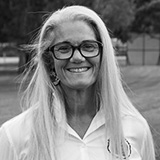 Belinda Field
That’s the connundrum facing every organisation that works directly with vulnerable communities. There is a sense of distrust in the system among those who the system should be protecting. Field is blunt, “[We acknowledge] that the reason why our people have so many legal issues is because this country wasn’t designed for us.” They rely on social media and community events to engage with the tools of support, including the CCCLC.
Field says this is achieved through the relationship Eleanor Duncan and the CCCLC have with local Aboriginal organisations, including the Barang Regional Alliance, an Aboriginal-led recognised regional governance structure on the Central Coast, but also with the Gudjagang Ngara li-dhi, Mingaletta, NAISDA Dance College and Bara Barang. They form a central repository of organisations that meet monthly to discuss what is happening in the community. It’s a synergetic relationship that looks at collective solutions to empower and support Aboriginal people in the area, and working closely with the local legal centre is essential for the wellbeing of its community. “You get it right for our mob,” Field says, “you get it right for everybody.”
It’s a point of pride for the CCCLC that, even though they are not an Aboriginal-led organisation, they are still invited to the Barang Regional Alliance meetings as consultants. As far as Field knows, it’s unique in the country that a Community Legal Centre engages so closely with the local governance bodies for the Aboriginal community. The result exceeded expectations. Field says it was possible to invite her Honour Judge Helen Skinner, President of the Children’s Court of New South Wales, to tour on country and talk to frontline staff about what happens in the courthouse and how those decisions impact children in restoration and juvenile justice. “We needed to ensure that our community understood their rights,” Field continues. “The amount of Aboriginal people in this community that get over reported to child protection and don’t know that they actually, legally, do have to let them in the door … it’s just a simple way of making sure that our people have access to legal advice at the right time.”
Field feels the despair of underfunding at most levels. Not just the impact that it has on the Community Legal Centre but on all the other elements of social support on the Central Coast. It can feel like a Sisyphean task, that the boulder they carry up the mountain always rolls down before they get to the top. There are around 150 people working at the Centre, all in different capacities of support, but the opportunity to hire just one project manager would go a long way. A lot of problems are systemic; they only have two GPs working with them, because when the allocations are done, they are considered suburban even though they’re more regional. And the public transport network doesn’t meet the demands of a region with that population and of that size. If a client from The Entrance needs to attend court in Wyong, they know it can take them two-and-a-half hours to travel a little over 15 km. This issue also leads to further isolated localities, particularly inland. “If you live in Gwandalan [there’s] nothing,” explains Field. “One bus in the morning, one in the afternoon, and it’s in line with school times. That’s ridiculous, how are they going to get to court?”
The Alliance tried to bring up the issue of transport several times with the government. Transport officials visited the region to survey and gather data. But consultations and concerns don’t lead to actual results.
Instead, they work around it as much as they can. Transportation time is factored into case management, so all parties are informed and prepared for any delays that may occur. Whenever possible, they’ll pick the clients up themselves or conduct outreach visits to avoid any unnecessary trips that take over a good part of the day of their clients. “[It’s] a little bit difficult when it’s our medical staff, but our nurses are mobile [and] and we’re not too bad here,” Field continues. It’s the southern end of the coast that concerns her. It can take up to 50 minutes to travel to Woy Woy, which adds a two-to-three-hour long home visit. “This is the stuff that these decision makers aren’t considering,” she says. “Then they come and [are surprised that] it’s a lot more spread out than [they] thought.”
Field’s passion for mob and country is infectious. She’s direct and straightforward in addressing the issues she faces, but also unyielding. Her job continues; Eleanor Duncan stands tall breathing life and projecting it towards the expansive land that stands at its doorstep. But Field believes that nothing will change until Australia addresses its own truth telling. When reparations are made, and land returned, it empowers a community that had its history taken away.
“This country has some real truth saying that needs to happen before they’ll even recognise the fact that we’re the most vulnerable.” Field concludes. “And if you fund us properly, and you get it right for us, you’ll get it right for everybody.”
All photos by Trent Bailey, courtesy of the Eleanor Duncan Services.
Top image: L to R, Belinda Field, (CEO, Eleanor Duncan Aboriginal Services), Jessica Wheeler (Manager), Alana Cox, (Yadhaba Solicitor), Yeena Kirkbright (Yadhaba Solicitor), Paul Hussein (Business Manager), and Breannon Field (Manager).