
By Karl Hoerr -
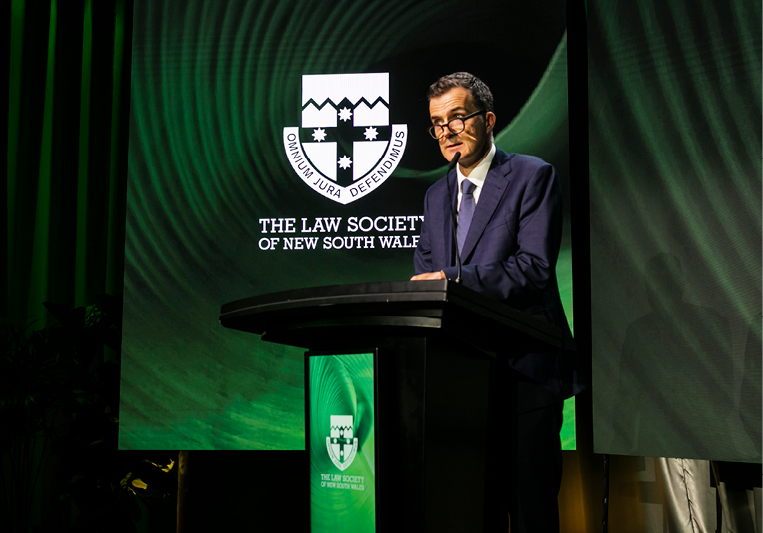
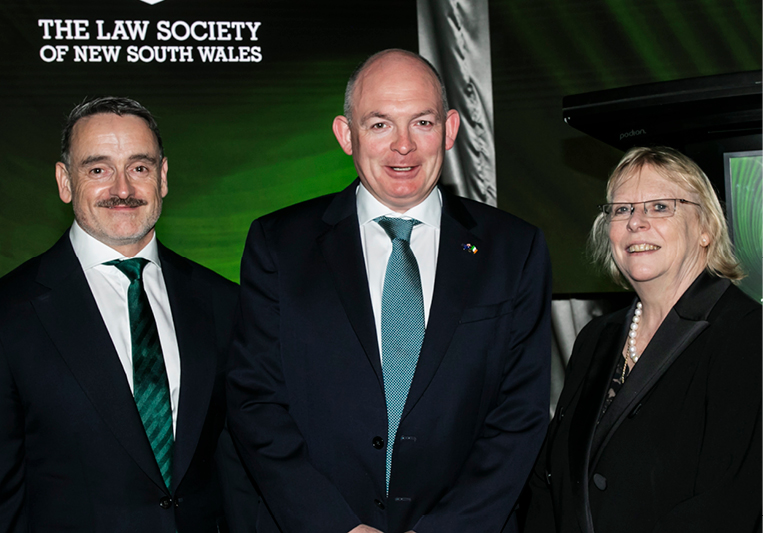
The Chief Justice of NSW Andrew Bell has used his address at the Law Society of NSW Opening of Law Term Dinner, to launch a spirited defence of his judicial colleagues, including one who presided over the case involving last year’s march on the Sydney Harbour Bridge.
In August 2025, Justice Belinda Rigg refused an application by the Commissioner of Police for an order under the Summary Offences Act 1988, prohibiting a planned protest by the Palestine Action Group seeking to draw attention to the humanitarian crisis in Gaza.
Bell described the judgment, produced overnight, as “detailed, closely reasoned and carefully considered”, adding that it was “[r]egrettably” subject to a social media post by former Prime Minister Tony Abbott.
“It should not be for judges to decide when a political protest is justified,” remarked Abbott. “The decision to close the Sydney Harbour Bridge to facilitate this protest is a political decision and should be made by elected and accountable ministers,” he added.
Bell said the decision was not about whether “a political protest was justified”, Justice Rigg had not decided to close the Harbour Bridge (a decision already taken by authorities) and responsibility for the decision had been given to the Court by the legislature.
He added it was not a political judgment, but involved the “careful weighing of the common law and constitutionally protected right to free speech and public assembly (Clubb v Edwards, Preston v Avery [2019] HCA 11 at [164], Tey v New South Wales; Altakrity v New South Wales [2023] NSWSC 266 at [83], Lees v New South Wales [2025] NSWSC 1209 at [126]) with considerations such as public safety and disruption …”
Bell said the same was so of a Court of Appeal decision he later presided over, preventing a march to the Opera House.
He suggested while such decisions should not be free from scrutiny, “social cohesion … is not enhanced when judicial decisions are attacked on bases and in terms that betray an ignorance of the statutory framework for the decision and, in very many cases, an ignorance of the judge’s reasoning process and of the evidence …”
Remarks on Bondi massacre
Speaking at a public occasion for the first time since the December terror attack at Bondi Beach, the Chief Justice extended his deepest and heartfelt condolences, for what he described as an “act of unvarnished hatred and evil”. Bell acknowledged the presence of Rabbi Dr Benjamin Elton in the audience.
He said the forthcoming Royal Commission was a “large and dauntingly complex task” but that the country was fortunate to have Viriginia Bell leading the inquiry.
Law Society President outlines priorities
In his address to the event, Law Society of NSW President for 2026 Ronan MacSweeney also acknowledged the Bondi atrocity, which he said had “cast a shadow over the pride Australia rightly feels in being an open and welcoming society”.
He reflected on his upbringing, education and early career in Ireland, and what was meant to be a year’s leave of absence to travel to Australia in 2003.
MacSweeney explained his priorities for the year would involve supporting the legal profession to meet regulatory obligations, empowering it to protect the rule of law, advocating for physical and digital court and tribunal infrastructure and promoting NSW as a legal jurisdiction of choice in the Asia Pacific.
Among those in the audience was the Attorney General of Ireland, Rossa Fanning SC.
MacSweeney said he wanted to encourage conversations why an independent judiciary and legal profession are vital and why the integrity of our justice system is central to our way of life. “We have one of the best justice systems in the world, and it must not go undefended.”