

By Cat Woods -
Women in the Australian Defence Force have launched a major class action claiming widespread, systemic sexual harassment and violence, physical abuse, rape, and discrimination. The proceedings were filed on the morning of 24 October at the Sydney registry of the Federal Court by Brisbane-based JGA Saddler, backed by global litigation funder Omni Bridgeway.
At the request of JGA Saddler, approved by Justice Wendy Abraham, the four lead applicants’ identities have been redacted. The class action represents all women who were subject to abuse, harassment, or discrimination while working for the ADF between 12 November 2003 and 25 May 2025, inclusive of the Army, Navy, Air Force, or training environments such as the ADFA.
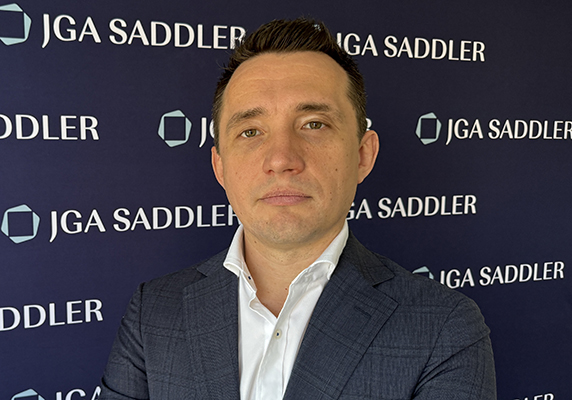
Joshua Aylward is the director of JGA Saddler. He acknowledges that this class action has no obvious precedent internationally.
Aylward tells LSJ Online, “There have been broad sex, race and gender-based discrimination actions in places like Canada and the United States, however nothing to my knowledge which is specifically on behalf of military women in relation to systemic sexual violence and discrimination.”
According to a statement provided by JGA Saddler: “The proceeding alleges the ADF is vicariously liable due to the systematic failure to protect their female members from sexual harassment during their service…”. Notably, the action is opt-out, meaning women who do not wish to be automatically included within the claim must elect to withdraw. Current and former members of the ADF who served during the period in question are eligible.
Arguably, this action is a consequence of the Royal Commission into Defence and Veteran Suicide in 2024, revealing systemic cultural misogyny, violence, discrimination, and intimidation. In the five years leading up to the Commission’s inquiry, over 800 sexual assaults had been reported to the ADF, which was estimated to be less than half of the actual number of assaults owing to a culture of silence and ‘loyalty’ to the force.
JGA Saddler has been proactive in launching class actions based on gender-based harassment, abuse and discrimination. On 11 December 2024, class action proceedings were taken against Rio Tinto and BHP respectively. The allegation is that, respectively, BHP and Rio Tinto “are vicariously liable for failing to protect their former and current female employees from experiencing sex discrimination, sexual assault and/or sexual harassment during the course of their employment from 25 November 2003.”
Both actions were launched subsequent to separate reports into the workplace culture within the companies, particularly for women employees, indicating a long-term, widespread culture of misogyny and gender discrimination.
One story led to many revelations
Aylward says, “It all started with one woman about 18 months ago. She called asking for advice, she didn’t know where to turn and felt the ADF had abandoned her. Once I started speaking with her and understanding her situation, she put me in touch with other women, and it snowballed from there. I could not believe the stories I was hearing, how many of these women there were, and how much worse it was than the ADF discloses in their reports.”
“… these women felt like they had nothing left to lose by opening up …”
He explains that ADF members are often reticent to speak about these matters due to fear. “However, when it came to systemic sexual violence and discrimination of women in the ADF, these women felt like they had nothing left to lose by opening up because the ADF had already taken everything from them.”
There are potentially 15,000 to 20,000 group members, Aylward indicates, but there may be more.
“We initially spoke with hundreds of women, and since filing the proceeding, an overwhelming number of women have contact us to register their support.”
Applicants want change and apology
Aylward says, “The Applicants and Group Members want to see change in the ADF, a genuine apology from the highest levels of the ADF and our government, and compensation. For far too long this issue has been either ignored, or ineffective ‘solutions’ have been implemented. These women hope that when thousands of current and former ADF members stand up together, that the ADF will finally listen and act.”
He adds, “We know that money can never really compensate these women, but it can send a message that the ADF cannot ignore – that failure to act has a financial consequence. Financial penalties for inaction have resulted in safer workplaces. We have seen this in other industries like construction. This is a chance for women in the ADF to have the ADF held accountable for allowing the culture of violence and abuse to continue.”
“It is not easy for anyone to relive their experiences or to hear these stories.”
Inevitably, the Applicants include women who are feeling threatened or vulnerable, either as the result of their treatment, trauma, or in fear of losing their job.
Aylward says, “It has been an emotional journey for the Applicants, Group Members, my team, and myself. It is not easy for anyone to relive their experiences or to hear these stories. We have however been involved with clients for over a decade who have had traumatic experiences, and we, and the people we speak with, receive professional help to ensure that what we do, how we do it, how we engage with others, and how we look after ourselves, is all done in the most trauma-informed way.”
Review into the Treatment of Women in the Australian Defence Force
According to information on the class action provided by JGA Saddler: “For the past thirty years there have been several reports and inquiries undertaken into the systematic sexual harassment within the ADF. These reports have provided several recommendations to be implemented by the ADF to improve the culture but as the reports every few years indicate, sex discrimination and harassment remain a prevalent issue within the ADF. The ADF has a history of committing to undertaking cultural reform but never achieving meaningful change.”
The Australian Human Rights Commission, led by Sex Discrimination Commissioner Elizabeth Broderick, undertook a major review into the treatment of women in the Australian Defence Force and published subsequent recommendations. In the introduction to the phase two report in August 2012, Broderick said: “Despite progress over the last two decades, today, I am not confident that in all the varied workplaces that comprise the ADF, women can and will flourish. That is the reality the ADF must change.”
The independent 2014 Audit Report indicates that some recommendations from the review were implemented, including the creation of the Sexual Misconduct and Prevention Response Office (SeMPRO) and a restricted reporting regime for sexual misconduct and assault.
As military researcher at the University of South Australia, Cate Carter, wrote for The Lowy Institute’s The Interpreter, “The [media] focus tends to represent the ADF as an homogeneous force, however, the ADF has three quite distinct services, seven service categories of employment, and populates more than 70 major bases in Australia. The diversity in the military life is broad and importantly, includes the mundane and the ordinary. The ordinary is not newsworthy but important to a public understanding of the complexity and cultural divergence in a professional all-volunteer force.”
The lead applicants
The first applicant, enlisted with the Royal Australian Air Force (RAAF), has alleged that she was assaulted by colleagues on an evening out. The military police heard her case, and according to a statement from JGA Saddler, “they chose not to prosecute and did not provide her reasons as why they would not to prosecute”.
The second applicant, enlisted in the Royal Australian Navy, alleged that she was subject to daily lewd comments while participating in training, including comments such as: “you can jerk off a guy, but you can’t cock a weapon” and “I wish I was going up [the ladder bay] behind you so I could sniff what you had for breakfast”.
While on duty on sea patrol, she reports having been forcibly kissed by a colleague, despite her resistance. Later, while on shore leave, she reported being repeatedly groped and told she was a “slut” and that “everyone on the ship knows that she puts out”.
The third applicant, according to the statement, “attended a party on-base involving ADF members and their families where she consumed alcohol and then woke up the next day in her room completely naked, disoriented, in physical pain, and with bruises and scratches on her body, and was subsequently informed she had left the party with four male ADF members and was alone at some point with one of them. She did not know how she returned to her room”.
After the applicant made a complaint, she was placed on freedom of movement directives restricting her movement. The perpetrator remained unrestricted, albeit escorted around the base, which had the effect of riling male colleagues. She was, the statement says, “confronted at a formal dinner by a friend of her alleged perpetrator who said to the effect of ‘how f—ing dare you try to ruin [his] life … you f—ing c–t’”.
The fourth applicant, enlisted in the RAAF, alleged: “a colleague who came into her office daily and would position himself close, rubbing his groin against her body and she could feel his erect penis” and touching her in otherwise invasive and unwelcome ways. Following the applicant’s internal complaint about this behaviour, the perpetrator threatened her if she pursued action against him.
Defence says it is aware that proceedings have been issued. “All Defence personnel have a right to be respected and deserve to have a positive workplace experience in the ADF,” says a spokesperson. “There is no place for sexual violence or misconduct in Defence.” The spokesperson adds, “Defence acknowledges there is work to be done and that is why the recommendations of the Royal Commission into Defence and Veteran Suicide which relate to sexual violence are being implemented as a priority.”
A much-needed revamp of whisteblower laws is due
Anneliese Cooper, Acting Senior Lawyer at the Human Rights Law Centre’s Whistleblower Project was engaged with the case of Julia Delaforce, who shared that in 2010 she was sexually harassed at knifepoint in a NSW military base by a drunken, machete-wielding senior male corporal demanding oral sex.
Cooper says, “For many years, Julia was forced to say silent about her experience of sexual violence while at the ADF… When Julia came to the Whistleblower Project, she had been trying for many years to speak up about her situation, including writing directly to ministers, without success. In the end, it was because of her tireless self-advocacy that we were able to help her, and now she can tell her story.”
She adds, “Whistleblowers play a vital role in exposing wrongdoing. At the moment, service members working in the ADF can speak up under federal public interest disclosure laws and if done lawfully, they can receive immunities and protections for doing so. But our whistleblower laws are flawed, difficult to navigate and mean too many stay silent.
“The Albanese Government must establish an independent body to protect, guide and empower whistleblowers, so that wrongdoing and human rights violations do not continue in the dark.”
Resources
Further information and opportunity to register at Australian Defence Force Sexual Discrimination Class Action | JGA Saddler


