

By Vincent Barry -
Behind every legislative change sits a drafter—quiet custodians of the statute book who translate politics into law, navigate complexity and keep a sprawling legal system coherent enough to function. Inside the NSW Parliamentary Counsel’s Office, drafting is a human, interpretative craft that is every bit art as it is science.
The common law world generates an exponentially expanding mass of statute. While individual reforms may appear glacial, in reality the broader machinery of government doesn’t creak and groan; it hums and whirs at remarkable speed. Every year the statute book gets bigger. In 2025, a relatively average year for the written law, the New South Wales Parliament passed 86 bills and the Commonwealth passed 79. This century the NSW Parliament has passed 2,440 bills, an average of about 94 per year. That’s one new Act every four days. For 26 years.
In 2022, the Australian Law Reform Commission calculated that, when it comes to Commonwealth legislation alone, the statute book was more than 280,000 pages long—about the length of 252 copies of Tolstoy’s War and Peace. Even without stopping to sleep or eat, you’d be reading for over a year.
Australia isn’t unique in this regard. The proliferation of legislation is a common theme across all common law jurisdictions. Our modern system of government sustains itself on reams upon reams of inked paper; fuelling everything from regulatory schemes for financial products to the transfer of real property, from the management of information to the prosecution of violent crimes. And, just like War and Peace or any other literary work, the statute book is coursing with themes, devices and style. Structure and form convey nuance, while setting and context frame meaning. In its scale, complexity and architecture, it resembles nothing less than an immense national novel—one authored collectively, revised endlessly and read closely every day.
At the centre of this vast literary project stand legislative drafters—the authors who design every section, every chapeau, every definition. They translate political intention into text and shape the interpretive legal world in which people, courts, companies and governments must live. As the primary writers of the nation’s legal text, they are responsible for giving structure and clarity to the rules that govern daily life. Through their choices of language and design, legislative drafters shape how laws operate and how they are navigated. They are the keepers of the book.
Who, then, are these quietly powerful people? What sort of minds inhabit the offices of Parliamentary Counsel and how do they actually go about turning shifting political will into durable statutory text? Their history in Australia, and NSW in particular, is long and rich. Over that time, their practices and techniques have developed into an artistic and scientific craft. And the issues that define their work reflect some of the biggest philosophical tensions in our legal system: flexibility versus precision, creativity versus clarity, tradition versus innovation. To grasp their significance, it is necessary to look more closely at the discipline itself; its origins, its methods and the pressures now shaping it.
The NSW Parliamentary Counsel’s Office
Tucked away in understated premises on Elizabeth Street in Sydney, the NSW Parliamentary Counsel’s Office (PCO) is a far cry from the cloistered or austere environment one might expect of the State’s legislative drafting hub. The open plan layout is softened by muted, matted-hue divider panels and a gentle hubbub of inaudible conversations permeates the space. In the main area, two half‑finished jigsaw puzzles lay spread across a bench. A friendly support dog, a gorgeously excitable labrador, wanders freely. Clutching my pale pink coffee cup, I’m unexpectedly cosy and, as the sound of typing drifts over to me, I find myself wondering: Is that a law, right there, being written?
The PCO is one of Australia’s oldest institutions. Founded in 1878, it will be 150 years old in 2028. Back then it was a single role, called the Parliamentary Draftsman, and a 29-year-old Edmund Barton would apply for, and ultimately fail to be appointed to, the job. Despite such unassuming offices, drafting legislation for a country is, evidently, harder than running it.
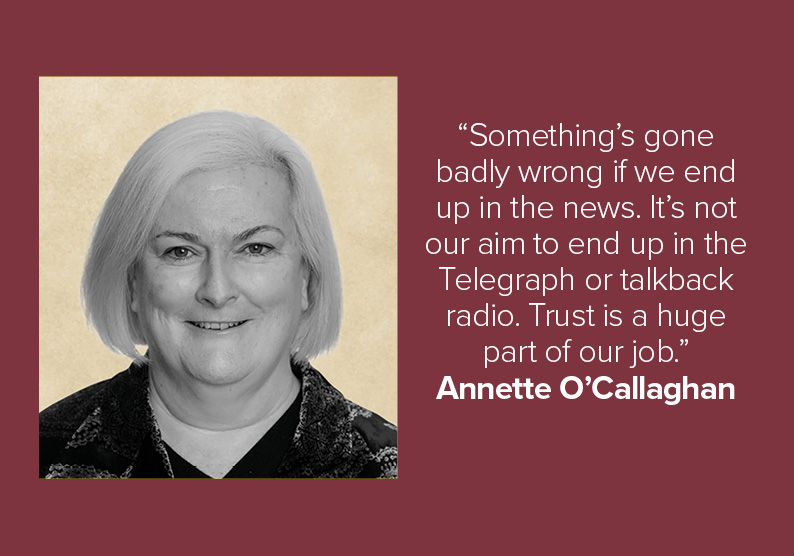
“We like that one. We use it when we give talks,” says Annette O’Callaghan with a chuckle. She’s the current holder of the century-and-a-half old office. O’Callaghan has been writing laws up and down the east coast for 32 years and has been the NSW Parliamentary Counsel since 2018. She guides Richard Hurford, her Deputy Parliamentary Counsel and leader of the PCO’s non-government bills program, and myself to a meeting room. Sandwiched between them, I’m struck by the sense that these two people plot the statute book like a sudoku.
O’Callaghan and Hurford, as well as the rest of their team at the PCO, are responsible for drafting and maintaining the bulk of NSW legislation. This includes drafting every bill that goes before Parliament, as well as a broad range of statutory instruments—regulations, rules, proclamations, orders and environmental planning instruments. Their mission is to produce legally effective legislation that achieves its policy intent. They also run the NSW legislation website, the public portal through which all this material is accessed. It’s a mammoth job, that needs a mammoth intellect.
“An Act of Parliament can only bang its head against the reality of human nature,” says Hurford laconically shaking his fists. “An Act of Parliament should be as clear as possible for the good of the people. But, it is a political document as well. Given the intentions of our client, they can’t answer all the questions and they have a deadline. We can’t chase every rabbit down every warren. Things have to be left to the common sense of administrators and courts.”
Hurford’s point lands with the weight of experience: clarity has limits, time is finite and legislation must eventually move from concept to text, often at the expense of perfection. And it’s at this junction—where political ambition meets practical constraint—that the drafting process truly begins.
How does an Act actually get written?
An Act begins as an idea, and an idea can come from anywhere. It could grow from a government’s election promise, a law reform body’s advocacy work, a department’s experience and expertise in administering a particular Act or area of policy, or a surge in public demand for a specific change. From there, a government’s policy team will develop that idea into something more tangible. Usually this will include consultation with key stakeholders: entities who will be administering the legislation, people whose rights or duties will be impacted, community and advocacy groups, and professional associations.
This process should equip policy officers to prepare instructions for drafting of a bill. They’ll need to have a firm idea of the purpose and context of the proposal, the administrative and staffing arrangements needed to run it, any new offences that will be created, how and when the scheme should commence (including transitional steps), and which matters are intended to be dealt with through delegated legislation. Most importantly, they’ll need approval from cabinet. Now, the idea is ready to become a bill. That’s where parliamentary counsels come in.
Parliamentary counsels—the ‘official’ legislative drafters for government and parliament—are not simply scribes, or even editors. In fact, they do far more than just convert policy into legislative text. They probe and test proposals, drawing on years of experience to spot gaps, clarify assumptions and push for instructions that make a scheme workable. In this way, drafters often play a major role in shaping the policy itself. Through their dialogue with policy officers—sometimes a lengthy process of iterative drafts and feedback exchanges—they steer their instructors toward clearer objectives, more coherent structures and solutions that will survive real‑world application. For O’Callaghan and Hurford, this often takes the form of scenario testing, an exercise in brainstorming hypothetical situations that might be captured by the policy and asking if that would be an intended outcome.
“We add that extra layer. Good policy officers want you to challenge them and come up with scenarios that help them think about it. It’s never the work of one person. Even in our own office, things go through multiple checks. You want your own thinking to be challenged,” says O’Callaghan.
In many ways, a drafter’s contribution sits upstream of the text: by challenging policy logic, identifying unintended consequences and suggesting alternative approaches, they help build the foundation of the legislation before a word is ever drafted. In doing so, drafters inevitably blur the line between independent technical adviser and policy instructor, inhabiting a space where drafting and policymaking become almost inseparable.
“Essentially, it’s always about understanding the problem,” says Natalie Plumstead when reflecting on the way in which she clarifies instructions. After a lengthy career in the Office of Chief Parliamentary Counsel in Victoria (OCPC), she now works independently, offering legislative design and drafting services to a diverse range of clients from across the world.
“What is their intent? They’re wanting a bill that achieves a certain legislative intent and you need to work with them to make sure you understand what they’re saying and what they’re instructing you to do. And you might need to assist them to develop the instructions. As drafters, we always want to make sure the legislation achieves what it’s meant to. We have to help them consider all aspects of the problem.”
Framing the idea behind new legislation as a ‘problem’ is not unique to Plumstead. This terminology is used is Parliamentary Counsel offices across the country. It reflects a common conception of legislation as a targeted remedy to a clearly defined mischief, gap or failure in the existing law, and a conception of drafting as an exercise in diagnosis and repair. O’Callaghan agrees, telling me that “inevitably, as you do the drafting you’re helping refine the policy, teasing it out with the questions you ask and being very aware of what they’re trying to achieve and what matters to their stakeholders.”
There are many times when laws have dramatically failed in the absence of scrutiny from an experienced drafter. The notorious ‘cobra effect’—a canonical example—appears whenever a law fails to anticipate the incentives its text creates. In colonial Bombay, a bounty on cobra skins was meant to reduce snake numbers; instead, it rewarded people for breeding cobras. When officials cancelled the bounty, breeders simply released their now‑worthless stock, increasing the cobra population beyond its original levels. Similar tales played out with rat tail bounties in French‑era Hanoi and, more recently, wild pig incentives in the United States.
Some drafting doesn’t explode—it just silently fails. One of the clearest examples is the UK’s Proceeds of Crime Act 2002, which created an Assets Recovery Agency (ARA) promoted as one that would hit big‑time crooks hard, funding itself through recovered assets. By 2006 the ARA had cost taxpayers around £60 million while recovering only £8 million since its launch. The agency admitted this was partly because its cases were taking far longer than expected, with many being fought aggressively in the courts on human rights grounds. Moreover, the fact that staff were working with new laws meant they were building procedures, precedents and operational capability from scratch. Finally, broad assumptions used in calculating criminal benefit often led to large nominal claims that could not realistically be recovered. The ARA’s fate shows what happens when legislation is built without effective drafter’s scrutiny. An experienced Parliamentary Counsel would have stress‑tested the scheme’s assumptions, narrowed its overly broad powers, anticipated litigation bottlenecks and designed a framework that was capable of delivering what the law promised.
Origins
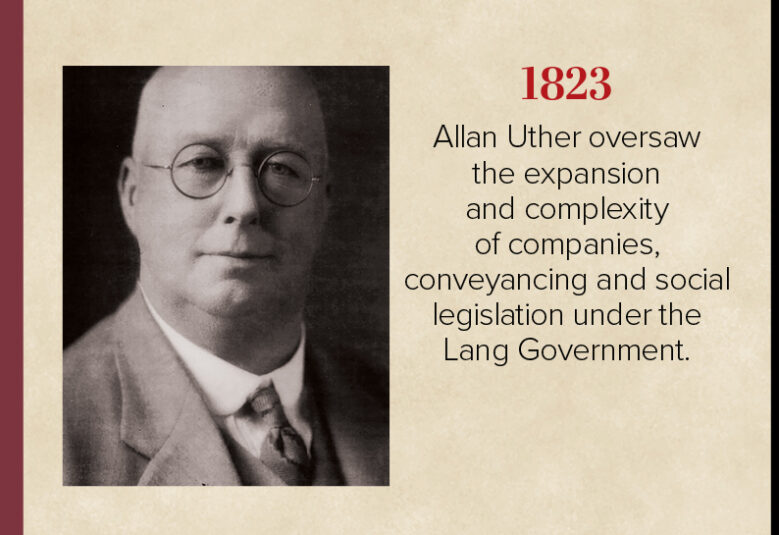
In Australia, legislative drafting didn’t begin as an admired specialty so much as a practical habit of government. In the earliest years of the NSW colony, lawmaking was inseparable from administration: rules and orders had to be written to make the place function, and the work fell to officials in an ad hoc way. It was simply whoever was ordered to do so that drafted orders and regulations for the Governor of the day. When the colony acquired a more formal legislative structure in 1824, drafting moved into the orbit of its law officers. The new office of Attorney General, appointed by the Governor, drafted legislation with support from senior legal and administrative figures. The point is worth lingering on: drafting began as something done within other jobs, not as a discrete craft with its own professional identity.
That changed as the NSW Government became increasingly independent from England. Parliament’s workload expanded, executive government became more politically driven, and Attorneys General became central political figures rather than primarily appointed legal technicians. Drafting functions were handed to barristers who worked part-time and were paid by the piece. It was an arrangement that treated drafting as a service that could be commissioned, rather than as an office that needed continuity, institutional memory and method.
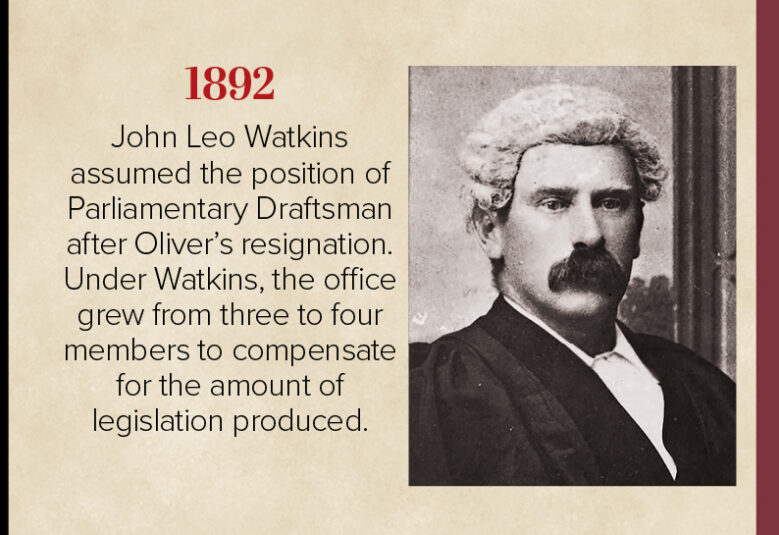
It didn’t last. This commissioning approach had predictable problems: reliability, continuity, cost and inconsistency across the statute book. There was widespread concern that briefing out bills could be expensive, uneven in quality and vulnerable to patronage dynamics (including accusations that drafting fees could operate as a form of political favour). By the 1870s the volume and tempo of legislative work, and the desire for a coordinated approach, exposed the weakness of fee‑for‑service drafting. In 1878, hot on the heels of similar developments in England, the office of the NSW Parliamentary Draftsman was established with Victoria following suit the next year. The significance of this cannot be understated. The modern office of the NSW PCO derives directly from this institution, and it marked the beginning of a conceptual shift. Drafting was no longer dictation, but an institutional function—one that accumulates expertise, standardises technique and starts to treat the statute book as a corpus that needs internal coherence over time. They became keepers of the book.
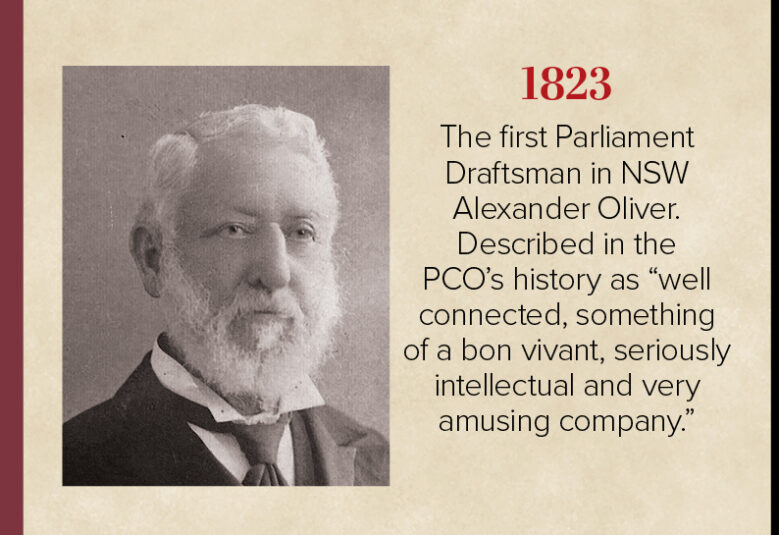
The first Parliament Draftsman in NSW was Alexander Oliver, described in the PCO’s history as “well connected, something of a bon vivant, seriously intellectual and very amusing company.” With only a clerk and a messenger boy, Oliver drafted most government legislation until 1892, while also taking on related tasks such as examining regulations and keeping abreast of imperial statute law. He also busied himself with an anonymous political gossip column. In a post-Banerji era, the fact this was not a scandal is hard to believe. It may reflect the political culture of the era—the boundaries between political commentary and official life were much looser than today.
O’Callaghan grimaces when I mention this to her. “Something’s gone badly wrong if we end up in the news. It’s not our aim to end up in the Telegraph or talkback radio,” she chides. “Trust is a huge part of our job.” Much has changed in 150-odd years.
Federation created a new jurisdiction that had to legislate itself into existence. For the Commonwealth, early drafting capacity sat inside the Attorney General’s Department rather than in an immediately separate drafting agency. Sir Robert Garran became Secretary of the Attorney General’s Department and the Commonwealth’s Parliamentary Draftsman on 1 January 1901, with an incredibly broad mandate: designing foundational legislation for federal departments, elections, courts, defence, customs and the public service. This period demonstrates the foundational influence of legislative drafting on our modern system of government. As a form of institutional architecture, it was drafters who designed the legal structures for organising power, defining responsibilities and operationalising federation. The Commonwealth’s drafting function formalised into a dedicated office within the Attorney General’s Department in 1948 and the current, independent Office of Parliamentary Counsel wasn’t established until 1970—almost 100 years after its NSW predecessor.
But things started to get complicated quickly after federation. Due in large part to the Industrial Revolution and two successive world wars, by the mid-20th century, the statute book was ballooning. “There was basically an explosion in the need for regulation,” says Plumstead. “The statute book in the UK and Australia and other places had become really unwieldy and unworkable … they would try to describe absolutely every aspect of the problem. It went along with this literal approach to interpretation where you’d have to draft legislation to comprehensively cover everything.”
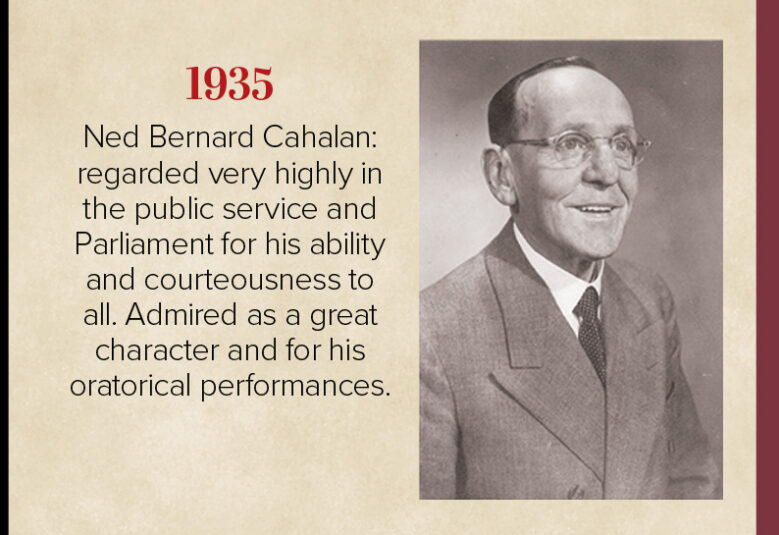
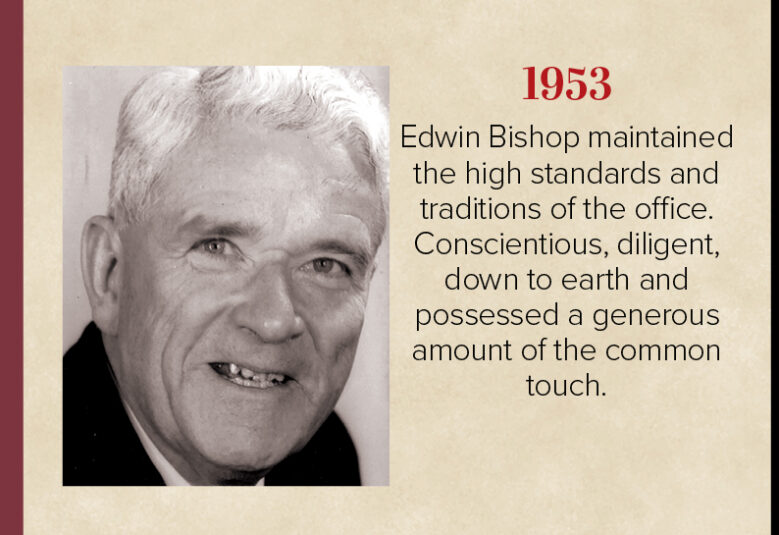
Not only were there more laws being passed, they were getting longer and longer. Between 1965 and 1977, the NSW Parliament passed 18,229 pages of Acts—4.4 times the previous decade. Drafting at this scale could no longer be a solitary job. It became a managed production process: programming, triage, consistency mechanisms and a reliance on experienced office knowledge. The institutional changes that followed in NSW show the profession hardening into shape. In 1970, the Parliamentary Draftsman became known as the Parliamentary Counsel, and the newly titled PCO relocated to the Goodsell Building—symbolically and practically reinforcing the move from individual post to institutional office. A few years later comes a telling procedural reset. For decades, government policy had required departments to present proposals in the form of draft bills. By 1974, the PCO accepted this policy had failed: agencies were required to submit instructions in narrative prose, and Parliamentary Counsel would draft the bill in consultation and then submit it for Cabinet approval.
The plain English revolution
Another problem of this period was the fact that legislation was increasingly inaccessible. The legislative style of the period was marked by dense, convoluted phrasing in which the pursuit of absolute certainty produced layers of unnecessary detail and left statutes structured in ways that were difficult for readers to navigate. Traditional legal diction was defended as suitably dignified for Acts of Parliament, yet the prevailing interpretive literalism of the High Court encouraged ever‑longer, more intricate sentences, often peppered with archaic terminology; the result was legislation that resembled the fine print of modern terms and conditions, and lacked even basic navigational aids such as tables of contents.
Writing in 1970, the author of the common law world’s most authoritative work on legislative drafting, G.C. Thornton wrote:
“Too often the struggle for precision and accuracy causes the draftsman to hedge about in inelegant fashion closing with his ‘ifs’, ‘provided thats’ and his ‘notwithstandings’ numerous loopholes, real or imaginary. A passion for precision and accuracy there must be, but not to the point where reasonable intelligibility is lost.”
In the UK—as in other common‑law jurisdictions observing these developments, including Australia—public criticism was mounting about statutes so intricate and over‑elaborate that they were unintelligible not only to ordinary readers but often to lawyers and administrators as well.
Parliamentary debates at the time openly lamented that modern legislation had become obscure, arcane and hierophantic, warning that unreadable laws risked shifting power from democratic institutions to bureaucratic interpretation.
Against this backdrop, the British government established the Committee on the Preparation of Legislation in 1973, chaired by Sir David Renton. The Committee’s mandate was clear and tightly focused: to examine the form of bills with a view to achieving greater simplicity and clarity in statute law. When its report—commonly known as the Renton Review—was published in May 1975, it set out 121 recommendations aimed at transforming both the structure and drafting practices of legislation.
The Renton Review crystallised a pervasive dissatisfaction with the prevailing literalist methods of statutory interpretation and responded by urging clearer structural organisation, improved layout, shorter sentences and more transparent use of aids such as headings and tables of contents. Importantly, it helped legitimise the emerging plain English movement. While not dismissing the need for precision, the Renton Review insisted that legislation must be intelligible to the ordinary citizen and that clarity must be treated as a substantive legal virtue, not an aesthetic preference. This was a turning point: judges were encouraged to adopt less rigid, more purposive interpretive techniques and drafting offices across the common‑law world began experimenting with simpler vocabulary, clearer structure and reader‑oriented design.
Australia absorbed the Renton Review’s conclusions into existing currents of thinking about legislative clarity. Drafting offices, courts and law reform bodies began treating readability as a serious objective. In NSW, that shift became concrete when the PCO introduced a plain‑language policy in 1978, modernising the structure and style of legislation along the lines Renton had encouraged.
Eamonn Moran was cutting his teeth as a legislative drafter in Northern Ireland at this time and the plain English movement, in many ways, shaped his career. Finding his way to Australia, he spent 30 years at the OCPC in Victoria and then went to Hong Kong in 2008 to lead a legal drafting division in their Department of Justice tasked with introducing plain language.
“To understand something, you would never look at the Act. You would get some sort of pamphlet explaining it,” he says, reflecting on the way it used to be. “Nowadays, you can pick up an Act and, if you’ve got a reasonable intelligence, you’ll be able to follow it and understand what it’s doing. And that’s a challenge for the drafter; to try to see and to make legislation as a piece of communication and not just a piece of law.”
The idea of legislation as communication embodies the spirit of the plain language movement. Legislation is, at its core, the State speaking to the people—setting boundaries, granting powers, creating rights and obligations—and doing so in a form that can be understood so it can be followed. Seeing legislation this way reframes the drafter’s task: not as the mechanical assembly of clauses envisaging every possibility, but as the crafting of a message that will be read by ministers, judges, public servants, businesses and ordinary citizens trying to work out what they must do. A law that cannot be followed because it cannot be understood fails at the first hurdle. Treating legislation as communication therefore demands clarity, navigability and empathy for the reader. It pushes drafters to strip away needless complication, to structure ideas logically and remember that the ultimate purpose of the text is to guide human behaviour in the real world.


An interpersonal profession
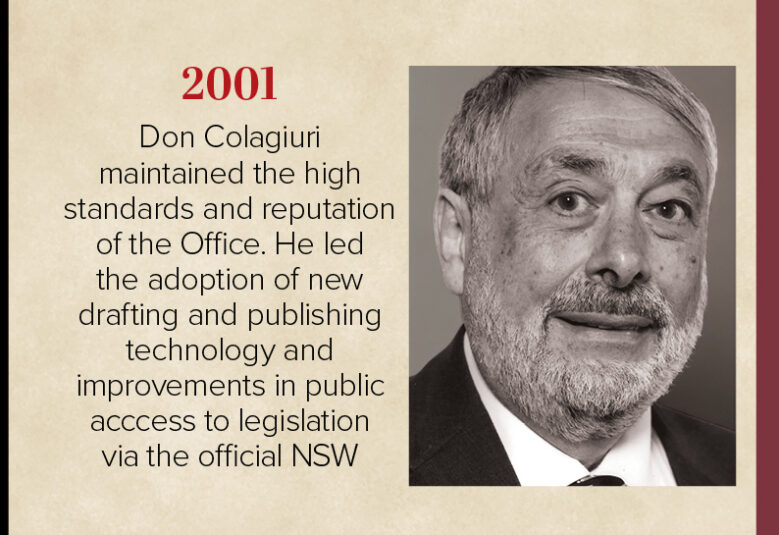
Back at the PCO, I linger by the unfinished jigsaws. If you watch a drafter work for long enough, you stop thinking of drafting as writing in the ordinary sense. It looks less like typing and more like design: moving parts around, testing load‑bearing joints, checking that one clause doesn’t collapse into another and that the whole structure can survive the weather of real life.
“The average number of drafts is about 15—sometimes you could get it done in two. The most we’ve done is 60,” says O’Callaghan. That iterative process involves constant interaction with instructors and stakeholders. While it is often imagined as a solitary technical exercise, in practice legislative drafting is an intensely interpersonal profession. Drafters work in sustained collaboration with policy officers, Cabinet agencies, regulators, departmental lawyers and—in major schemes—entire cross‑government working groups. Hurford jokes, “we’re not monks at our desks with quills; there’s actually a lot of interaction with your instructors on interesting societal topics.”
And Annette agrees, nodding emphatically: “a lot of people think this role is very ivory tower. You’ll sit on your own, look at the statutes, take a very academic approach. In fact, you are never going to get good instruction from someone if you don’t have empathy, can’t build that relationship, influence outcomes. You need to push back without causing damage, you need the ability to ask the right questions, and have people trust you enough to share what it is they are really trying to achieve.”
Nevertheless, there are those that see drafting as a job that AI is capable of. In recent years a ‘rules as code’ movement has emerged, arguing that legislation should be conceived as a computable system, drafted with multidisciplinary teams so the human text and a machine‑readable version evolve together and can be tested like software. The logic is that this would allow more rigorous scenario testing to detect unintended effects long before legislation is enacted. Machine‑readable rules would also power tools like eligibility checkers, benefit calculators and compliance engines, giving the public instant, accurate answers. Some proponents go further, contending that much of the drafting workload can be automated.
O’Callaghan is sceptical. Over the course of her career she’s developed an insight she struggles to see AI capable of. “I think it’s a simplistic view of what it means to draft. People think drafting is just a formula. But there’s a lot of thought that goes into it. The biggest part of drafting is the analytical and problem-solving element and I don’t think the technology has got us there yet. It’s that intuition you develop over time that make the difference.”
Indeed, rules as code efforts have invariably failed. Pilot programs in the US reveal hard limits: models stumble on edge‑cases and exceptions, reinforcing that expert oversight and iterative testing remain non‑negotiable.

Keepers of the book
In the drafter’s world, the statute book is the environment every new law must inhabit, shaping its form, function and survival. As Moran emphasises, parliamentary counsel are “experts on the local statute book … and know how best to work the new piece of drafting into that book so that it can operate effectively and in harmony” with the surrounding legal landscape. Without this deep familiarity, new legislation risks duplicating existing provisions, contradicting entrenched schemes or unsettling carefully balanced rights and obligations. O’Callaghan stresses the same point: “You want a consistent and cohesive statute book. You need to take into account the interaction between different pieces of legislation. You have to know the history of how legislation was developed, how it all fits together. There is a specialist skill to it.”
And that specialist skill can only be cultivated with time. There’s a rule of thumb that it takes five years before a drafter can draft independently. Moran describes these early years as the stage where “the more you try, the more you learn,” and where mistakes—inevitable at first—slowly produce the intuition that marks an experienced drafter. What develops is not a rote memory of statutes, but an instinctive understanding of where the bodies are buried: which definitions have been litigated, which schemes sit delicately atop older regimes, which Acts cross-reference others. This understanding safeguards against error. It’s particularly important in modern legislative ecosystems where policy areas interlock: planning with environment, crime with evidence, corporate law with tax. Coherence strengthens predictability, and predictability is the heart of legality. As Moran explains, it also reduces complexity: “knowing where things are means you don’t repeat … You don’t have to lay out how a court will approach sentencing if you know it’s already covered in a particular sentencing legislation.”
But this is an increasingly difficult task. Moran highlights that, despite the impact of the Renton Review, legislation continued to proliferate. “You know, in my old office in Melbourne, I used to have the statutes for the year up in the shelf behind me. And, starting from the early ‘80s, you could just see them getting bigger and bigger and bigger each year.” Moran has kept the spirit of this practice up. As we speak on Teams he’s framed by floor-to-ceiling bookshelves brimming with books with that distinctive law report tincture. “One thing that has struck me over the course of my career is the growth in legislation. It’s phenomenal and it must be very hard for people in any industry, including law, to keep up with it.”
The sheer volume and velocity of statutory change fundamentally alters what it means to keep the statute book. When legislation accumulates at this pace, coherence becomes harder to maintain, interactions become more complex and the risk of unintended conflict escalates. The result is what Rares J in Wingecarribee Shire Council v Lehman Bros Australia Ltd (in liq) [2012] FCA 1028 memorably called ‘legislative porridge’: a statute book thickened by detail, exceptions and qualifications introduced to make complex policy workable, but which often ends up making the law less clear and harder to comply with. The Corporations Act 2001 (Cth), Social Security Act 1991 (Cth) and most tax legislation are examples of this. For these Acts, patchwork amendments have been made without regard to the legislation as a whole and multiple government entities administering such Acts amend them without coordination. Keeping the statute book is no longer just writing new law. It is trying to preserve coherence, comprehensibility and navigability in a system whose natural tendency—under political pressure, risk aversion and the demand for certainty—is to grow more detailed, more tangled and less legible every year.
Art and science
The art and science of drafting cannot be separated. The science supplies the structure: the technical rules, the interpretive doctrines, the disciplined attention to coherence. But the art supplies everything that cannot be reduced to process—the judgement to know which problems matter, the empathy to draw clarity out of imperfect instructions, the creativity to design legislative schemes that behave well in real‑world conditions. Drafting is a craft built on constraint and imagination in equal measure. It lives in the space between policy and law, where drafters quietly shape the architecture of government one clause at a time.
Legislative drafting is often described as a technical craft, but spending time with the people who do it makes clear that it is better understood as a form of state‑building in slow motion. Every bill is an act of civic architecture: a new beam added to a structure that has been expanding, shifting and settling for more than a century. It is also intensely human work. Drafters mediate between political imperatives, administrative realities and legal constraints, absorbing imperfect instructions and coaxing them toward coherence. They do this at remarkable speed, under the spotlight of parliamentary timetables, and under conditions where the cost of error can be borne by thousands of people who will never know their names.
What emerges from their stories is the sheer scale of the cognitive load involved. Drafters must hold the statute book in their heads. They must navigate a legislative environment that grows denser every year, where policy complexity fuels legal complexity and patchwork amendments threaten the coherence on which the rule of law depends.
And that is the quiet truth running through every conversation in the PCO: legislative drafters are the custodians of legal order. Their work is invisible when it succeeds, publicly blamed when it fails and constitutionally vital either way. They translate political will into durable legal form, shape the norms that govern daily life and maintain the navigability of a statute book whose natural trajectory is toward entropy. Drafting is not the mechanical production of text. It is the ongoing, intricate maintenance of the legal architecture that holds the state upright.