
By LSJ Team -
The right to speak one's mind without fear of government reprisal is the very foundation of a free and just society. Free speech is the lifeblood of a functioning democracy, enabling the open exchange of ideas, the vigorous debate of public policy, and the critical scrutiny of those in power.
Without this fundamental right, a society risks becoming stagnant, unable to challenge the status quo, correct its course, or innovate through collective discourse. It is the very engine of social progress, ensuring that a diversity of voices can contribute to the ongoing evolution of a nation and its ideals.
In August this year, the Law Society of Hong Kong struck Kevin Yam off the Roll of Solicitors for conduct “unbefitting a solicitor” which compromised “his integrity, his own reputation and the reputation of the profession, contrary to common law.” He was also ordered to “pay the costs and disbursements of the Law Society, the Prosecutor and the Clerk to the Tribunal, in a total sum of HK$816,600.”
The conduct referred to his testimony given in May 2023 to the China Executive Congressional Committee of the US Congress (CECC), an independent agency of the US government that monitors human rights and legal developments in China.
As an Australian citizen, he was one of the few lawyers outside of Hong Kong who could speak freely about the situation. He had been a vocal advocate for human rights and the rule of law, and his legal background as a commercial lawyer for over 15 years in Hong Kong gave his views significant weight.
During his testimony, he expressed concerns about the vagueness and selective application of the National Security Law (NSL), which has been used to punish pro-democracy activists. He also spoke about the need for greater accountability in Hong Kong’s legal system, even suggesting the application of sanctions against judges who are handpicked by the chief executive to preside over National Security Law cases.
Political proxy: Undermining free speech
The Law Society of Hong Kong said the tribunal’s decision was based “solely on professional conduct and not on any alleged criminal offence or political opinion.” The organisation emphasised that solicitors must “uphold the integrity of the profession and the rule of law,” adding that the disciplinary process is meant to “protect the public, maintain the reputation of the profession, and maintain public confidence in the administration of justice.”
Yam’s disbarment is the first of its kind under the NSL, which Yam says signifies to lawyers and activists who want to speak out from abroad to “stay silent or else”.
“Getting me disbarred is a convenient proxy for national security law-related bounty that they’re not, to date, able to act on,” Yam says.
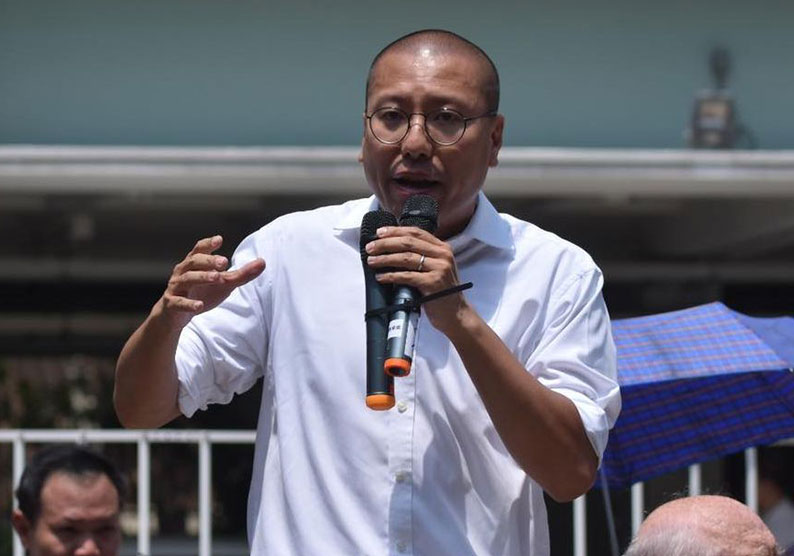
According to Simon Henderson, an international human rights lawyer and member of the Law Society of New South Wales Human Rights Committee, this case represents a dangerous “overreach” by the Hong Kong government, with significant implications for lawyers in Australia and beyond.
Henderson also believes that Yam’s disbarment has been a way for Hong Kong authorities to target Yam because they were unable to force his return. He says disbarment is a lawyer’s most serious punishment, usually reserved for offences like fraud, gross negligence, or theft of client funds.
“The narrative that the Law Society of Hong Kong seems to be pushing is that this is not about freedom of expression, but it very clearly is. This is about an indirect way to use the National Security Law to target a legal practitioner for actions that are part of public discourse.”
They were actions which Henderson says, “(Yam) undertook as an Australian citizen, to a foreign executive, a foreign congressional committee.”
He likens appearing before the CECC as the equivalent of a parliamentary committee in Australia. “I felt that that was extreme overreach, both by the Hong Kong authorities, but also by the Law Society of Hong Kong in undertaking this action rather than standing up for a member of the profession.”

The erosion of ‘One Country, Two Systems’
For decades, the principle of “one country, two systems” was the foundation of Hong Kong’s autonomy, ensuring its independent legal and economic systems after the 1997 handover from the UK. Yam was a staunch defender of this principle, even working on the Constitutional Affairs and Human Rights Committee of the Hong Kong Law Society. During his career, he saw a gradual shift.
He recalls a moment during the Occupy Central protests in 2014, when Beijing released a white paper reinterpreting “one country, two systems” on its own terms. He was able to organise an extraordinary general meeting of the Hong Kong Law Society to oppose it. Despite facing significant pressure from Beijing and its Liaison Office in Hong Kong, which tried to influence law firms to vote against their motion, Yam and his colleagues succeeded in their campaign.
“I think there was still enough of a sense that you can speak out on things if you wanted to,” Yam recalls.“Lawyers still felt able to resist when there were perceived encroachments from Beijing.”

But now, he says, a sense of fear has taken hold.
As a convenor of the now-defunct Progressive Lawyers Group, Yam had often spoken in defence of Hong Kong’s judiciary against attacks from pro-Beijing figures. The group, which Yam helped found, was dedicated to upholding core values such as the rule of law and judicial independence. However, after the 2019 anti-extradition bill protests, the political landscape was irrevocably changed by the imposition of the NSL in 2020.
Henderson left Hong Kong in June 2019 and was there for the city’s last Tiananmen Square Massacre commemoration event. This annual event is now a casualty of the NSL’s powers.
Henderson, like Yam, dedicated years to advocating for human rights issues in Hong Kong. As an exchange student and later with human rights NGOs in Hong Kong, he also witnessed firsthand the changing political and legal landscape. He collaborated with Yam through the Universal Periodic Review, a human rights mechanism that reviews China’s record, and the Progressive Lawyers Group, a body formed out of frustration with the Hong Kong Law Society’s inaction on human rights and rule of law challenges in the region.
“[I]n the middle of 2020, the National Security Law came in, and that’s completely upended Hong Kong civil society, and drastically changed what Hong Kong looks like, feels like, from a legal policy, human rights perspective,” Henderson explains, “A lot of lawyers have been targeted as a result of their activities, both in Hong Kong and also for activities outside Hong Kong.”
“Most lawyers in Hong Kong were either co-opted by the Hong Kong Chinese government. They felt it was unsafe to speak out, or otherwise, they were in detention. And that’s the really sad reality of the situation at the moment,” Henderson says.

Jailing dissent
Yam says he left Hong Kong in 2022 for various reasons, but he points to the imprisonment of many of his friends as a major turning point. Chow Hang-tung, former vice-chairwoman of the Hong Kong Alliance in Support of Patriotic Democratic Movements of China, is one of these friends.
“I can still remember I literally had dinner with her, a few others, one night, and less than a week later, she was locked up, never to be seen again,” Yam recalls.
Chow and two other former alliance leaders, Lee Cheuk-yan and Albert Ho, were charged with subversion under the sweeping National Security Law in 2021. The alliance was known for organising the commemoration event for the Tiananmen Square Massacre.
“Lawyers have been silenced … a number of pro-democracy lawyers have been jailed,” Yam says.
He points to the conviction of politician and barrister Martin Lee Chu-ming SC as an example. In April 2021, Lee was found guilty of his part in the 2019 “unauthorised assemblies” and sentenced to 11 months in jail, suspended for 24 months.
Yam says this suspended sentence has “effectively silenced” Lee, often known as “Hong Kong’s Father of Democracy”, who previously told the Guardian at the imposition of the NSL, “I won’t allow this to be the end of Hong Kong. Hong Kong may be a tragedy, but I won’t give up … even if you jail me, kill me, I will still point out it’s their fault. Democracy will come to China one day.”

Far-reaching impacts and bounties
Hong Kong authorities have allegedly used the NSL’s extraterritorial reach to harass Yam in Australia, including spurious tax claims and distributing leaflets near his home calling for him to be kidnapped back to Hong Kong.
Former Hong Kong legislator and activist Ted Hui, who also fled to Australia, shares Yam’s fate. Hong Kong authorities have placed a HK$1 million bounty on both men for information leading to their arrest.
Last year, Hui told SBS that foreign judges serving in Hong Kong are “lending their own reputations and integrity of their respective jurisdictions to Hong Kong’s already eroded and authoritarian regime.”
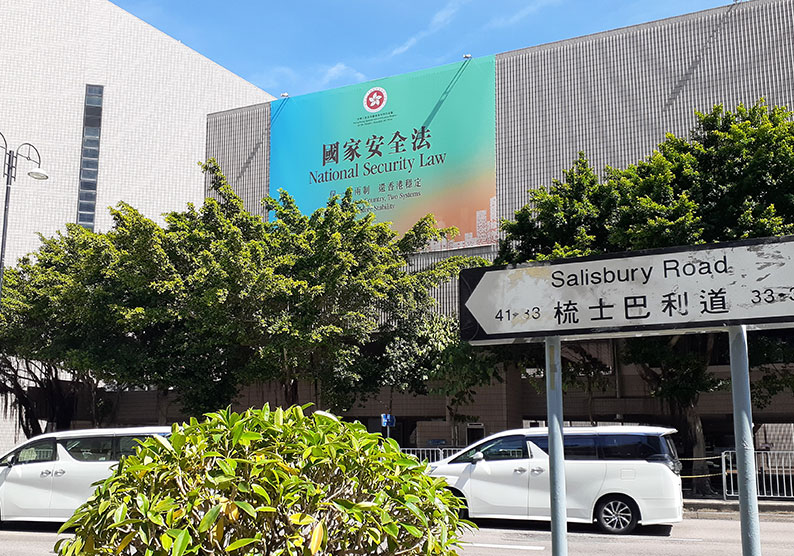
Henderson says the NSL is very vague and doesn’t comply with international human rights standards.
A contradiction in principles
An independent press is crucial to democracy, and so is an independent legal profession. This is what we are told, but according to Yam and Henderson, the situation in Hong Kong appears to be a direct contradiction. Henderson believes the legal professional bodies in Hong Kong are not speaking out against the crackdown on lawyers, stating that through their inaction, they have failed to uphold the tradition of their international counterparts.
He notes that legal bodies in jurisdictions like Malaysia and Turkey, where lawyers faced threats from overbroad legislation such as national security laws, have historically stood up, issuing public statements and even participating in protests despite facing detention.
“The Law Society of Hong Kong is not speaking up on these issues,” Henderson explains. “The Hong Kong Bar Association used to be more active in speaking out on these topics, and they’re not. None of them are speaking up on behalf of lawyers who’ve been prosecuted and persecuted by Hong Kong authorities.”
He believes this silence is due to a combination of self-censorship and a selective approach to the rule of law, arguing that the bodies “don’t seem to prioritise these issues” and aren’t acting in the best interests of the profession or the rule of law in Hong Kong.
Henderson says he is particularly disappointed because he has spent several years working in-depth in legal professional bodies and knows the impact they can have.
“I know the positive contributions that they can make to society, and sadly, that has not happened,” he says.
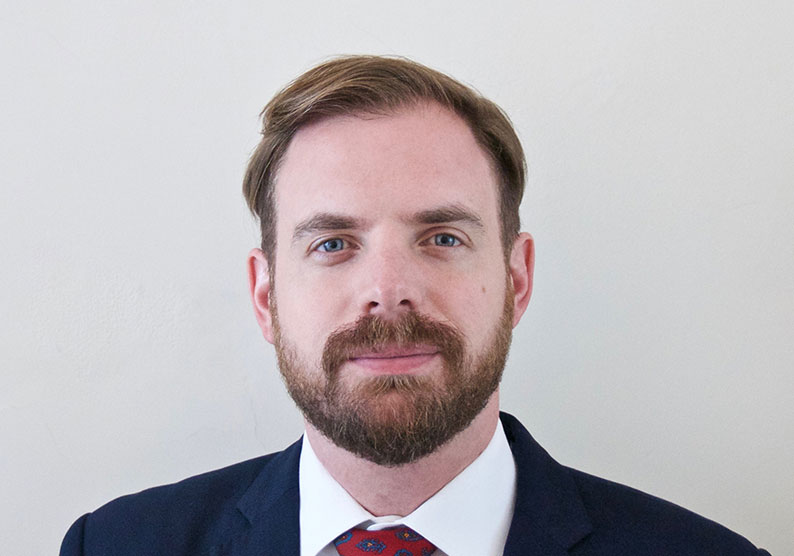
Instead, Henderson believes the legal professional bodies in Hong Kong are “enabling” and supporting the crackdown. He recalls attending a conference in 2022 where the heads of the Hong Kong Bar Association and Law Society of Hong Kong promoted the NSL, a narrative he describes as “rank propaganda of the highest sort”.
For Yam, the decision to speak out was a moral imperative, despite potential controversy.
“There might be people that say, ‘Hey, isn’t it controversial to call for sanctions against prosecutors and judges in the jurisdiction that you’re admitted in?'” Yam acknowledges. “And I can see on a superficial level that that’s how people might see it.”
However, he argues that such a view ignores the context of the National Security Law, the fact that many lawyers have already been imprisoned, and the inaction of Hong Kong’s legal professional leaders.
He saw it as his responsibility to seek help from “neighbours” because the leadership of the legal profession in Hong Kong had done nothing. He likened it to seeking help when some of your own family members are “arsonists” trying to “burn down your own home”.
“sometimes speaking out on the rule of law is easy because you get applauded for it, but other times, it carries a price…”
A call to be fearless
Both Henderson and Yam emphasise the critical role of Australian legal bodies in upholding the rule of law. Henderson draws a parallel to Australian lawyers like Julian McMahon, who have long engaged in human rights work internationally, and stated that the legal profession has a responsibility to stand up for lawyers who face threats from “overboard” legislation.
Henderson suggests that if a lawyer’s activities overseas can be threatened, it is a matter of serious concern for the entire profession. Yam’s case, he concludes, serves as both guidance and a platform for public discourse, reinforcing the need for Australian legal professional bodies to be more active in their advocacy for human rights.
Yam calls for legal professional bodies to be actively involved in speaking out publicly against experiences like his. “I know that all of these organisations care a lot about human rights, and this is something that should be on their radar.”
Yam was heartened that the Australian government and legal bodies, including the Law Council of Australia, have taken his case seriously.
“I hope legal professions around the world would understand, when it comes to cases like mine,” Yam says.
Yam urges Australia to remain vocal on these issues and object to any threats against its citizens for exercising their democratic right to free speech.
From a practical perspective, he suggests that Australia should consider working with allied countries to suspend any existing extradition arrangements with Hong Kong or mainland China. Yam notes that under current conditions, there are many countries he cannot travel to, even in transit, which creates significant practical issues for those targeted.
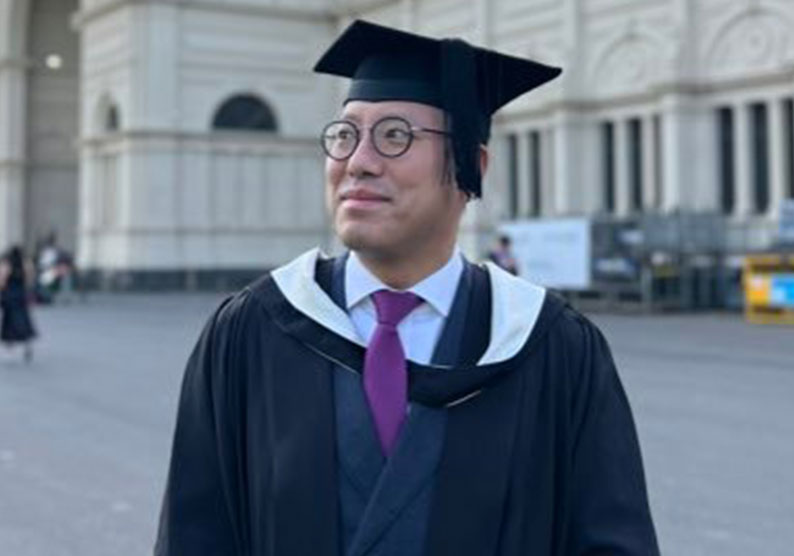
Today, Yam lives in Melbourne and is currently a PhD student at Melbourne Law School. When asked whether it has been difficult to go about his daily activities, he recalls a time when he was warned that speaking out against Beijing would result in being “watched from a distance or more closely than that, in one way or another.” However, as he tells LSJ Online, “you’ve got to live your life, because if you keep watching your back, then they’ve won.”
His final message to the legal profession in Australia is simple but powerful: “Be fearless”.
“We are blessed to be armed with legal knowledge, and we are custodians of the rule of law … sometimes speaking out on the rule of law is easy because you get applauded for it, but other times, it carries a price, and we’ve just got to carry on.”